Tag Archives: reviews

THE OUT CROWD

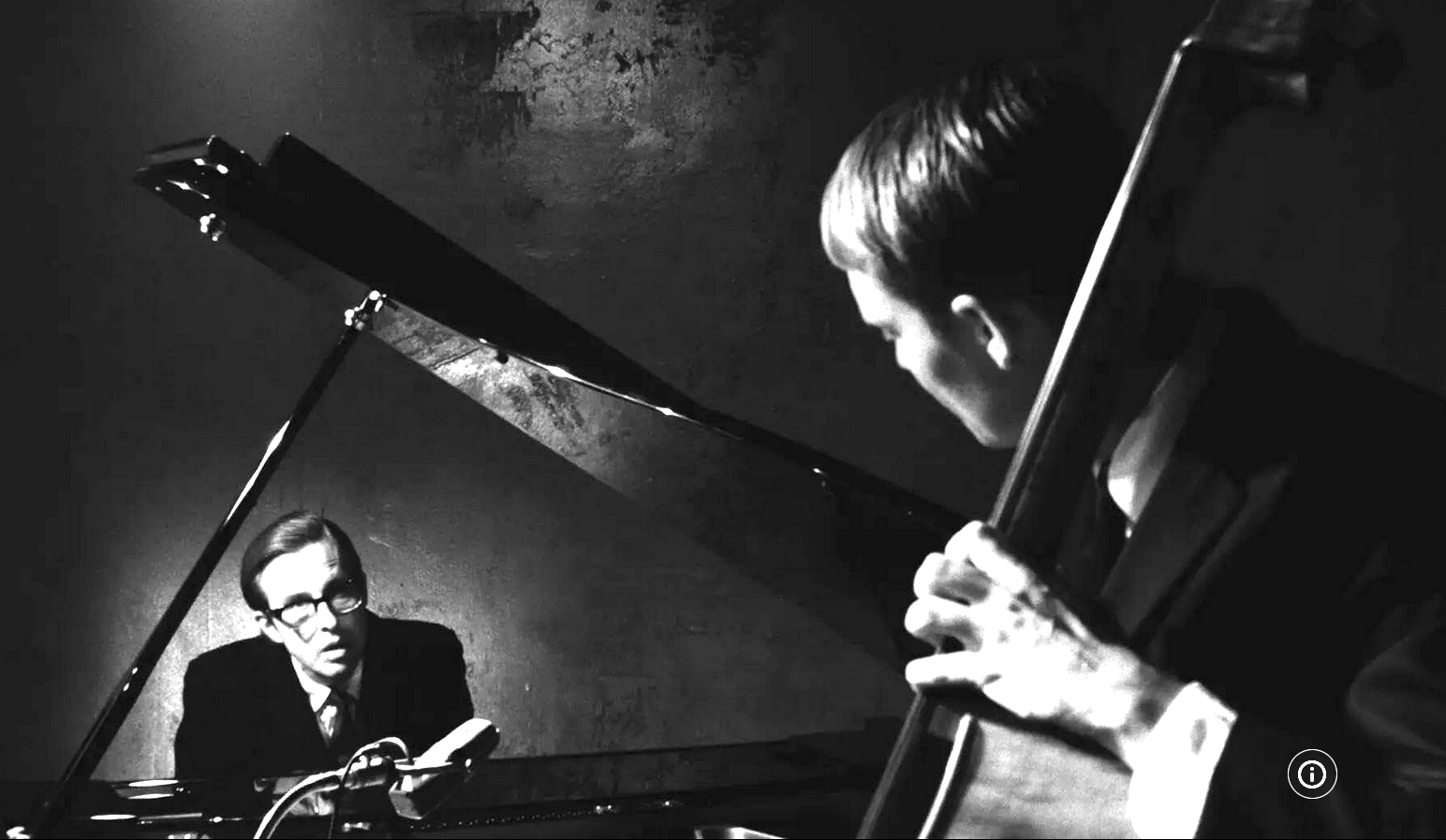
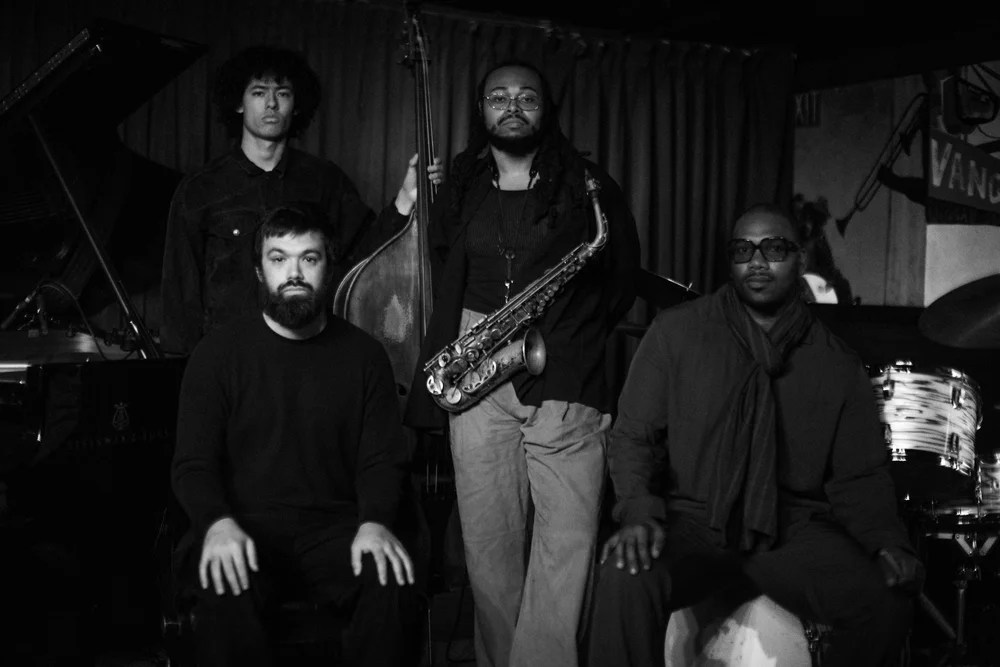
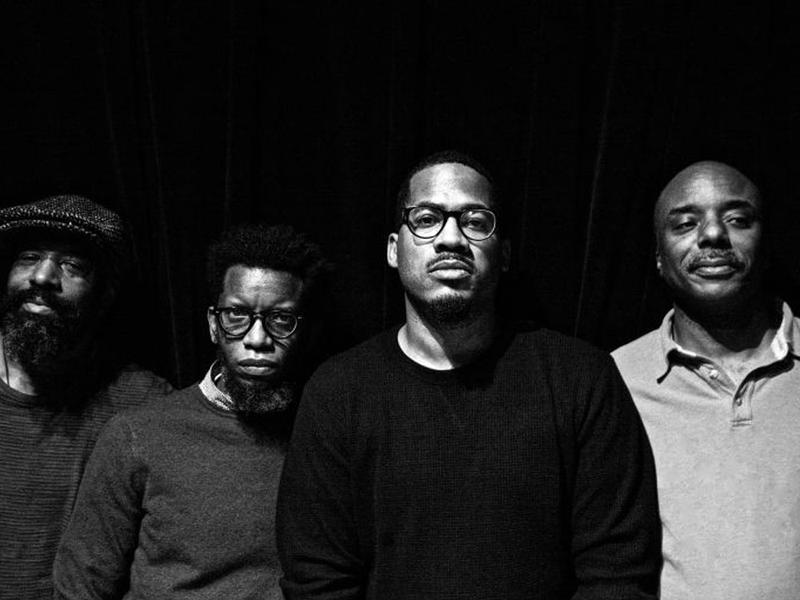
Two heavyweight US players are over here next month, both of whom really do sometimes frighten the horses with the intensity of their performances. Altoist Immanuel Wilkins is part of the informal Blue Note “house band” – a pool of players who often appear on each other’s albums, including Joel Ross on vibes, Marquis Hill on trumpet and Kendrick Scott on drums. His latest release is Live at the Village Vanguard Vol. 1, echoing similarly titled classics by Bill Evans, John Coltrane, Paul Motian and dozens of others. It is a powerful document of the joy of long-form improvisations, knotty and muscular in places, surprisingly lyrical in others, interspersed with passages of hypnotic, repetitive beauty. Wilkins and his quartet appear at the Jazz Café on Saturday July 18 and it’ll be quite the evening, just don’t bring any horses. Or improvised jazz agnostics. https://thejazzcafe.com/event/immanuel-wilkins-quartet/?accept=true.

        Immanuel Wilkins Quartet

 Also coming to London, where he performs more regularly than Wilkins, is James Brandon Lewis. He is another player not afraid to go “out” (or even “out out”). His output varies from concept albums (the wonderful Jessup Wagon, about a 19th Century black agriculturist and educator, and the fractured gospel of For Mahalia With Love), through bold sonic explorations (Abstraction is Deliverance; Apple Cores) to hard-hitting but highly listenable punk-funk-jazz (The Messthetics and James Brandon Lewis). He is playing two nights at the home of left field music, Café Oto over in Dalston, so will probably bring his more tumultuous side to the proceedings, but I’ve seen him three times now and he has never failed to exhilarate – even when the music swerves into uncharted territory, the listener is always aware of a fierce intelligence at work. Details: https://www.cafeoto.co.uk/events/james-brandon-lewis-quartet-two-day-residency/.

      James Brandon Lewis, above (photo by Thomas Sayers Ellis )

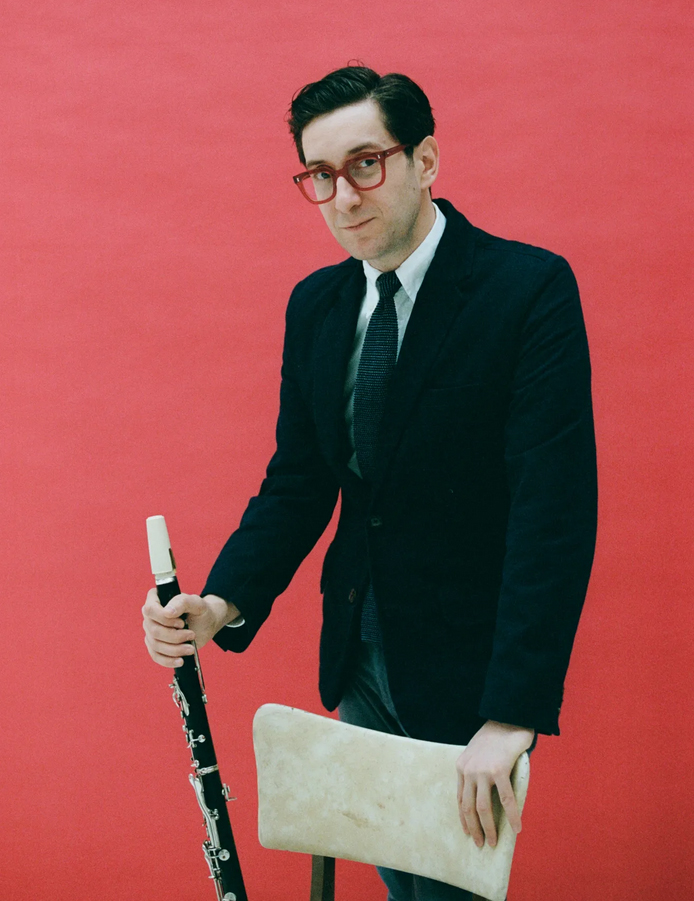
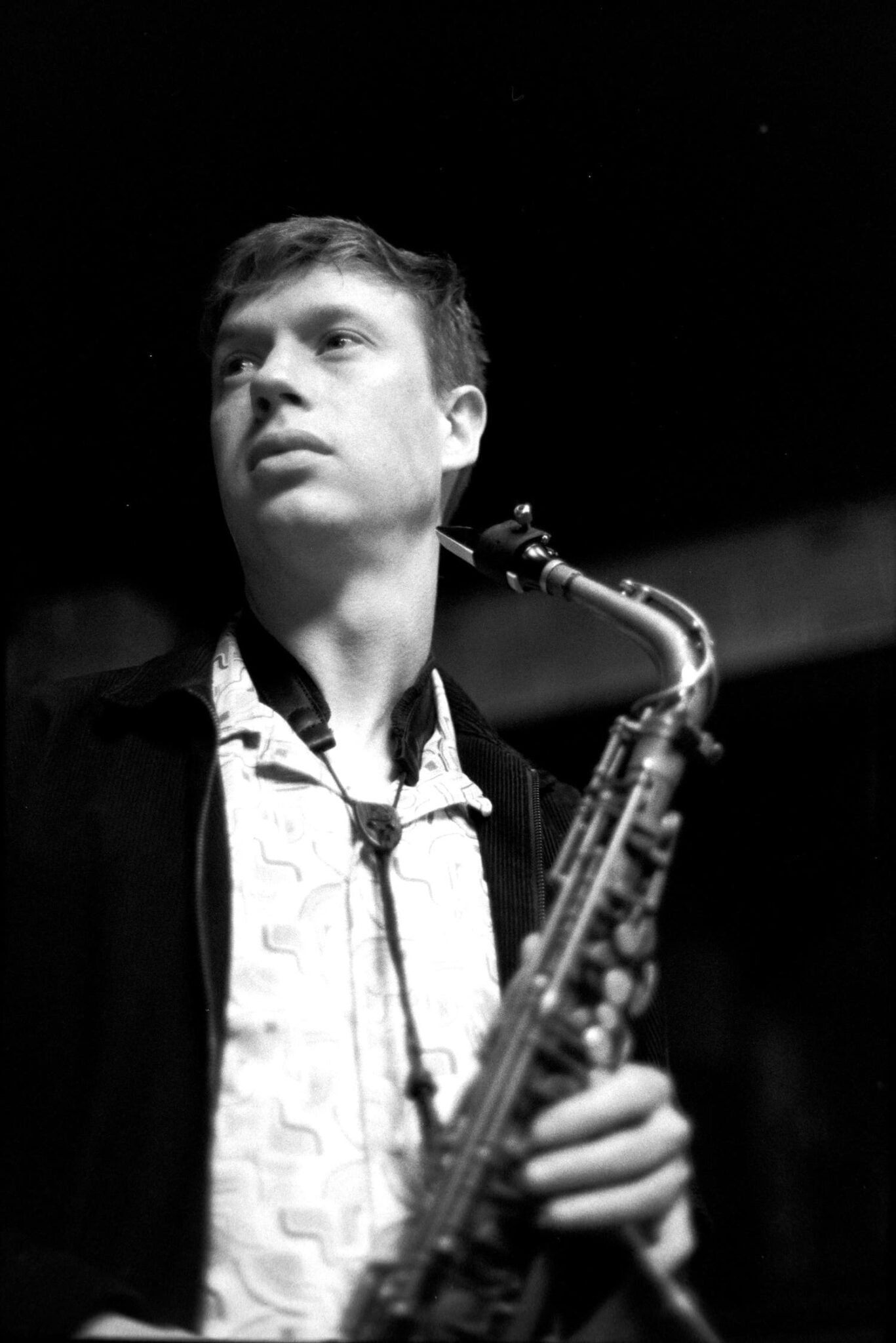
 Saxophonist and composer Alex Hitchcock is a London-based player who has spent time finding pastures new and fresh growth in the vibrant and highly completive NYC scene. He brings the results – complex, sometimes off-kilter compositions, always accessible, always delivered with passion and integrity – to Kentish Town’s Bull & Gate on Monday June 22, with selections from his album Letters from Afar. Full listing for the rest of June, including Alex: https://jazzattheparakeet.com/.

        A more familiar jazz landscape, perhaps, is explored by young Sam Braysher who hefts his honey-toned horn to the Pizza Express on July 2 to launch a new album called A Sinner Kissed an Angel. It is a collab with Amsterdam guitarist Linus Eppinger plus drummer Eric Ineke and consummate bassist Darryl Hall (no, not of “& Oates” fame, but a regular with the likes of Ravi Coltrane). It includes music by Horace Silver, Frank Sinatra, Dusty Springfield, Nat King Cole and Benny Goodman. The album has a warm, inviting, live-in the-studio feel, with the band totally relaxed playing in and around material they clearly cherish, perhaps not re-inventing the jazz wheel, but certainly giving it a damn good polish. Tickets to hear it live: https://www.pizzaexpresslive.com/whats-on/sam-braysherlinus-eppinger-quartet.


A quick non-sax local gig to mention. Expat Canadian singer Lauren Bush, now based in London, has gradualy been building a name for herself the old-fashioned way – by gigging, with both her own shows and guests slots with the likes of Ian Shaw. She is at Tufnell Park’s Aces & Eights on June 20 as part of the latest Red Desert Sessions. She will appear alongside fellow vocalist Angela Chan, singer/songwriter/drummer/host Eleonora Claps, Guillermo Hill on guitar and Andy Hamill on bass. Expect sophisticated jazz standards and smart originals, all for just £15. Tickets: https://www.eventbrite.co.uk/e/red-desert-music-presents-lauren-bush-angela-chan-eleonora-claps-tickets-1989185427160.

MIXED UP MILES

An expanded version of this piece will appear in the Camden New Journal.

Theo Croker’s “Miles Davis Mixtape”

Southbank Centre x Montreux Jazz Festival Residency. Royal Festival Hall. 13 March 2026

“I’m not going to talk very much,” announced Theo Croker near the start of his Royal Festival Hall concert, before adding, with a chuckle, “Miles didn’t talk much.” Which is, of course, very true – in his later years you were lucky if the trumpeter even looked at the audience. This non-speaking gig was a double celebration – of Miles Davis’ centenary and of a collaboration between the Southbank and the venerable Montreux Jazz festival, which came to town for the weekend. There was lots going on but – for me at least-  Theo and Miles was the centrepiece.

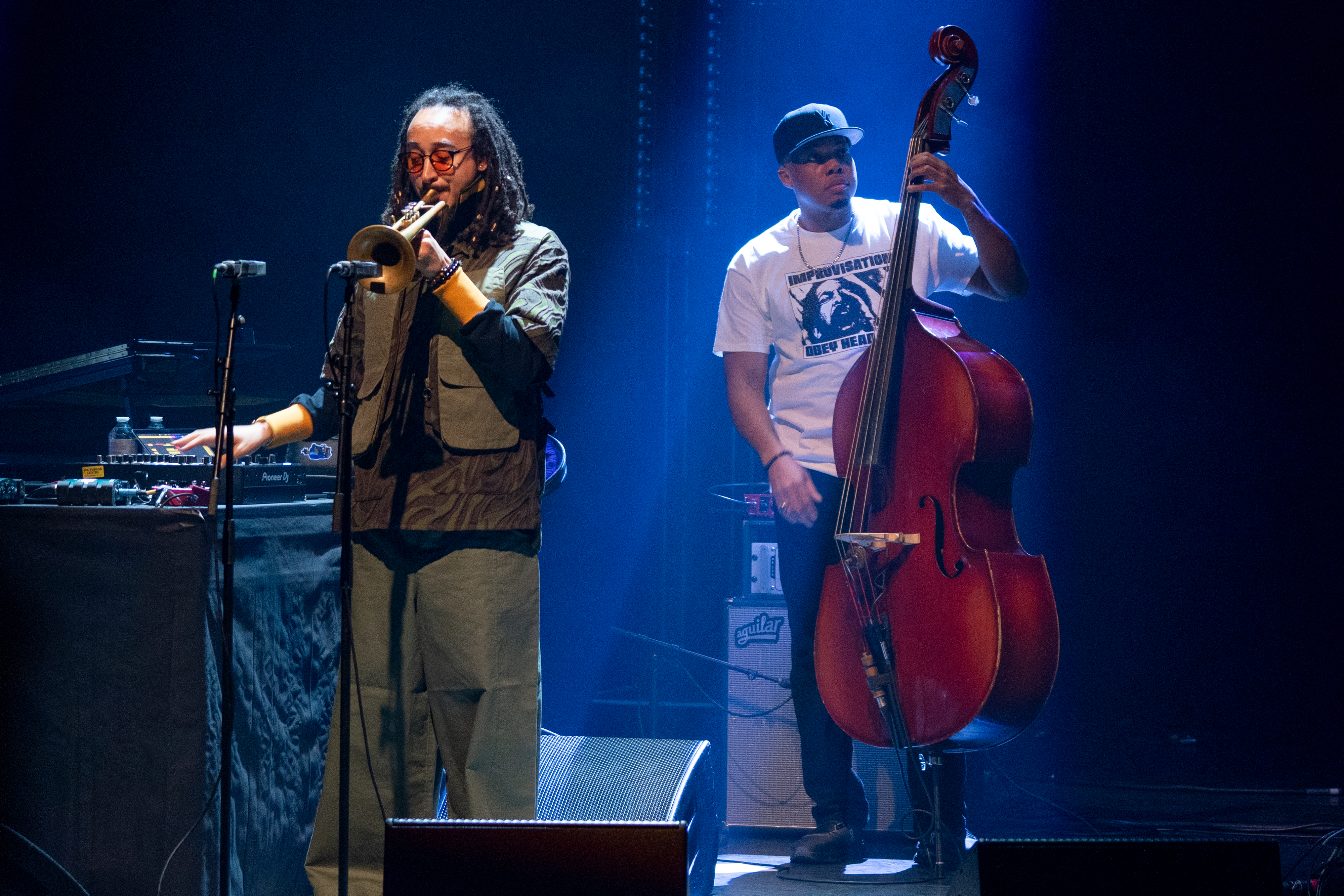
        (Photo: Pete Woodhead) The concert began with a beautifully full toned Concert de Aranjuez from the Gil Evans-helmed masterwork Sketches of Spain. Miles used a flugel in the opening on disc; Theo has a Monette trumpet, but no matter – that horn sings. It soon became clear that the pure-voiced singing was going to just part of its role here, as delay and reverb (Croker used a double microphone set up), scrunchy electronics and voice samples came to the fore as the Rodrigo segued into Croker’s own 4Knowledge. This was no slavish reproduction of Miles’ music, but a Theo Croker “mixtape”, with all the experimentation that suggests from a man who is one of the best and most forward-facing of the current crop of trumpeters. He included a good number of his own compositions in the mix – notably Amen Waters (where his playing reminded me of that other Miles admirer, Mark Isham) and 64 Joints, which is from his last album Dream Manifest. And they fitted perfectly.

         So, those hoping for Kind of Blue played in its entirety were destined to be disappointed, but we did get some exhilarating deep cuts. Very deep, one of them being Yaphet from the underrated Big Fun album from 1974, a pulsing track which could have acted as a blueprint for the whole gig. The band were on top form as it essayed the changes in tempo, atmosphere and harmony while Croker manipulated the sound in real time. Eric Wheeler was a powerhouse on bass, young drummer Koleby Royston subtle and far from overwhelmed by the demands of the ever shifting soundscape and Tyler Bullock was on keys. Although the latter also played synths, he also gave us some welcome, energetic passages on acoustic piano that offered us a definite human touch amid the electronic processing.

        (Photo: Pete Woodhead).

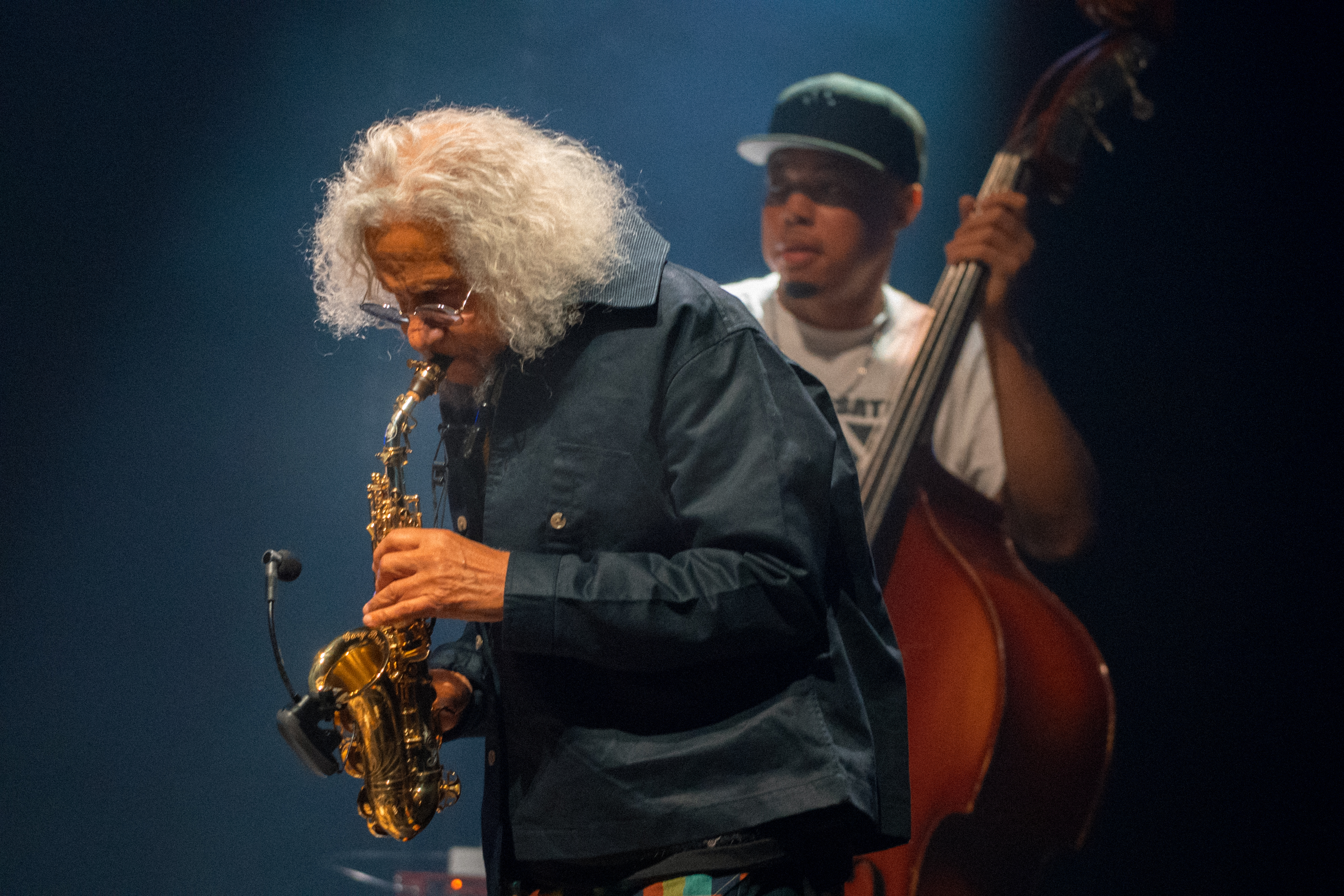
But it was special guest Gary Bartz who often took the limelight and ran with it. Looking like he had based his hairstyle on Doc from Back to the Future, the 85-year old began his contribution a little tentatively. I was a little concerned, as I have seen my fair share of jazz vets who no longer had the chop for a full-blown concert experience. No so Gary, who played with Miles in the early seventies (see Live-Evil) and led a pioneering fusion band called Ntu Troop (you’ll probably know Celestial Blues), and who showed here that he had the power and energy of a player half his age. Guest singer Ego Ella May also acquitted herself beautifully on two songs, including Croker’s Somethin’ which she sang on his album By the Way. I could have listened to more – but I guess I’ll have to catch one of her solo gigs.

         The concert ended back on solid Miles ground with Wayne Shorter’s Water Babies and a tender, acoustic Round Midnight that raised a few hairs on my neck, before Croker had the last word with his Hero Stomp. A couple of the two thousand plus audience expressed disappointment to me over a post-gig drink (they’d seen me taking notes) at the Croker-to-Miles ratio and the treatment of the sound. As someone who got on board with Miles at around Bitches Brew, I enjoyed the sonic manipulation which seemed entirely appropriate. After all, plenty of Miles’ music was heavily restructured in the studio by producer Teo Macero (look at the number of tape edits on the In a Silent Way album). I gave them my considered verdict on Theo’s mixtape: Miles would have loved it.

JACK BOND

It wasn’t until recently that I discovered that film director Jack Bond had died at the age of 87 on December 21st, 2024. It was a shock, because I had last spoken to him a couple of months ago on the phone, and he seemed as irrepressible as ever. We said we would meet up soon, but soon never came.

      I first met him back in the mid-nineties, when researching a short story for Esquire. It was about “Williams” the man who won the inaugural Monaco GP in 1929 and who later became a Special Operations Executive operative in wartime France, alongside two other talented race drivers – Robert Benoist and Jean-Pierre Wimille.

       I had begun my research by contacting Gervaise Cowell, the SOE Advisor to the Foreign & Commonwealth Office, an archivist role, SOE itself having been wrapped up with possibly undue haste at the end of WW2. Frustratingly, the files I obtained were heavily redacted. At the time I thought Cowell was simply being wilfully obstructive, although after his death in 2000 I discovered that he was something of a Smiley figure – he had been Our Man in Moscow in the early sixties. I think secrecy was in his blood.

      One day Valerie, who was Cowell’s assistant in the SOE office, called and told me someone else, a Jack Bond, was researching the same resistance circuit, at which my heart sank. (In fact, there were three of us – Joe Saward, whose non-fiction The Grand Prix Saboteurs book on the drivers is highly recommended – was already taking an interest.) Valerie offered me Jack Bond’s name and number. I rang him and he invited me to his office near the British Museum.

      Somehow (that word features a lot in any account of Jack’s career), somehow he had managed to persuade a well-known hotel chain to open a film division, with him in charge, and they funded the offices. The company’s first project was to be Early Morning, named after a painting by William Orpen, who was a character in the real-life story of Williams (in reality William Grover-Williams) and his wife Yvonne. It quickly became modified to Early One Morning.

       At that meeting Jack and I discussed the story. I had been chatting to Peter Howarth, my editor on Esquire, and had told him about my difficulties in extracting the exact facts from SOE. “Make it up,” he said. “we’ll publish it as fiction.” Which I did, and it appeared in Esquire as The Man with One Name. Jack wanted to do something similar but didn’t have a script. Would I write it?

       I had never tackled a sceenplay before, but Jack had, of course – he had a long string of successful projects behind him.

(See https://www.theguardian.com/film/2024/dec/24/jack-bond-cult-british-director-pet-shop-boys-collaborator-dies.)

What was he like? At that first encounter, he reminded me of a cross between Terence Stamp, Richard Harris and Ian McShane in Lovejoy (Jack loved a leather jacket). There was a disarming, almost rogue-ish charm and a sophistication about him that made you happy to be in his company. He was also a born storyteller, most of them tales drawn from a life well lived. There was always the feeling that here was a man who had enjoyed a rich and varied life, both creatively and personally, and that yours was somewhat dull in comparison.

       An accountant at the hotel company eventually asked Why have we got a film division? Good question. So, the offices and financing disappeared.  But we did write a script and its fate became another picaresque story among the many that dotted Jack’s life. It was bought by Granada Film who subsequently went bust – not because of how much they paid us, but due to the poor performance of several of its films. We went into the dreaded turn-around. At one point Jack phoned me and told me he had sold it on to an Irish film company that had never made a film. And, as it turned out, never would.

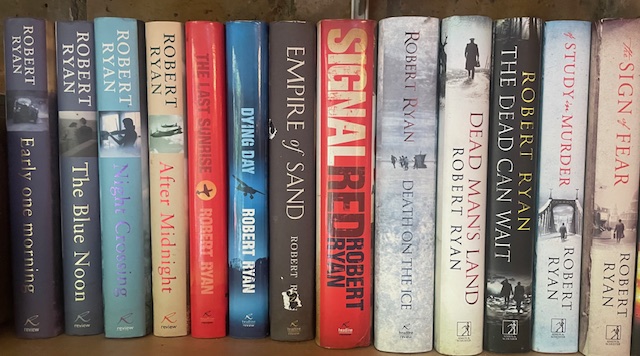
       Frustrated at the lack of progress, I decided, with Jack’s blessing, to combine the short story with some plot points from the script and produce a novel, also called Early One Morning. It was my fourth book, and the first to become a Sunday Times bestseller. I still get calls asking to option it as a movie and I have to explain that, thanks to its chequered history, it comes with some baggage.

       Jack carried on making films and I carried on writing books, but we would meet now and again to discuss ways to revive the project and Jack never lost the ability to surprise me. I remember us drinking a coffee on Wardour Street when an elegant 1960s Bentley glided by. “I used to have one of those,” Jack said. “When?” I asked. “When I was a millionaire,” came the reply.

       But that’s another story for another time. Goodbye, Jack.

*The picture of Jack was taken by his partner, cinematographer and photographer Mary-Rose Storey