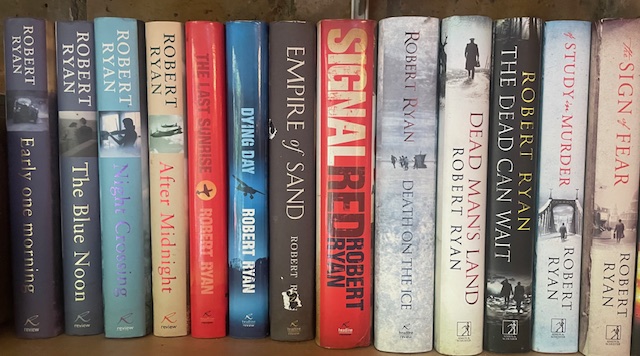
Tag Archives: Books

SPOILT FOR CHOICE

It’s that tense time of year again. The EFG London Jazz behemoth is rolling into town and bringing with it a multitude of artists playing across town and stressful decisions as to which show to see, given that there are multiple gigs every night from November 13-22 – more than 300 performances in total (see https://efglondonjazzfestival.org.uk/whats-on for the full, head-spinning programme). Choosing can be overwhelming for an indecisive Libran like me, especially with so many clashes. There is also a danger than some smaller gigs will get overshadowed by the Big Guns, like bass legend Dave Holland playing the music of Kenny Wheeler at Kings Place on November 22 (https://www.kingsplace.co.uk/whats-on/efg-london-jazz-festival/) or Branford Marsalis and Dianne Reeves re-casting the music of John Coltrane and Johnny Hartman on November 21 (https://www.britishairwaysarc.co.uk/event/branford-reeves/). So, here is a selection of shows you might have missed.

Trombonist/composer/producer Rosie Turton is playing the Green Note on Parkway on Wednesday November 18. I first came across Rosie with the pioneering band Nerija, making joyous music as if she hadn’t just got off a plane from India. I still play her 5ive album and especially like her vinyl EP Expansions and Transformations Parts I & II.  She has since added modular synths to her armoury (and acquired an alias for some projects –Nomieye). At the Green Note she’ll be performing with Swedish-Eritrean vocal artist Miryam Solomon (the pair are shown below), showcasing the ambient/improvised music from their impressively immersive album maar. Details: https://www.greennote.co.uk/production/efg-london-jazz-festival-presents-rosie-turton-miryam-solomons-maar/

On November 15 in-demand producer/songwriter/guitarist Dave Okumu takes to the stage at Islington’s Union Chapel with a programme called “Music That Changed the World”. It will range from Nina Simone through Sly Stone to Prince, D’Angelo, and Kendrick Lamar, all refracted through a jazzy, contemporary lens, with a choir led by ESKA and Alice Hill swelling the ranks. Okumu, incidentally, has a done a brilliant production job on singer NAO’s new soul/jazz album, Autumn, bringing along his best guitar chops too.

Luca Boscagin is another talented guitarist, who performs as part of Irene Serra’s ISQ project, which she describes as “alt pop, noir jazz and electronic textures”. Irene (below) has been recommended to me by none other than Ian Shaw, a premier jazz singer and mentor /tutor to many a vocalist. She has a highly engaging new album out, The Silence is Deafening, which explores her own backstory (a mother who left Sicily for Milan – where Irene was born – and then Copenhagen when Irene was two and who played Frank Sinatra, Nat King Cole, Mina and other classic Italian singers on heavy rotation) as well as universal themes of identity, migration and womanhood (see https://www.isqmusic.com). Irene brings ISQ to the Cufford Room at Cadogan Hall on November 19 as part of the festival and the Hall’s excellent “Out to Lunch” series. Underpinning Irene’s tunes is Richard Sadler on double bass, a very lyrical yet incisive player who was a founder member of the Neil Cowley Trio in its first incarnation. Note the stage time of midday and that a standing is free, seating is a fiver. Book on: https://cadoganhall.com/whats-on/otl-isq/book/1366234/.

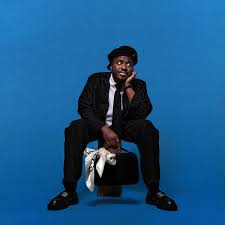
Jazz Voice, the London jazz Festival’s opening gala, is on November 13, and features the fabulous young vocalist Tyreek McDole (below; he is also playing the Lower Third on November 16), alongside Emma Smith, Lizz Wright and many more, all presented by Jumoké Fashola.
As always the show is masterminded by arranger and trumpeter Guy Barker, although this year he also has a gig of his own in the splendid setting of Smith Square Hall (formerly St John’s Smith Square), a Grade I listed 18th century Baroque masterpiece in Westminster. There, on November 19, he will be conducting the Spirit of Django suite, his orchestrations of themes by guitarist Martin Taylor and explored by the Guy Barker Big Band and the Sinfonia Smith Square along with Taylor himself. It features tunes Django would have played, those he might have played if he were around today, and a charming (musical) guest appearance by Jacques Tati’s M. Hulot. It’s far more than swinging gypsy jazz – although that features of course – and packs an emotional punch in the section dedicated to Taylor’s late son. See https://www.sinfoniasmithsq.org.uk/event/spirit-of-django/.

One of my favourite parts of the festival for the past couple of years has been hanging out at the Jazz Social, near the Barbican. It opens on November 9 (i.e. before the official launch) and hosts a pop-up Blue Note record store, live concerts, DJ sets, live radio broadcasts, and entertaining jazz-themed talks. The latter include “Five Essential Blue Note Albums” (November 10) and, on November 12, “The Magic of Live” – what makes a great live album? See https://efglondonjazzfestival.org.uk/thejazzsocial.

JACK BOND

It wasn’t until recently that I discovered that film director Jack Bond had died at the age of 87 on December 21st, 2024. It was a shock, because I had last spoken to him a couple of months ago on the phone, and he seemed as irrepressible as ever. We said we would meet up soon, but soon never came.

      I first met him back in the mid-nineties, when researching a short story for Esquire. It was about “Williams” the man who won the inaugural Monaco GP in 1929 and who later became a Special Operations Executive operative in wartime France, alongside two other talented race drivers – Robert Benoist and Jean-Pierre Wimille.

       I had begun my research by contacting Gervaise Cowell, the SOE Advisor to the Foreign & Commonwealth Office, an archivist role, SOE itself having been wrapped up with possibly undue haste at the end of WW2. Frustratingly, the files I obtained were heavily redacted. At the time I thought Cowell was simply being wilfully obstructive, although after his death in 2000 I discovered that he was something of a Smiley figure – he had been Our Man in Moscow in the early sixties. I think secrecy was in his blood.

      One day Valerie, who was Cowell’s assistant in the SOE office, called and told me someone else, a Jack Bond, was researching the same resistance circuit, at which my heart sank. (In fact, there were three of us – Joe Saward, whose non-fiction The Grand Prix Saboteurs book on the drivers is highly recommended – was already taking an interest.) Valerie offered me Jack Bond’s name and number. I rang him and he invited me to his office near the British Museum.

      Somehow (that word features a lot in any account of Jack’s career), somehow he had managed to persuade a well-known hotel chain to open a film division, with him in charge, and they funded the offices. The company’s first project was to be Early Morning, named after a painting by William Orpen, who was a character in the real-life story of Williams (in reality William Grover-Williams) and his wife Yvonne. It quickly became modified to Early One Morning.

       At that meeting Jack and I discussed the story. I had been chatting to Peter Howarth, my editor on Esquire, and had told him about my difficulties in extracting the exact facts from SOE. “Make it up,” he said. “we’ll publish it as fiction.” Which I did, and it appeared in Esquire as The Man with One Name. Jack wanted to do something similar but didn’t have a script. Would I write it?

       I had never tackled a sceenplay before, but Jack had, of course – he had a long string of successful projects behind him.

(See https://www.theguardian.com/film/2024/dec/24/jack-bond-cult-british-director-pet-shop-boys-collaborator-dies.)

What was he like? At that first encounter, he reminded me of a cross between Terence Stamp, Richard Harris and Ian McShane in Lovejoy (Jack loved a leather jacket). There was a disarming, almost rogue-ish charm and a sophistication about him that made you happy to be in his company. He was also a born storyteller, most of them tales drawn from a life well lived. There was always the feeling that here was a man who had enjoyed a rich and varied life, both creatively and personally, and that yours was somewhat dull in comparison.

       An accountant at the hotel company eventually asked Why have we got a film division? Good question. So, the offices and financing disappeared.  But we did write a script and its fate became another picaresque story among the many that dotted Jack’s life. It was bought by Granada Film who subsequently went bust – not because of how much they paid us, but due to the poor performance of several of its films. We went into the dreaded turn-around. At one point Jack phoned me and told me he had sold it on to an Irish film company that had never made a film. And, as it turned out, never would.

       Frustrated at the lack of progress, I decided, with Jack’s blessing, to combine the short story with some plot points from the script and produce a novel, also called Early One Morning. It was my fourth book, and the first to become a Sunday Times bestseller. I still get calls asking to option it as a movie and I have to explain that, thanks to its chequered history, it comes with some baggage.

       Jack carried on making films and I carried on writing books, but we would meet now and again to discuss ways to revive the project and Jack never lost the ability to surprise me. I remember us drinking a coffee on Wardour Street when an elegant 1960s Bentley glided by. “I used to have one of those,” Jack said. “When?” I asked. “When I was a millionaire,” came the reply.

       But that’s another story for another time. Goodbye, Jack.

*The picture of Jack was taken by his partner, cinematographer and photographer Mary-Rose Storey

THE (SLIGHTLY) NERVOUS TRAVELLER: KIMBERLY McCREIGHT

Kimberly McCreight, 40, is the author of Reconstructing Amelia (Simon & Schuster), which has been compared (by The Sunday Times and Jodi Picault) to ‘Gone Girl’. She originally trained as a lawyer but realized she was in denial about being a writer, so left to pursue that career. Reconstructing Amelia is her fifth written novel, but the first to be published. Married with two daughters (6 and 9), she lives in Park Slope, Brooklyn, New York.

6452053

I never travelled as a child. I was brought up in the Tri-State area around New York, my parents were divorced, and we just didn’t get away much. So, as an adult, I was determined to make travelling a part of my life. The first chance I had to go abroad was to Japan when I was at college, to a small town between Osaka and Kyoto. Talk about a baptism of fire. But it was a fabulous experience. I was studying, but also got to do some touristy things – I climbed Mount Fuji. What I didn’t realise was, it’s a proper mountain. It was in the guidebook as a ‘must-do’, so I thought: how hard can it be? Well, it’s a tough climb and there is snow at the top and you really shouldn’t do it in running sneakers. My feet ached for days. I was walking like a Geisha. Lesson one of travelling for me: always double-check whatever the guidebook recommends.
I lived in London for a year when my then fiancé and now husband came to study. What I loved about being in the UK was how you could zip off to other countries so easily. I don’t think you appreciate that here. So we went to France, Italy, even Russia. That’s another thing I learned: don’t try and do St Petersburg on a budget. It was beautiful and fascinating, but we definitely weren’t prepared for the expense.
I am also trying to give my kids the chance to travel, because I do feel I missed out on seeing other cultures when I was young. One of my daughters has a fear of flying, which I think she got from me – I have a mild form. When we were on honeymoon in South Africa, I realised how small the plane was going to be taking us up to the Kruger – you could wind the windows down, for goodness sake – and I had to go to the doctor and get tranquilizers to get onboard. It was worth it, though. I have never been to a place that made me feel so insignificant. Not just the animals, but also the scale of it – one tree standing on an enormous horizon beneath an even larger sky. I can’t wait to go back.
We’ve fortunate in that neither of the girls are ‘Princess’ types, so we don’t get Disney pressure. It’s not much talked about as school, which is just as well – it’s such an expensive vacation. I looked at how much and then said: you know, we can go to the South of France for the same number of dollars. So we’ve just come back from Provence, although it was a challenge persuading my daughter about the flight. But by the time we got there, she was ‘what’s all the fuss about?’ She is also a very picky eater and I think it’s great to get children out of their comfort zone and into eating different foods. I told her she couldn’t afford to be fussy in France. Neither my husband nor I speak very good French, so I said we’ll be lucky if we get something that isn’t snails, and it worked, she tucked in.
We also try and go skiing every year. My husband is a very good skier and I’m.. not. But I try and hide that from the kids when we are teaching them. ‘You follow, dad, I’ll be right behind’ kind of thing. Normally, we ski on the East Coast, but last year we went to Vail in Colorado. It’s better in a number of ways. It’s less icy than the in East and it’s much less crowded on the slopes. Which means I can look like I know what I am doing – it’s much easier to fool the kids on the wide, empty slopes.
We are lucky because we can leave the children with the in-laws and get away by ourselves for short breaks. Often, though, we just stay in the city and do a show and restaurants. But a few years back we went to Costa Rica, which I love – it’s so lush and both the animals and the people are wonderful. We didn’t make the coast, but stayed in the centre, around the volcano. It was actually my second time there. After college I had backpacked there down through Mexico with a friend. Two girls backpacking alone in Central America – what were we thinking? Nothing bad happened, but the hassle was constant and relentless. We definitely had hassle fatigue by the time we had finished the trip. And again I made the mistake of believing the guidebook, that climbing the Chichen Itza pyramid on the Yucatan was easy. That thing is steep. I got to the top and thought: there’s no way I am ever going to get down.
I’m not very good with beaches. My husband is OK. In St Thomas in the Caribbean I kept insisting we go into town for dinner. Which was usually disappointing for one reason or another – I simply didn’t realise, that’s not really what you do in the Caribbean. It’s a beach holiday. Just stay put at the hotel. But I like a little adventure. So the next big trip is probably Macchu Picchu or possibly Kilimanjaro. That’s more climbing iconic sites – but this time, I’ll check what footwear I need.

* Kimberly McCraight talked to Robert Ryan

AN (OLD) CHAT WITH IAIN BANKS

This piece is of an age now, not long after Iain had ripped up his passport in an anti-Blair protest, but I still remember it as one of my favourite interviews with another author, even though we never really got onto books (at least not on the record: it was for ‘My Hols’ in the Sunday Times) and remembering it made the news about his illness all the more sad and depressing.

“There was no great moment of epiphany, no blinding light when I decided it was time to go ‘green’. It was more like a straw that broke the camel’s back. Perhaps it was thirty years of reading New Scientist, which has been going on about global warming for all that time, but one day one of the cars needed an MOT and I thought: why don’t I just get rid of them?
In some ways I felt like I’d got the fast cars out of my system and the same is possibly true of travelling. I have a fair number of miles under my belt. I do love driving, especially on holiday. One of the best trips I ever had was Highway One from Los Angeles to San Francisco. I hired a car and it was a terrible thing. It would change gear at the slightest incline and start labouring like I was asking it to go up a cliff. But I ended up really enjoying the journey, because the views were so wonderful and driving next to the ocean just can’t be beat. And if you are driving fast and concentrating, you miss all that, you daren’t take your eyes off the road. I have even found that in Scotland, having a slower car means I take in a lot more of my surroundings. And the scenery is the thing here, of course.
Another wonderful driving experience, again in the USA, was when I did a drive-away. That’s when you drive someone else’s car from one side of the States to another, because they have moved and want to take it with them. I had an uncle, a mate of my dad’s rather than a blood relative, in Washington DC and I flew there, then picked up a car to be delivered to Los Angeles. You had to do six hundred miles a day, which is no small amount, but it was a wonderful feeling, Highway 40 all the way, the ultimate open road. You hit Tulsa, Oklahoma City, Amarillo, Albuquerque, all these great places, although you didn’t have much time to do much other than get out and stretch your legs. I did make a small detour for the Grand Canyon, though, but still got it there on time and with less than maximum permitted miles.
I enjoy travelling alone. Perhaps because I am an only child, I am happy with my own company. The first couple of times I went abroad was either side of my time at Stirling University, when I hitched in Europe. I’d read somewhere a single man travels faster – although, of course, a single women travels even further – and so I went by myself. Like all those kind of trips, it is probably better in recollection than it was at the time, but I enjoyed it and I didn’t have any scrapes or misadventures. I am naturally suspicious, so I didn’t take sweets from any strangers or anything like that.
I have never really enjoyed very hot countries. I don’t like the heat. Anything over sixty is a heatwave as far as I am concerned. For me the tropics begin somewhere around Nottingham. It’s genetic, I’m sure: my dad is very pale skinned and when he was younger he had red hair, so he’s not big on sun either. Friends have pushed me to holidays on the Greek Islands and Gran Canaria and the Algarve. I even did a Nile cruise Egypt, but I spent most of the time lying in the shade panting like a dog.
So for the past few years my holidays have been on Barra, jewel of the Outer Hebrides, and they probably would have been, passport or no. It’s perfect for me – quiet, no great social scene, good walking and wonderful beaches where you can just stare out over the Atlantic. At night you go to sleep with the sound of those waves in your ears.
[In response to a question about not flying and selling his collection of fast cars for a hybrid:] I don’t have any kids but plenty of my friends do, and I’d like to be able to look them in the eye and say: yes, my generation did do this, we did screw up the planet, but at least some of us have made a start, no matter how small, on trying to do something about it.”