Monthly Archives: June 2026

RUN VERA RUN

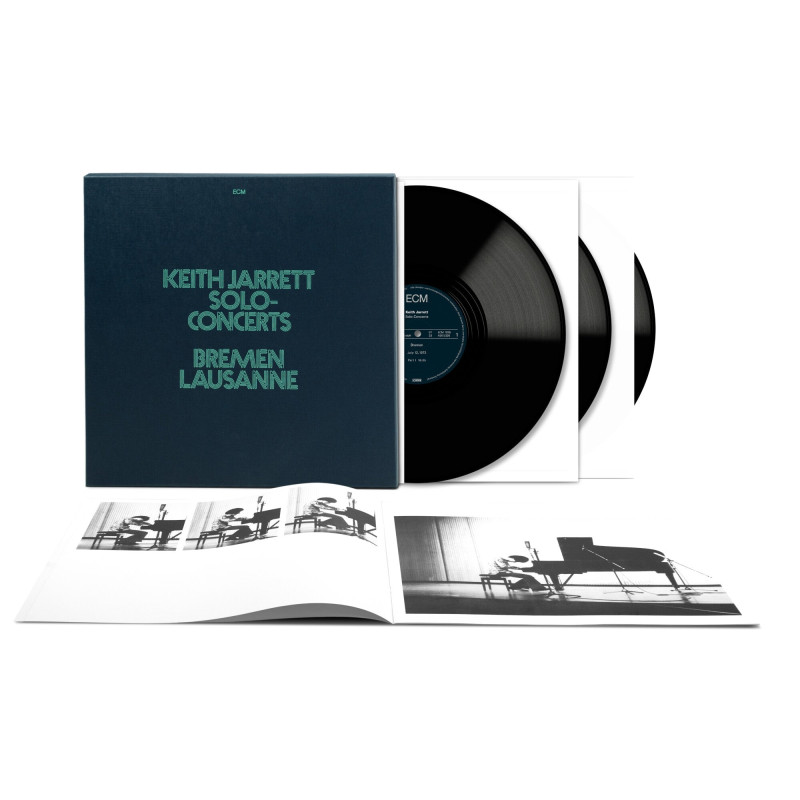
I came late to Keith Jarrett’s Köln Concert, both on record and, slightly less tardily, on film. The disc, on Manfred Eicher’s ECM Records, is the best-selling solo jazz record of all time. And I haven’t got it. Or at least I didn’t have it for ages – I actually bought it on CD about six years ago. I’m not sure why I didn’t get it sooner, given its status. When it came out just over five decades ago, I was already semi-collecting ECM, with records by Dave Holland, Terje Rypdal, Ralph Towner, Gary Burton and Dave Liebman in my jazz rack. But Jarrett’s 1973 Bremen/Lausanne boxed set was also in there – three albums of solo piano improvisations that must have cost me a pretty penny at the time. Perhaps when Köln came along two years later, I thought shelling out for more of the same (although I did get the point that it wasn’t always the same with Jarrett) felt like overkill. After all, I rarely played all six sides of my triple set.
         Since then, of course, the story of the concert at the Köln Opera House has become the stuff of jazz legend. How it was put on by an eighteen-year-old girl (albeit it a very precocious one who had also promoted gigs for Ronnie Scott in Germany) with money borrowed from her mother, how Jarrett was sleep-deprived and in pain from a bad back and completely out of sorts, even before he saw the broken down, out-of-tune baby grand (as opposed to the promised Bösendorfer Grand Imperial) that he was expected to play in front of 1300 people.
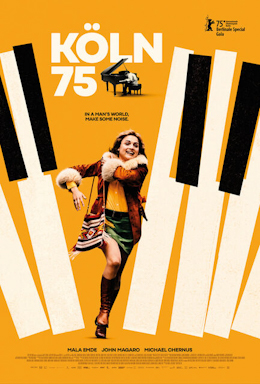
         This tale forms the basis of Köln 75, the movie version of how Vera Brandes pulled off the seemingly impossible task of persuading Jarrett to go on and make jazz history, which I have only just caught up with, a few weeks after its release. I’m not going to dissect the plot any further here. If you don’t know the story, you are in for a bit of a treat; if you do, well, I am sure liberties have been taken with the facts, but it still manages to ramp up the tension even if you know the end result. This is helped by an energetic, explosive performance from Mal Emde as young Vera, who take the final act into manic Run Lola Run territory. Kudos too for John Magaro, who gives us a believable Keith Jarrett, although I found Michael Chemus as jazz writer Mick Watts very annoying, especially his asides to cameras to bring the viewer up to speed on jazz history and improvisation. But maybe all jazz writers, by definition, are annoying.
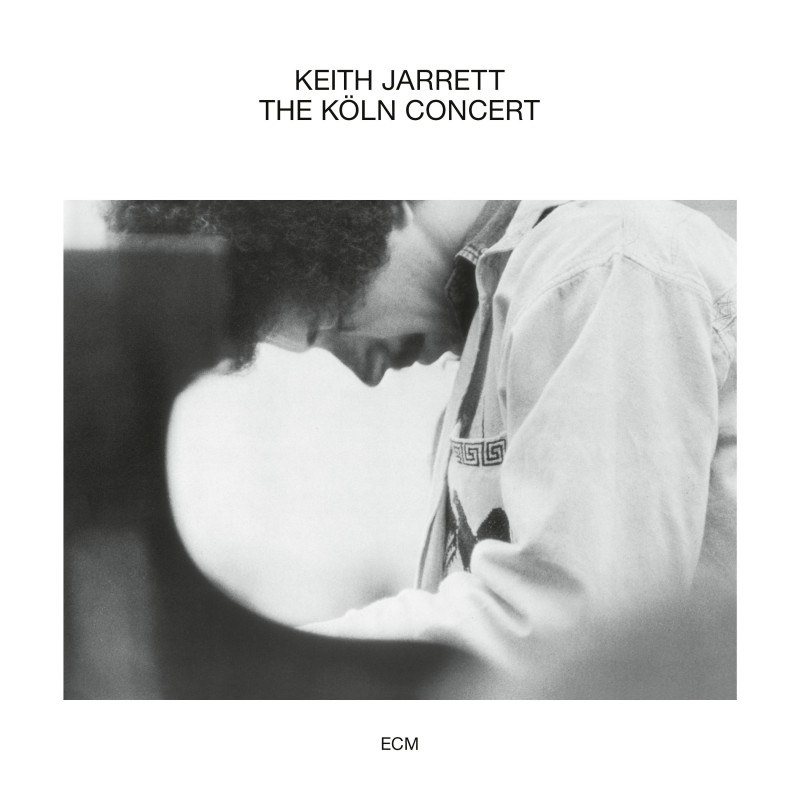
         Overall, though, Köln 75 is a better than average music biopic that avoids most of that genre’s pitfalls, helped by the fact that, in essence, it is Vera’s story. Much has been made of one rather glaring omission – there is none of the music from that Köln concert in the movie. The filmmakers could not get the rights. But had they secured them, what were they meant to do? Play snippets? Or use all of it and lengthen an already slightly over-long film by an hour? The whole point of Jarrett’s improv is his (and the audience’s) total immersion in the process and part of the pleasure in listening to the album is trying to figure out here he is going next, not in sampling it here and there. So, in the absence of a true soundtrack, Köln 75 sends you right back to listen to the ECM recording of that night. So, in one sense, it’s job done.
THE OUT CROWD

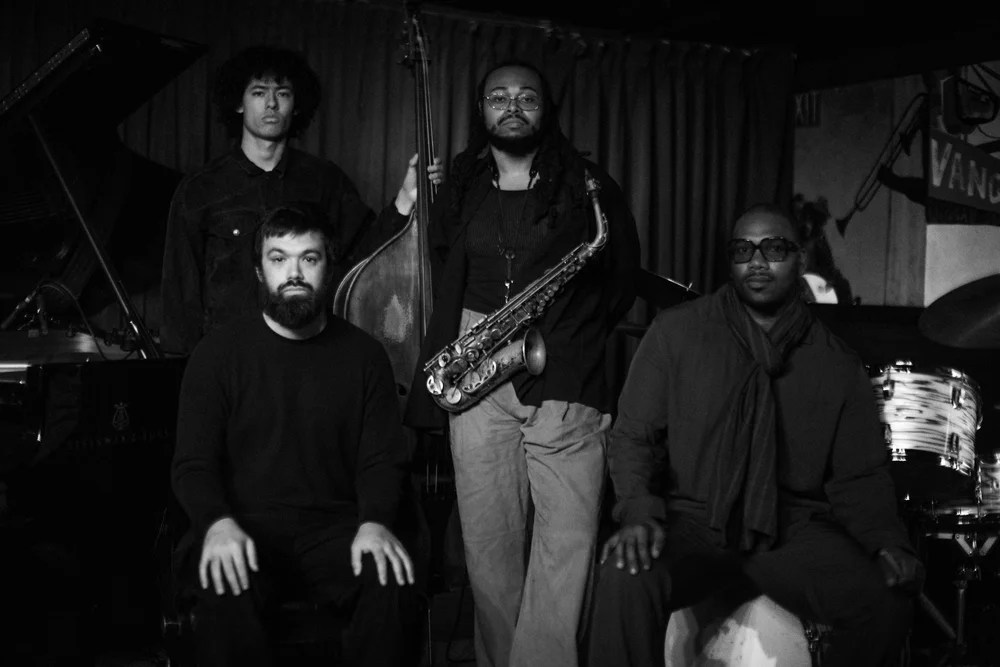
Two heavyweight US players are over here next month, both of whom really do sometimes frighten the horses with the intensity of their performances. Altoist Immanuel Wilkins is part of the informal Blue Note “house band” – a pool of players who often appear on each other’s albums, including Joel Ross on vibes, Marquis Hill on trumpet and Kendrick Scott on drums. His latest release is Live at the Village Vanguard Vol. 1, echoing similarly titled classics by Bill Evans, John Coltrane, Paul Motian and dozens of others. It is a powerful document of the joy of long-form improvisations, knotty and muscular in places, surprisingly lyrical in others, interspersed with passages of hypnotic, repetitive beauty. Wilkins and his quartet appear at the Jazz Café on Saturday July 18 and it’ll be quite the evening, just don’t bring any horses. Or improvised jazz agnostics. https://thejazzcafe.com/event/immanuel-wilkins-quartet/?accept=true.

        Immanuel Wilkins Quartet

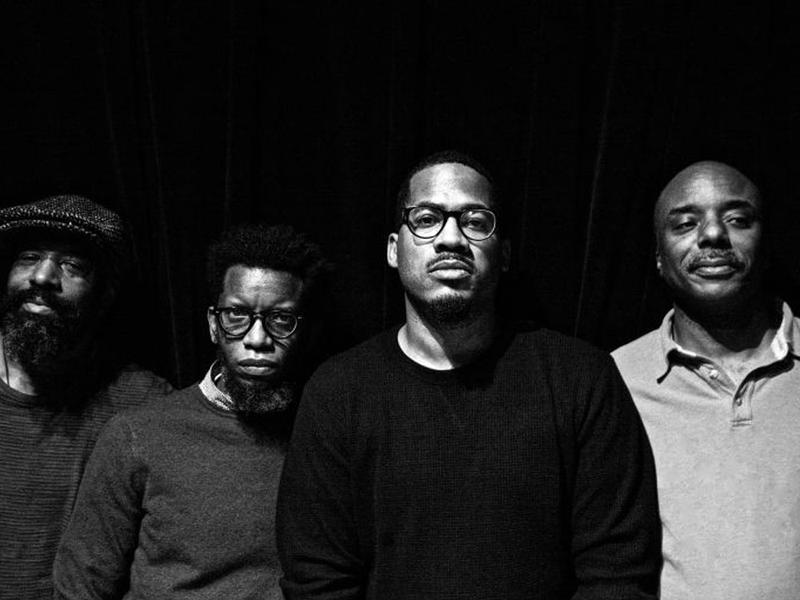
 Also coming to London, where he performs more regularly than Wilkins, is James Brandon Lewis. He is another player not afraid to go “out” (or even “out out”). His output varies from concept albums (the wonderful Jessup Wagon, about a 19th Century black agriculturist and educator, and the fractured gospel of For Mahalia With Love), through bold sonic explorations (Abstraction is Deliverance; Apple Cores) to hard-hitting but highly listenable punk-funk-jazz (The Messthetics and James Brandon Lewis). He is playing two nights at the home of left field music, Café Oto over in Dalston, so will probably bring his more tumultuous side to the proceedings, but I’ve seen him three times now and he has never failed to exhilarate – even when the music swerves into uncharted territory, the listener is always aware of a fierce intelligence at work. Details: https://www.cafeoto.co.uk/events/james-brandon-lewis-quartet-two-day-residency/.

      James Brandon Lewis, above (photo by Thomas Sayers Ellis )

 Saxophonist and composer Alex Hitchcock is a London-based player who has spent time finding pastures new and fresh growth in the vibrant and highly completive NYC scene. He brings the results – complex, sometimes off-kilter compositions, always accessible, always delivered with passion and integrity – to Kentish Town’s Bull & Gate on Monday June 22, with selections from his album Letters from Afar. Full listing for the rest of June, including Alex: https://jazzattheparakeet.com/.

        A more familiar jazz landscape, perhaps, is explored by young Sam Braysher who hefts his honey-toned horn to the Pizza Express on July 2 to launch a new album called A Sinner Kissed an Angel. It is a collab with Amsterdam guitarist Linus Eppinger plus drummer Eric Ineke and consummate bassist Darryl Hall (no, not of “& Oates” fame, but a regular with the likes of Ravi Coltrane). It includes music by Horace Silver, Frank Sinatra, Dusty Springfield, Nat King Cole and Benny Goodman. The album has a warm, inviting, live-in the-studio feel, with the band totally relaxed playing in and around material they clearly cherish, perhaps not re-inventing the jazz wheel, but certainly giving it a damn good polish. Tickets to hear it live: https://www.pizzaexpresslive.com/whats-on/sam-braysherlinus-eppinger-quartet.


A quick non-sax local gig to mention. Expat Canadian singer Lauren Bush, now based in London, has gradualy been building a name for herself the old-fashioned way – by gigging, with both her own shows and guests slots with the likes of Ian Shaw. She is at Tufnell Park’s Aces & Eights on June 20 as part of the latest Red Desert Sessions. She will appear alongside fellow vocalist Angela Chan, singer/songwriter/drummer/host Eleonora Claps, Guillermo Hill on guitar and Andy Hamill on bass. Expect sophisticated jazz standards and smart originals, all for just £15. Tickets: https://www.eventbrite.co.uk/e/red-desert-music-presents-lauren-bush-angela-chan-eleonora-claps-tickets-1989185427160.

MASTERS OF SAX

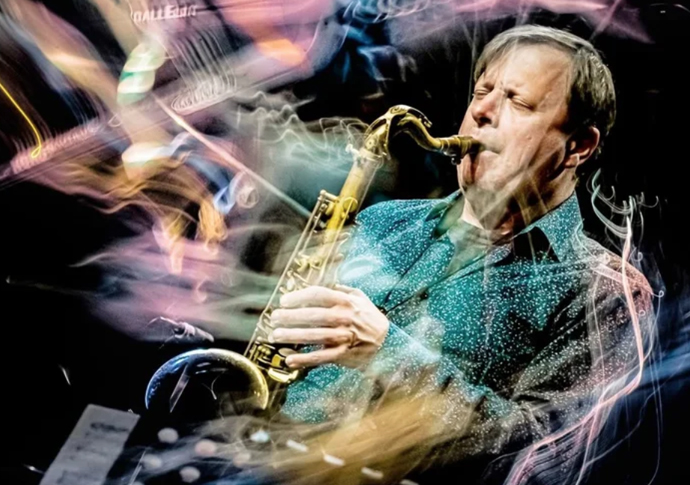
IN the week that we lost Sonny Rollins, that titan of the tenor, I went down to Ronnie Scott’s to catch one of his acolytes, Chris Potter, who has said that he learnt his approach to rhythm, phrasing and storytelling from studying Rollins.

This was a Downstairs gig for once, in the room that, much as I admire and enjoy the new Upstairs, still retains the lion’s share of Ronnie’s magic.

Chris Potter [Robert Ifarelli]

Potter acknowledged the passing of the saxophone colossus by announcing: “Long Live Sonny Rollins” to whoops and cheers from the sell-out crowd (which included a smattering of fellow sax players, including Bowie’s late career horn man of choice, Donny McCaslin, at the bar).

Soweto Kinch recently called one track of Potter’s he played on his Round Midnight Radio 3 show a “message from the summit of Mount Saxophone”. In a stripped-down trio setting (Matt Brewer on bass, Kendrick Scott on drums, both afforded plenty of space to shine), it certainly felt like we were at peak sax: Potter was on blistering, questing and yet playful form.

The sound was warm and textured, the technique mind-blowing, the soundscape switched around by Potter using the bass clarinet and even the piano.

Given how Potter paced his solos, building narrative, sometimes unaccompanied, hinting at classic tunes, the spirit of Rollins was definitely in the room.

Potter has a bold new album out, Alive With Ghosts Today on Edition records, a piece inspired by the legendary abolitionist John Brown, whose body famously lay a-mouldering after he was hanged.

Unlike many such concept records, it is neither portentous or over-sombre, although, unlike the live trio I saw, it is an ensemble piece, featuring really exemplary work from guitarist Bill Frisell (plus deft contributions from clarinet, trombone and violin) as well as agile excursions and deep, groove-heavy blues from the leader.

Give Alive with Ghosts Today and the earlier Got the Keys to the Kingdom: Live at the Village Vanguard a listen: together they will elevate Potter to one of your favourite sax men.

As is sometimes the way with jazz, there wasn’t much from the new record – Potter announced the trio would mainly playing new material for a planned studio session. Can you imagine a rock or pop band saying that? He did, however, essay my favourite track from the album, the pleasingly polyrhythmic Into Africa. It was, of course, a different beast without the bigger band, but still exhilarating.

And then, for the final number, a sprightly tune called Huckleberry, the aforementioned Donny McCaslin (who has his own hard-hitting Edition record, Lullaby for the Lost) came on stage, horn in hand, and, with his more angular, abrasive sound, thrillingly transported us to an old-school Lower East Side blowing session.

Potter responded with bravura runs, peppered with swoops, flurries and squeaks, all without losing his signature warmth and strangle-hold on melody.

They ended up trading sharp, punchy phrases, a cutting contest with no blood drawn, just big grins. It was sublime, spontaneous jazz at its best.

Potter, incidentally, is returning to Ronnie’s with multi-Grammy winning-pianist Gonzalo Rubalcaba and a killer rhythm section of Larry Grenadier on bass and Eric Harland on drums on July 18 (www.ronniescotts.co.uk/find-a-show/first-meeting). I’ll be there for that, too.

Another favourite sax player of mine, the lyrical Jean Toussaint (Grammy award winner and ex-member of Art Blakey’ Jazz Messengers) features in an ambitious project at Kings Place that explores the consequences of the black diaspora created by slavery, albeit one closer to home: the legacy of the Windrush Generation.

Windrush Day is June 22 and three days later north Londoner an Ivor Novello-award winner Renell Shaw (of Rudimental, Emeli Sandé and much, much more, including multiple theatre credits) will present his two ambitious, multi-faceted albums, The Windrush Suite and Echo In The Bones. We are promised “more than a concert”, something closer to a “sensory experience” involving jazz, rap, spoken word and hip-hop.

If the A-list talent on stage is anything to go by – the amazing Ayanna Witter-Johnson on cello (above), Orphy Robinson on vibes, trombonist Nathaniel Cross (tuba star Theon’s brother), swing-out-sister Romana Campbell on drums plus Toussaint – it should be quite the event.

I’ll be reporting back on it and the projected third volume of the piece due later this year. Meanwhile, get tickets here: www.kingsplace.co.uk/whats-on/jazz/renell-shaw-the-windrush-suite-echo-in-the-bones/