
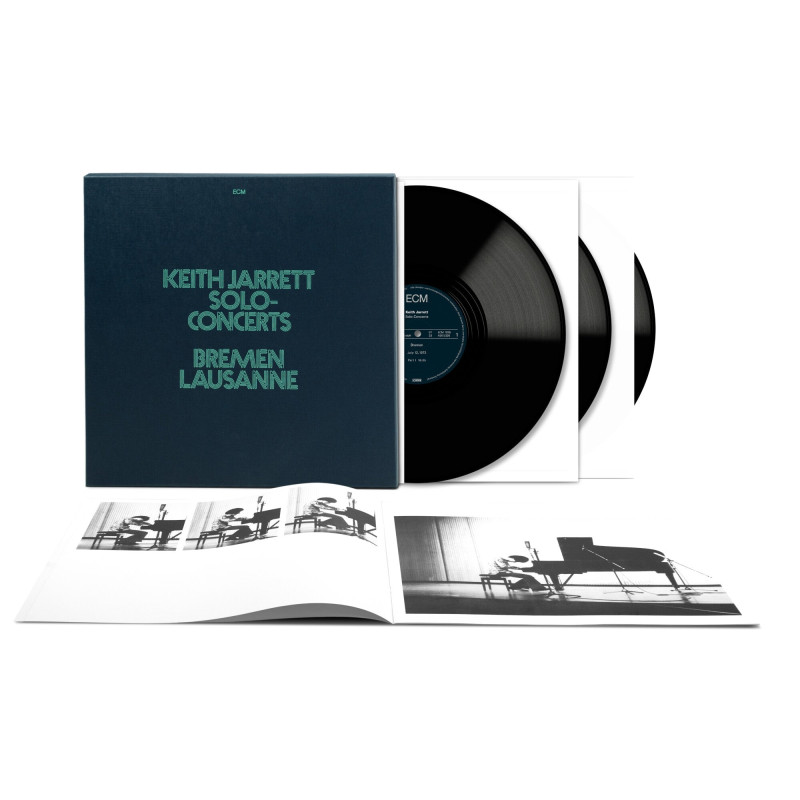
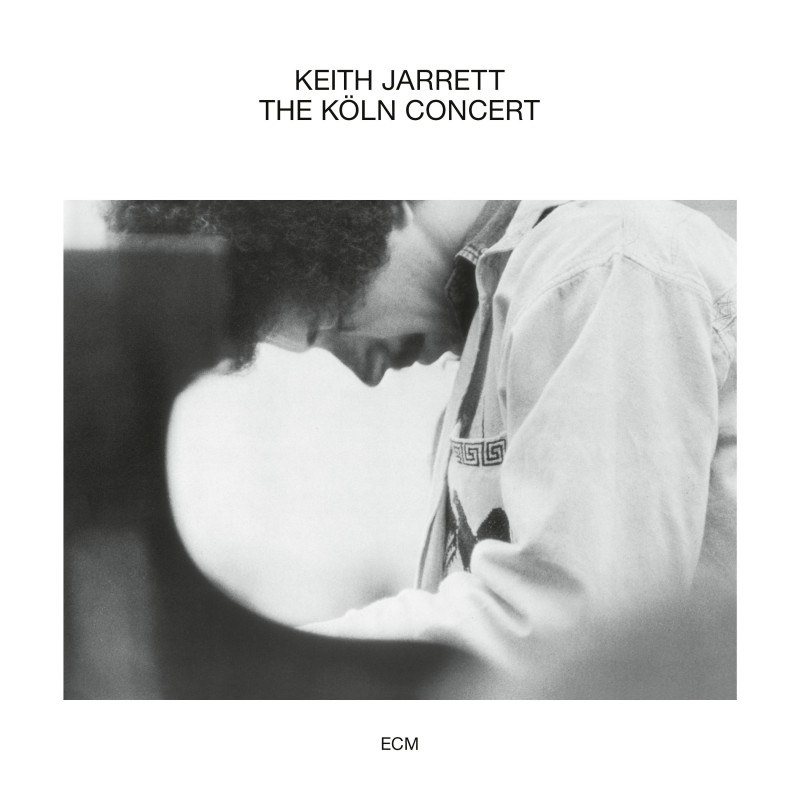
I came late to Keith Jarrett’s Köln Concert, both on record and, slightly less tardily, on film. The disc, on Manfred Eicher’s ECM Records, is the best-selling solo jazz record of all time. And I haven’t got it. Or at least I didn’t have it for ages – I actually bought it on CD about six years ago. I’m not sure why I didn’t get it sooner, given its status. When it came out just over five decades ago, I was already semi-collecting ECM, with records by Dave Holland, Terje Rypdal, Ralph Towner, Gary Burton and Dave Liebman in my jazz rack. But Jarrett’s 1973 Bremen/Lausanne boxed set was also in there – three albums of solo piano improvisations that must have cost me a pretty penny at the time. Perhaps when Köln came along two years later, I thought shelling out for more of the same (although I did get the point that it wasn’t always the same with Jarrett) felt like overkill. After all, I rarely played all six sides of my triple set.
Since then, of course, the story of the concert at the Köln Opera House has become the stuff of jazz legend. How it was put on by an eighteen-year-old girl (albeit it a very precocious one who had also promoted gigs for Ronnie Scott in Germany) with money borrowed from her mother, how Jarrett was sleep-deprived and in pain from a bad back and completely out of sorts, even before he saw the broken down, out-of-tune baby grand (as opposed to the promised Bösendorfer Grand Imperial) that he was expected to play in front of 1300 people.
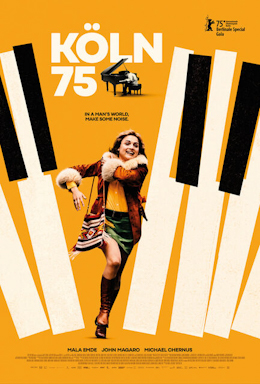
This tale forms the basis of Köln 75, the movie version of how Vera Brandes pulled off the seemingly impossible task of persuading Jarrett to go on and make jazz history, which I have only just caught up with, a few weeks after its release. I’m not going to dissect the plot any further here. If you don’t know the story, you are in for a bit of a treat; if you do, well, I am sure liberties have been taken with the facts, but it still manages to ramp up the tension even if you know the end result. This is helped by an energetic, explosive performance from Mal Emde as young Vera, who take the final act into manic Run Lola Run territory. Kudos too for John Magaro, who gives us a believable Keith Jarrett, although I found Michael Chemus as jazz writer Mick Watts very annoying, especially his asides to cameras to bring the viewer up to speed on jazz history and improvisation. But maybe all jazz writers, by definition, are annoying.
Overall, though, Köln 75 is a better than average music biopic that avoids most of that genre’s pitfalls, helped by the fact that, in essence, it is Vera’s story. Much has been made of one rather glaring omission – there is none of the music from that Köln concert in the movie. The filmmakers could not get the rights. But had they secured them, what were they meant to do? Play snippets? Or use all of it and lengthen an already slightly over-long film by an hour? The whole point of Jarrett’s improv is his (and the audience’s) total immersion in the process and part of the pleasure in listening to the album is trying to figure out here he is going next, not in sampling it here and there. So, in the absence of a true soundtrack, Köln 75 sends you right back to listen to the ECM recording of that night. So, in one sense, it’s job done.

