Tag Archives: music

DEDICATED TO HIM..AND WE WERE LISTENING

Soft Machine

Ronnie Scott’s 10th April 2024

This review first appeared in the Camden New Journal

My wife suggested that a vanishingly small number of readers would appreciate the headline to this piece. So, here goes – it is a play on a track called Dedicated To You.. But You Weren’t Listening on Soft Machine Volume Two (also used for the title of an album by the Keith Tippet Group, which featured Softs men Elton Dean and Robert Wyatt). It came to mind because guitarist John Etheridge of this parish (you may see him crossing the Heath most days), and the de facto frontman of the current Softs line-up, dedicated the band’s performance on Wednesday night to long-term, masterly drummer John Marshall, who played his final gig at Ronnie’s last year with the band and died in September 2023. Marshall wasn’t actually on Volume Two or the Tippett album but the latter in particular is a masterpiece of the kind of jazz-rock that Marshall excelled at.

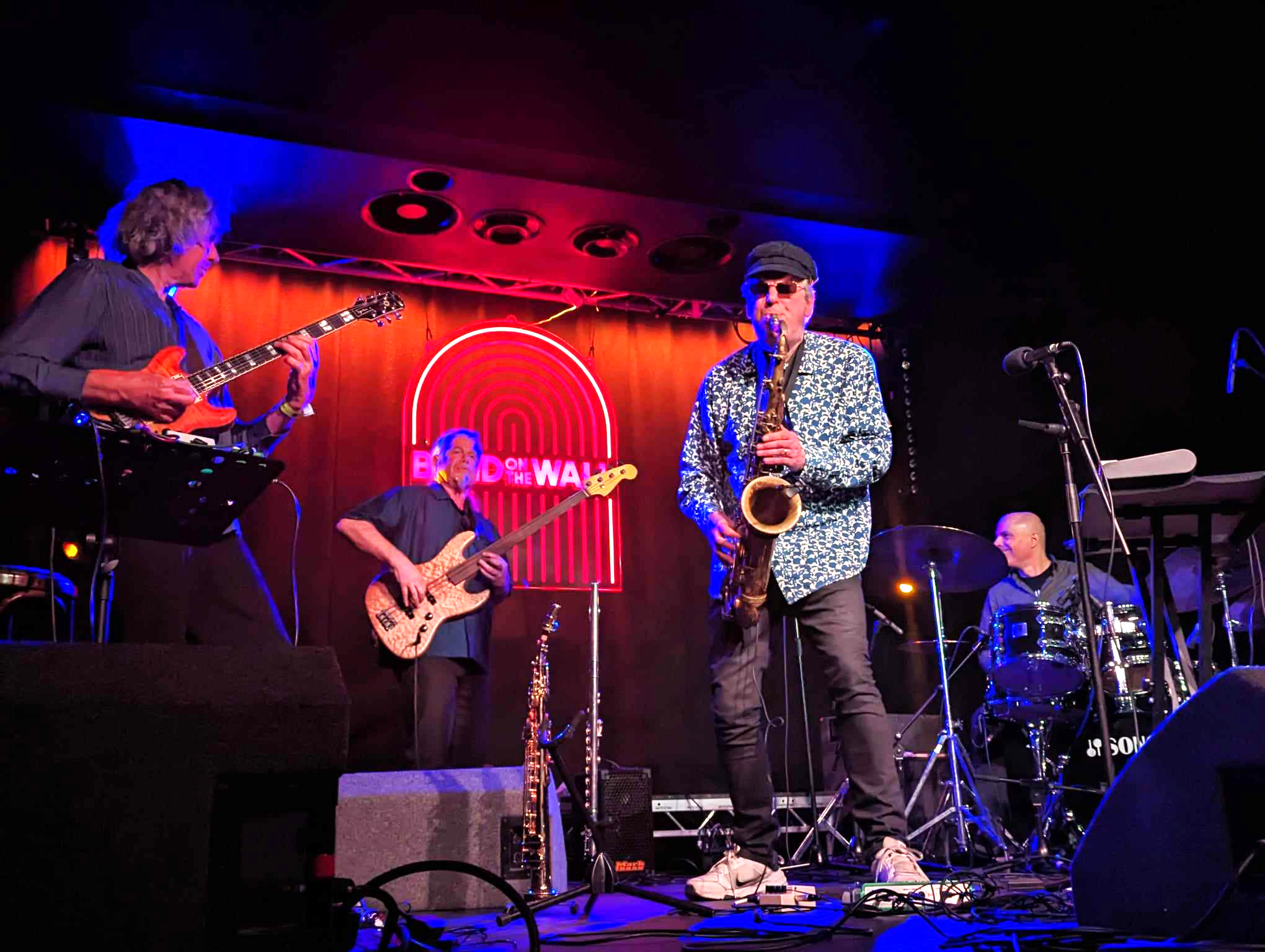
         The latest iteration of the Softs (above, pic by P Howitt) played the first show at Ronnie’s – 6.30-8pm -a slightly early slot for jazz. It was ”Just after nap time” as Etheridge, who joined the band in 1975, making him the elder statesmen, put it. Whether he had partaken of a snooze himself wasn’t clear, but something put fire in his belly, because he was on blistering form, whether trading licks with the versatile sax/flute/keys man Theo Travis, indulging in a McLaughlin/Cobham like interplay with drummer Asaf Sirkis or turning out fiery finger-shredding solos on former member (Sir) Karl Jenkins’ Tales of Taliesin from the ninth album Softs.

         With no original personnel left, there are those who think the group is like Trigger’s famous broom in Only Fools and Horses – if all the parts have been replaced, is it still the same brush? In this case, though, the better analogy would be something like the Porsche 911 that has evolved over time into a new, yet familiar, beast. Hardly any components remain from the original in the current 911 model, yet the DNA they share is obvious. Soft Machine began in 1966 but the 2024 version has a similar genetic connection to the original.

       Etheridge went to great lengths to explain how the new boys – drummer Sirkis with his five crash cymbals and bass player Fred Baker  – slot into the history of the band, although a hand-out of a Pete Frame-like family tree would certainly help beginners to the Canterbury scene. Baker, incidentally, may look like he’ll be off to sell shooms at Glastonbury, but he demonstrated that he and his fretless bass are worthy (farm) successors to Hugh Hopper and Roy Babbington. The latter retired recently with hand problems, but he can be heard guesting on the excellent new record Other Doors, which has all the knotty time signatures, ethereal soundscapes and earworm melodies that any long-term fan could desire.

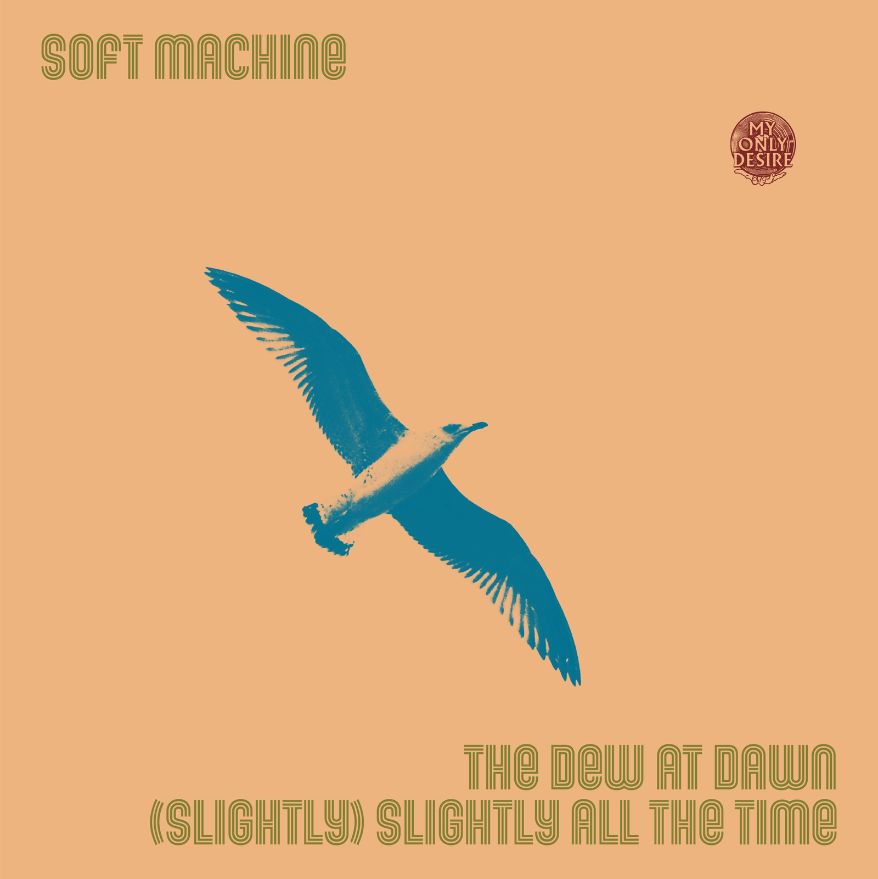
         The set was a canny mix of old and new, going back to the sixties for Joy of a Toy – also revisited on Other Doors – and taking in the seminal Third with Facelift and ranging from the abstract and angular (Travis’s The Visitor at the Window) to the serenely beautiful (a flute-driven version of Hopper’s Kings & Queens from Fourth – the flute harks back to the days when the enigmatic Lyn Dobson was a short-lived addition to the “classic” Dean/Hopper/Ratledge/Wyatt line-up). Odd that the new single wasn’t featured. It’s a proper 7-inch 45 rpm number with Harry Becket’s lilting The Dew at Dawn backed with a reworking of that old Mike Ratledge-era favourite, Slightly All the Time. Still, it was for sale in the foyer for those who missed it being included.

         The evening finished with a medley that spanned decades, where the multi-talented Travis let rip a la Elton Dean, beginning with 10.30 Returns to the Bedroom, the final track on Soft Machine Volume Two, and climaxing with a furious Hazard Profile Part One from the Bundles album. The full house loved it and, as on the new album, the band demonstrated this music, rather than being an exercise in prog-rock nostalgia, still has a winning vitality and relevance. Ronnie’s is closing for a refurb over the summer – let’s hope they invite Soft Machine back to the spiffed-up club, perhaps this time in the later slot, not just after nap time.

Rob Ryan

KIND OF BLUE NOTE

There is a horrible neologism that I came across in a newspaper recently. In the article the term “premiumisation” was applied to scotch whiskey – it describes the process of rebranding/hyping a product to make it “investible” and “collectable”. Something very similar is happening in the world of jazz, specifically in the world of LPs. It began with coloured vinyl editions, which are nearly always promoted as limited, collectable and attract a few quid extra over and above their monochrome siblings. I fell for this for a while – I have clear, yellow, red, orange, blue and even camouflaged discs. I stopped going colour-crazy when a record company executive assured me that adding pigment can affect sound quality and longevity of the album.

       The other route to “premiumisation” is the re-mastered special edition. This is spiralling to quite frightening heights – there was a recent version of Miles Davis’s Kind of Blue, announced with typical fervour: Definitive handmade limited run reissue Ultra High Quality Record! 33 1/3 RPM LP release limited to 25,000 copies. Mastered directly from the original 3-Track master tapes by Bernie Grundman. Pressed at Quality Record Pressings using Clarity Vinyl® on a manual Finebilt press. Cost for all this? Around £150. I’m sure it’s a wonderful artefact but I already have six versions of that record, including one on cassette. I surprised myself by resisting it.

       Less eye-wateringly expensive is the Blue Note Tone Poet series, supervised by Joe “Tone Poet” Harley, and put out to celebrate 80 years of the label. These are  “all-analogue, mastered-from-the-original-master-tape 180g audiophile vinyl reissues in deluxe gatefold packaging. Mastered by Kevin Gray (Cohearent Audio) and vinyl manufactured at Record Technology Incorporated (RTI)” . The latter is considered one of the best pressing plants in the world. Artists getting the Tone Poet treatment include Herbie Hancock, Grant Green, Lee Morgan, Wayne Shorter, Dexter Gordon and many others.

       Again, they are beautifully done, but are they worth the £10 premium they attract (they usually retail at £31-34) over a regular LP? After all, over the years I have been seduced by claims of superior sound quality by Japanese-only Blue Note editions (or maybe it was the obi strip – that band of paper that wraps around the cover) and “Cadre Rouge Audiophile” featuring Direct Metal Mastering and French pressing. Do I need more tweaks?

McCoy Tyner

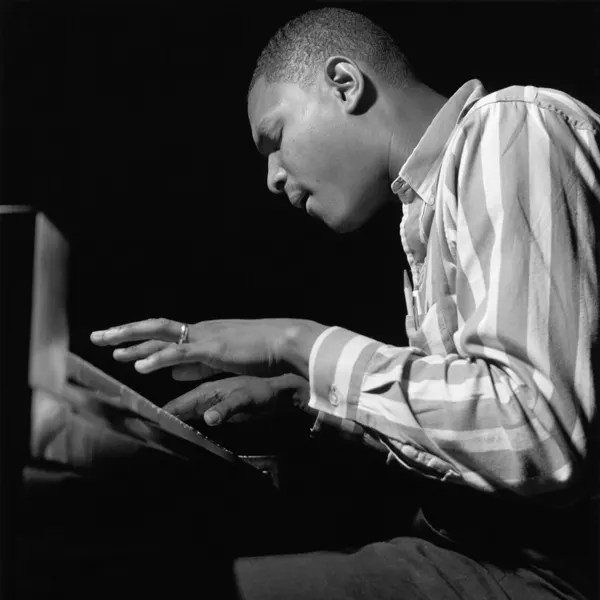
       One of the most recent batches of Tone Poets included McCoy Tyner’s splendid Expansions, which features the great Woody Shaw on trumpet, Wayne Shorter on tenor, Gary Bartz on alto and, unusually, clarinet, and bassist Ron Carter on an unexpected cello. It encompasses fast and furious modal jazz with the septet firing on all cylinders, Matthew Halsall-like Far Eastern tones and a piano/cello ballad. It was indeed an expansion of Tyner’s regular soundscape. I happen to have a 75th Anniversary re-issue of this, so I bought a Tone Poet one to compare and contrast.

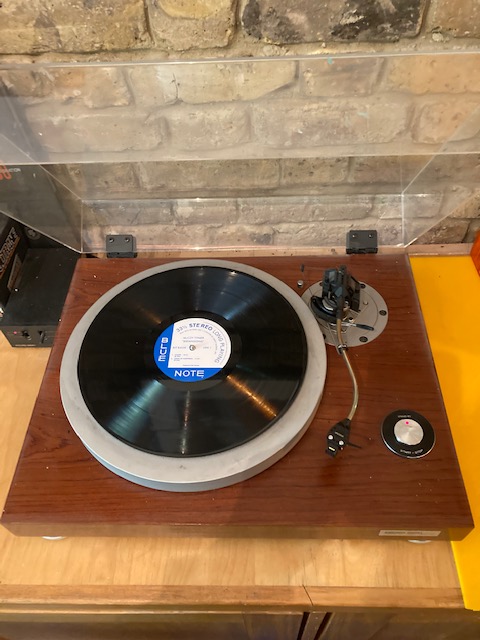
       I don’t have a particularly high-end audio system. At its heart is a vintage Quad and 1970s Japanese Micro-Seiki deck with SME arm which is maintained by Audio Gold in Crouch End (it was where I  traded a still-boxed CD player for it years ago, back when you couldn’t give record decks away). So not audiophile perhaps, but I do know its sound very well and thought I should be able to detect any differences/improvements in the new pressing.

       And I could. A more sonorous piano here, a richer woodier bass sound there, crisper horns in one or two places. But, I realised, paying such close attention and constantly repeating sections not only gave me a headache, but it also spoiled my enjoyment. I was like one of those oenophiles who can wax lyrical about the component parts of a wine without pausing to enjoy the whole (the same is true of some coffee drinkers I know).  I’m assured that the superior quality is best appreciated through headphones, but as that isn’t how I like to consume music, it’s a moot point. So, would I rush out to replace an album I already had with a Tone Poet version? No, probably not. But….

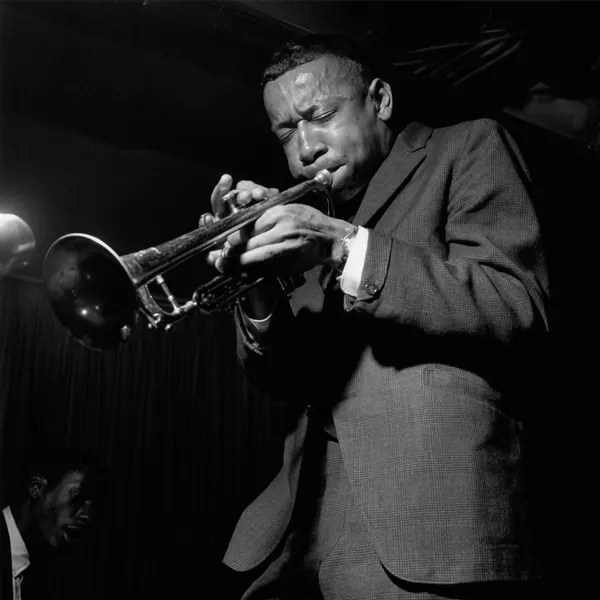
The great Lee Morgan

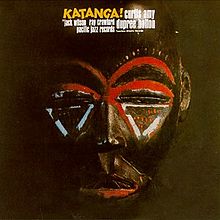
       And it is quite an interesting “but”. One of the welcome aspects about these re-issues is that Mr Poet hasn’t gone for the big ticket albums. So, no Sidewinder by Lee Morgan, but the more obscure Cornbread, no Maiden Voyage by Herbie Hancock, but The Prisoner and so on. Also Joe Harley has embraced other labels that were or are now in the Blue Note stable. So for instance, I have a Tone Poet of Chick Corea’s Now He Sings, Now He Sobs, which was on the originally on the Stateside label, and a recent release, Katanga! by Curtis Amy and Dupree Bolton, which was on Pacific Jazz.

       The latter is a fascinating album, because it highlights just how brilliant a trumpeter Dupree Bolton was, blistering fast yet astonishing accurate, with a hairs-up-on-the-back-of the-neck high-speed stratospheric excursions and brilliant tone. Bolton only made two real appearances on disc (Katanga! and The Fox by Harold Land, also recommended), frequently disappearing into the fog of drug addiction and subsequently prison. There isn’t space here to tell his whole tragic story of wasted talent, but if you are interested seek out Granta 69 (“The Assassin”). It includes a piece about Bolton by Richard Williams called Gifted, which is as fine and as moving a piece of jazz writing as you’ll find.

            So, given the quality and heft of the physical record, the heavy card used for the covers and, sometimes, the inserts with essays (as with Katanga!), I certainly would buy a Tone Poet if it was an album new to me or I only had it on CD and wanted an actual LP. Forthcoming releases for 2021 include Lee Konitz and Gerry Mulligan, Wayne Shorter, Joe Pass, Stanley Turrentine, Sonny Red and  more Grant Green, all new to me. I’ve got my extra tenners ready.

BOWLING UP

Exactly fifty years ago last weekend I caught a bus from my semi-squat in Catford to Crystal Palace and joined the crowd of long-haired, patchouli-scented hippies streaming into the park to witness the first ever rock Garden Party. The Crystal Palace Bowl with its distinctive hemi-spherical stage (think a dinky version of the Hollywood Bowl) overlooking a small lake had opened in 1961, but up to that point it had only hosted classical music. That day, headliners Pink Floyd were to usher in the dawn of a new age (but then everything was a New Age back then) with amplifiers, inflatables, dope and semi-nude people frolicking in the water in front of the stage.

I had already seen the band several times by that point, including the Azimuth Co-ordinator tour  – it was a joystick that controlled a quadrophonic sound system, allowing panning from speaker to speaker – at the Liverpool Empire. Although in the pantheon of PF gigs, that palls in comparison to the one my friend, writer Jonathan Futrell, witnessed: -Syd Barrett-era Floyd and Jimi Hendrix at the Albert Hall – it was a hard act to follow.

 Indeed, I was slightly underwhelmed by the band that day, not helped by being damp and cold (the weather was capricious in the extreme, much like this May) and the lengthy wait for them to set up. Atom Heart Mother without the orchestra didn’t carry the same punch as on the album, and although they did play one unfamiliar work – The Return of the Son of Nothing, later to become Echoes – most of the set was the familiar workhorses from the live disc of Ummagumma. Plus the inflatable octopus that was meant to rise majestically from the lake was a damp squib.

The ill-fated octopus

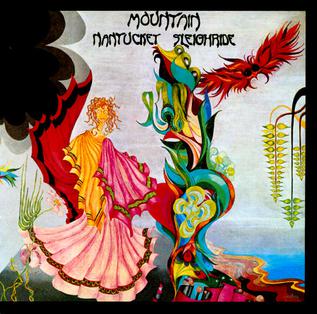
 I was mainly there for Mountain, a band featuring plus-sized guitarist Leslie West and bassist Felix Pappalardi (later to be shot dead by his wife Gail), a key figure in several Cream recordings. I don’t recall that much of their performance apart from Jack Bruce’s Theme for An Imaginary Western, their big hit Mississippi Queen and the long coda to a gloriously extended Nantucket Sleighride – later the theme for TV’s Weekend World. To my surprise, Rod Stewart, in a pink corduroy suit, and The Faces put on a fantastically rumbustious, amiable and crowd-pleasing set although, I have to admit, I wasn’t quite sure who he was. But I was young then. And wise enough to go back to the bowl a few more times, because it was – and will be again – one of London’s great outdoor venues.

The subsequent Garden Parties featured the likes of Elton John, Roxy Music, Yes, Jimmy Cliff, Ian Dury, Santana and, er, Vera Lynn. The most famous gig was probably Bob Marley and the Wailers, when capacity was increased from 15,000 to 25,000 and Jonathan Futrell (then a writer for Black Echoes) waded into the lake, stood on a milk crate and snapped an iconic photograph of the singer that now hangs in the Bob Marley Home & Museum in Trench Town, Kingston, Jamaica.

The original stage fell into disrepair and was replaced by a more angular (and now rusty) steel one in 1997 but that too became dilapidated. The final, small-scale concerts took place around 2009. Recently, however, a successful crowdfunding campaign (match-funded by the Mayor) has raised enough money to rebuild/refurbish the stage and bring back live music to the Bowl. In the meantime, a temporary structure will be floated onto the lake and used until the new permanent structure is complete. First up in this re-birth is the South Facing Festival (southfacingfestival.com), a month-long series of concerts with The Streets, Dizzee Rascal, Cymande, Soul II Soul, Sleaford Mods and the English National Opera. There is also a healthy smattering of jazz on offer and I’ll be writing more about that and the festival in the new Kind of Jazz column in the Camden New Journal over the coming weeks.

IAN SHAW: JAZZ IN THE JUNGLE

Ian Shaw has won the BBC Jazz Awards “Best Vocalist” twice and is critically lauded by the press – “Has few rivals” (Sunday Times); “Our finest jazz singer” (Time Out); “A recipe for bliss” (The Telegraph). Is he really that good? Listen to John Fordham at The Guardian:

“Shaw’s humanity, technique, wit and willingness to take an insane gamble has always kept him in the jazz loop. What you get with Shaw is always really him – sometimes funny, sometimes resigned, sometimes wounded, sometimes over the top, but always technically perfect.”

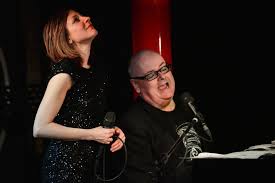
Ian Shaw (with the fabulous Liane Carroll at the piano)

Ian Shaw (with the fabulous Liane Carroll at the piano)

Yet these days when he packs up his music at the end of a gig (charts for The Great American Songbook, Joni Mitchell, Tom Waits, as well as his own compositions), Shaw is likely to be heading for a place that sees few UK musicians of any stripe – “The Jungle” in Calais, the multinational camp for refugees, migrants, call them what you will, who hope to cross to the UK.

For the past three months he has been visiting regularly, initially because he was outraged by the conditions in the camp he saw on television. Once out there – having taken out much-needed clothes and sleeping bags – he discovered there were decent players among the refugees who had lost their instruments along the very tough way. So later he loaded his car and took over drums, guitars and basses (including one that once belonged to Jack Bruce of Cream, donated by Jack’s family). But he now also helps build, fund, organise and raise awareness of what is going on just a few miles from the Kent coast. And he has put his money where his mouth is. There has been one benefit already, at The Vortex in Dalston, with Sarah Jane Morris and Carleen Anderson, and another is due at Phoenix Artist Club, Soho (Nov 18th, two shows, fabulous line-up, £25, see http://phoenixartistclub.com). All the money raised goes directly to helping the refugees (“I’ve spent all my own,” Shaw confessed from the stage of The Vortex) in practical ways.

Ian Shaw with Georgia Mancio, who will appear at one of the Phoenix shows

Ian Shaw with Georgia Mancio, who will appear at one of the Phoenix shows

Shaw is keen that people know about life in The Jungle, to share the story of the people he has met and the sometimes terrible things that have happened and are happening (the camps are being de-populated, but the refugees are being moved to windowless containers). He is also keen to refute what he calls the “vile lies” about the camp, such as the inhabitants having so many clothes from charities, they burn them for fuel. In fact, charities are very thin on the ground – there isn’t a large UK one active in The Jungle at all. Just an ad hoc group of musicians (as well as a larger contingent of non-musicians) who aren’t doing it for the cameras or some high-profile telly marathon.

From the creation of sublime music in a slum camp to the building of a church from bin bags, from professors to war-battered paupers, Shaw has seen all sorts. And he will be over there in the coming months because, to quote Game Of Thrones, Winter Is Coming, and things aren’t going to get any better. If you wish to help, and get a great gig in to the bargain, head for the Phoenix next week. And he still needs musical instruments.

@ianshawjazz

http://www.ianshaw.biz

MY LUNCH WITH JEFF – THE MUSICAL

On November 18 a piece of music will be premiered at the Queen Elizabeth Hall that owes its existence to a lunch I once had with Jeffrey Bernard (below).

jeffrey-bernard-2

A few months ago, I received two phone calls, a day apart, both concerning Soho. One was from the Groucho Club, asking if I had any anecdotes to contribute to a compendium it was compiling for its 30th anniversary. The other was from Guy Barker, saying he had a hankering to write a piece based on Soho for the BBC Concert Orchestra (he is Associate Composer there). However, he was staring at a blank page (well, actually a screen of the Sibelius programme) and needed a framework. Did I have any ideas for a skeleton he could flesh out with his music? We have done this before, with dZf, a re-working of the Magic Flute, and last year That Obscure Hurt, a Henry James/Britten-inspired piece. I give Guy a narrative; he builds his music around it.

Both phone calls, it seemed to me, could involve a story told to me by Jeff when, back in 1987, I interviewed him over a rather disastrous lunch at the back of the Groucho Club brasserie, when he fell asleep in the soup – the only time I have ever had to save a man from death by pea and ham. Anyway, he described an incident involving himself, the Colony Room, Francis Bacon & Co, a window cleaner’s ladder and more profanity than can be repeated here.

I wrote up the story for the Groucho and then met with Guy and said I would like to make that story at least part of the ‘Soho Symphony’ as we began to call it. I talked over other locations and tall tales we could include. I ended up with the task of combining Bar Italia, Mozart, Ronnie Scott’s, Archer St, a serial killer, the French, the Protestant church on Soho Square, Pizza Express, 20th Century Fox, ‘Fifis’ (the French and Belgian working girls of the 1950s), all-nighters at the Flamingo Club, late night drinking at Gerry’s, Harrison Marks, Paul Raymond, The Black Gardenia and, of course, that Groucho lunch, among many others.

And so, I wrote a short story that is (very, very loosely) inspired by James Joyce’s Ulysses (but, you know, more readable), about a boy failing to meet a girl and spending 24 hours wandering around the streets of Soho, among its ghosts, its music and its memories, and meeting Jeff with his ladder. To paraphrase the producer/writer Kip Hanrahan, I gave this piece of pressed tin to Guy Barker who proceeded to turn it into rolled gold.

It will be played at an ‘orchestral jazz’ concert – although Guy’s piece does not feature his usual jazz band, it is for the BBC C.O. only – featuring the symphony, plus the excellent saxophonist and composer Trish Clowes, and the vocal legend that is Norma Winstone, at the QEH on November 18, as part of the London Jazz Festival (see http://tinyurl.com/mff9g6n).