Tag Archives: jazz

INFERNO UPDATE

Some news on the Inferno 67 show with the Guy Barker Big Band at Ronnie Scott’s on September 17-19, with script and some lyrics (mercifully few – that’s not an easy gig) by me. Due to filming clashes, Clarke Peters can no longer take on the role as The Narrator. Fortunately, Clarke recently appeared in a lauded production of King Lear with the mighty Danny Sapani (Misfits, Penny Dreadful, The Crown) at the Almeida Theatre in Islington.

That’s Danny as Lear on the left with Clarke as The Fool. So, Clarke asked Danny if he could step in and pick up the baton, which we are thrilled to say he has. He joins Demetri Goritsas and Emer Kenny on stage at Ronnie’s, along with Joe Stilgoe and Vanessa Haynes on vocals and a mere 18 musicians, plus Guy Barker conducting and cueing. There’s an interview with myself and Guy talking to Ian Shaw about the show coming up on JAZZ FM soon – details later.

Meanwhile, Ronnie Scott’s has re-opened on time after its refurbishment during August and is looking very refreshed. This is me on the re-opening night, loitering with intent to go in.

AN INFERNO IN SOHO

Composer-arranger-conductor and let us not forget trumpeter Guy Barker and myself have collaborated on several large scale jazz projects over the years. There was The Amadeus Project featuring dZf, a cheeky Runyonesque re-working of The Magic Flute, featuring actor Michael Brandon as the gravel-voiced narrator. For a Benjamin Britten festival at Aldeburgh we created That Obscure Hurt, a 90-minute piece for 75 musicians, with the great American singer Kurt Elling and actress Janie Dee. As a co-commission with the RTE (he is its Associate Artist) and the BBC Concert Orchestras, Guy created bravura new arrangements of Charles Mingus’s music to a text written by me and spoken/sung by Allan Harris.

But Inferno 67 is something else, as you can tell from this ad in the latest edition of Jazzwise:

My instruction from Guy was to imagine an episode of the Twilight Zone as if directed by David Lynch and scored by Quincy Jones, Miklos Rosza, Bernard Herrmann and Johnny Dankworth. And maybe the Beatles. And definitely Coltrane. That was before the pandemic. Since that enforced hiatus, it has grown in scope, introducing new characters, references and twists and is now blessed with one hell of a score. Luckily the powerhouse Guy Barker Big Band, its ranks filled with world-class soloists, can manage every switchback that its titular leader can throw at them.

So that just left the story element to deal with. For the narrator, Guy recruited the wonderful Clarke Peters (The Wire, Five Guys Named Moe, etc etc) and for lyrics, wit and devilish charm, the urbane Joe Stilgoe. The firebrand soul and funk come from the incomparable Vanessa Haynes; the shape-shifting love story is delivered by two of the UK’s top actors – Demetri Goritsas (whom I had seen in the fabulous “Jaws” play The Shark is Broken, as Roy Scheider) and Emer Kenny, who, among many other things, wrote the screenplay and co-starred in the series Karen Pirie, based on the novels by Val McDermid.

So, in all, that’s about 22 people on stage. It’s fair to say Ronnie Scott’s has rarely seen anything like it, but rest assured, the beating heart of this piece is the finest big band jazz in all it iterations. And a bottle of Green Spot whiskey. Oh, and a shrunken head. You’ll just have to go to find out why.

INFERNO 67 is at Ronnie Scott’s on Frith St in Soho from September 17th to 9th, two shows each night. Details: https://www.ronniescotts.co.uk/find-a-show/guy-barker

DEDICATED TO HIM..AND WE WERE LISTENING

Soft Machine

Ronnie Scott’s 10th April 2024

This review first appeared in the Camden New Journal

My wife suggested that a vanishingly small number of readers would appreciate the headline to this piece. So, here goes – it is a play on a track called Dedicated To You.. But You Weren’t Listening on Soft Machine Volume Two (also used for the title of an album by the Keith Tippet Group, which featured Softs men Elton Dean and Robert Wyatt). It came to mind because guitarist John Etheridge of this parish (you may see him crossing the Heath most days), and the de facto frontman of the current Softs line-up, dedicated the band’s performance on Wednesday night to long-term, masterly drummer John Marshall, who played his final gig at Ronnie’s last year with the band and died in September 2023. Marshall wasn’t actually on Volume Two or the Tippett album but the latter in particular is a masterpiece of the kind of jazz-rock that Marshall excelled at.

         The latest iteration of the Softs (above, pic by P Howitt) played the first show at Ronnie’s – 6.30-8pm -a slightly early slot for jazz. It was ”Just after nap time” as Etheridge, who joined the band in 1975, making him the elder statesmen, put it. Whether he had partaken of a snooze himself wasn’t clear, but something put fire in his belly, because he was on blistering form, whether trading licks with the versatile sax/flute/keys man Theo Travis, indulging in a McLaughlin/Cobham like interplay with drummer Asaf Sirkis or turning out fiery finger-shredding solos on former member (Sir) Karl Jenkins’ Tales of Taliesin from the ninth album Softs.

         With no original personnel left, there are those who think the group is like Trigger’s famous broom in Only Fools and Horses – if all the parts have been replaced, is it still the same brush? In this case, though, the better analogy would be something like the Porsche 911 that has evolved over time into a new, yet familiar, beast. Hardly any components remain from the original in the current 911 model, yet the DNA they share is obvious. Soft Machine began in 1966 but the 2024 version has a similar genetic connection to the original.

       Etheridge went to great lengths to explain how the new boys – drummer Sirkis with his five crash cymbals and bass player Fred Baker  – slot into the history of the band, although a hand-out of a Pete Frame-like family tree would certainly help beginners to the Canterbury scene. Baker, incidentally, may look like he’ll be off to sell shooms at Glastonbury, but he demonstrated that he and his fretless bass are worthy (farm) successors to Hugh Hopper and Roy Babbington. The latter retired recently with hand problems, but he can be heard guesting on the excellent new record Other Doors, which has all the knotty time signatures, ethereal soundscapes and earworm melodies that any long-term fan could desire.

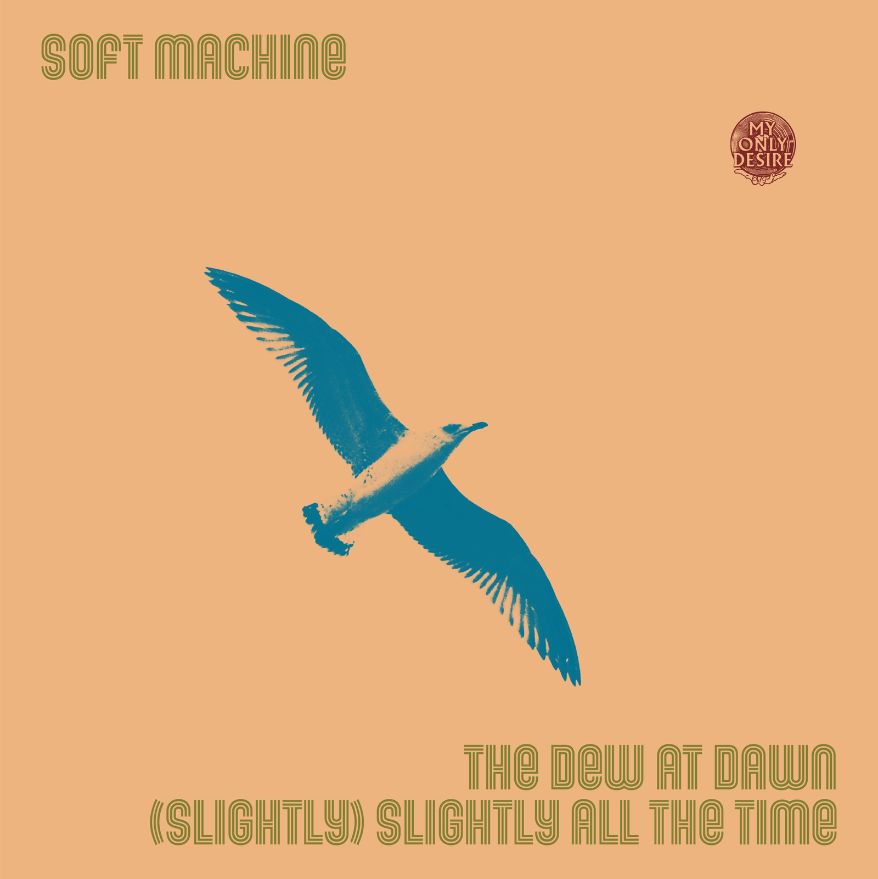
         The set was a canny mix of old and new, going back to the sixties for Joy of a Toy – also revisited on Other Doors – and taking in the seminal Third with Facelift and ranging from the abstract and angular (Travis’s The Visitor at the Window) to the serenely beautiful (a flute-driven version of Hopper’s Kings & Queens from Fourth – the flute harks back to the days when the enigmatic Lyn Dobson was a short-lived addition to the “classic” Dean/Hopper/Ratledge/Wyatt line-up). Odd that the new single wasn’t featured. It’s a proper 7-inch 45 rpm number with Harry Becket’s lilting The Dew at Dawn backed with a reworking of that old Mike Ratledge-era favourite, Slightly All the Time. Still, it was for sale in the foyer for those who missed it being included.

         The evening finished with a medley that spanned decades, where the multi-talented Travis let rip a la Elton Dean, beginning with 10.30 Returns to the Bedroom, the final track on Soft Machine Volume Two, and climaxing with a furious Hazard Profile Part One from the Bundles album. The full house loved it and, as on the new album, the band demonstrated this music, rather than being an exercise in prog-rock nostalgia, still has a winning vitality and relevance. Ronnie’s is closing for a refurb over the summer – let’s hope they invite Soft Machine back to the spiffed-up club, perhaps this time in the later slot, not just after nap time.

Rob Ryan

TRANE-ING DAY

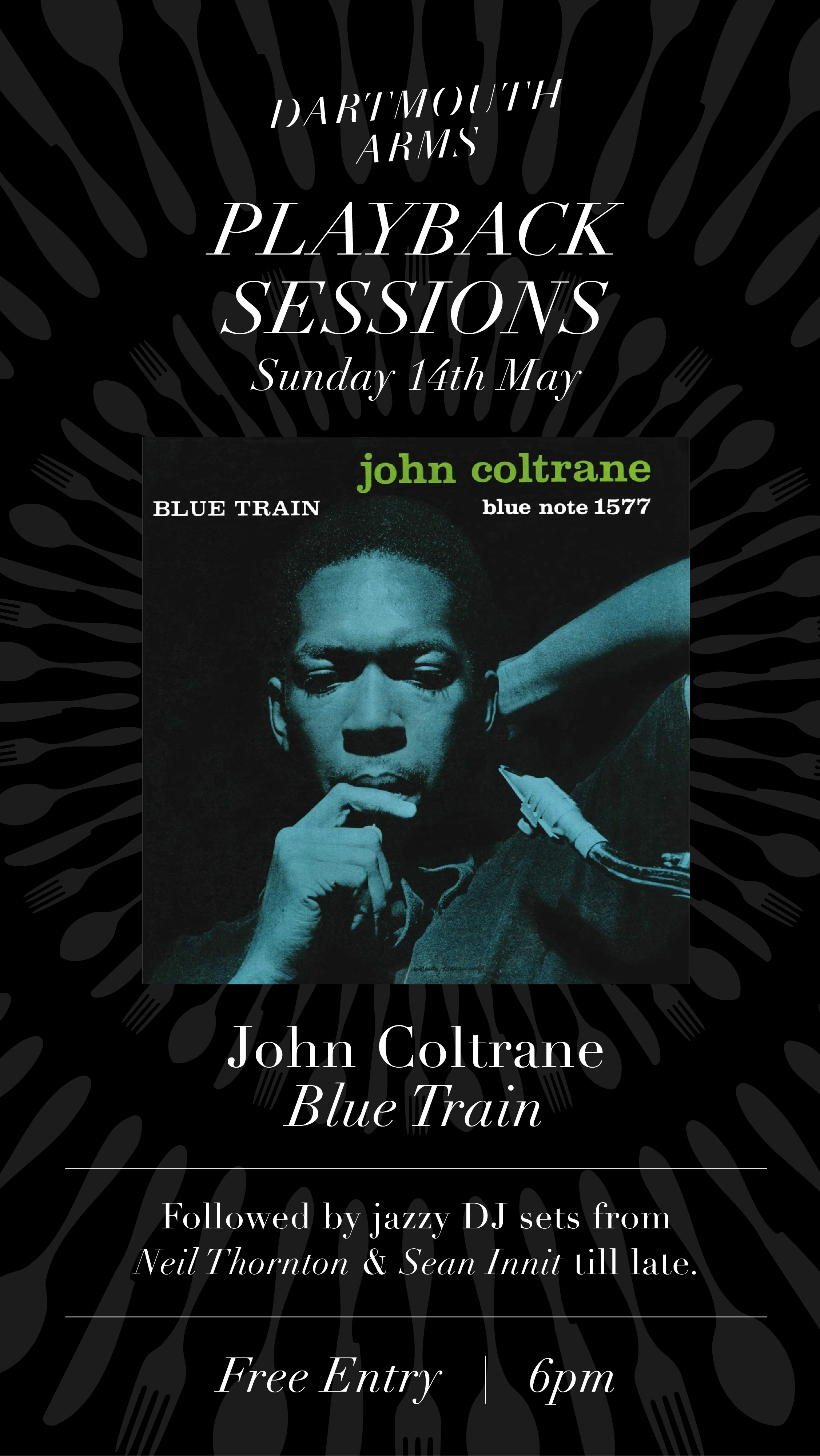
Sunday 14th May will be the last of my Playback Sessions at Dartmouth Arms NW5 for a while. I will be back later in the year and meanwhile there will be others carrying on the vinyl-only listening tradition. But the final one from me (for a bit) is a play-through of Coltrane’s Blue Note album Blue Train. That’s not to say we won’t dip into Crescent, My Favourite Things, A Love Supreme and so on. We will draw the line at the Ascension and Interstellar Space era. After all, we’d like people to stay. Blue Train, though, is hugely accessible and we are using the fantastic “Ultimate” version released last year. I’ll be in conversation with sax player Danny Silverstone of the Equinox Quartet (see https://mylifeinjazz.co.uk) , who will help steer us through Coltrane’s changes. As it says below, May 14, 6pm, free.

PARTNERS IN CRIME

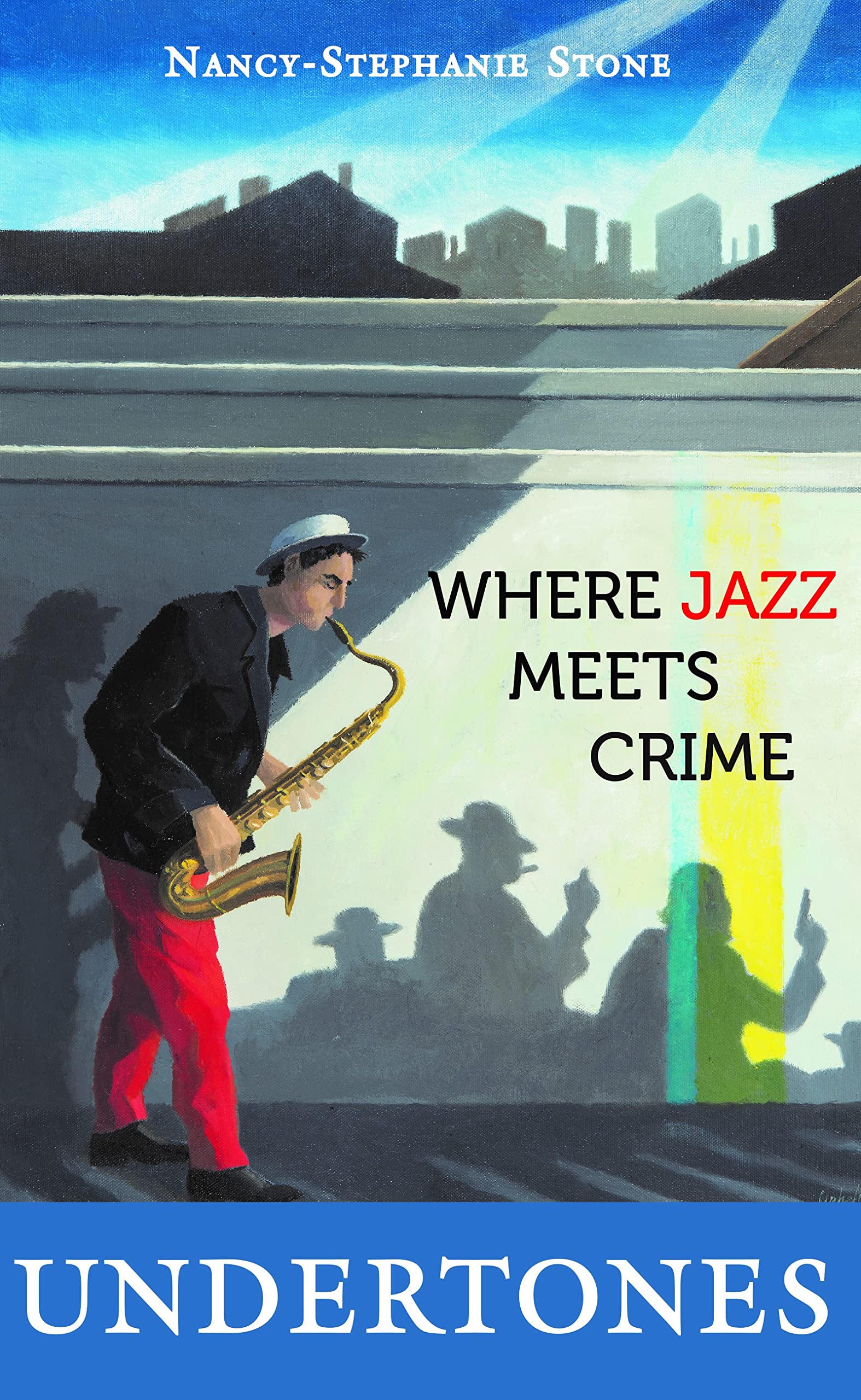
UNDERTONES -Where Jazz Meets Crime by Nancy-Stephanie Stone

There are obvious reasons why crime and jazz are intimate bedfellows in both fact and fiction. Syncopated music initially began its journey to the four corners of the earth in the wrong part of town (Storyville, the red-light district of New Orleans) and the clubs where it flourished in pre-WW2 Kansas City, Chicago and New York were generally Mob run (The Cotton Club in Harlem was owned by British-born bootlegger Owney Madden). Later, Las Vegas was also heavily Mobbed up. Just ask Frank. Even London wasn’t immune, what with Ronnie Scott’s being in Soho, most of which was run by the likes of the Maltese Messina Brothers and with the Krays owning El Morocco club in Gerrard Street (they once offered Scott and partner Pete King a club to manage further west, but Ronnie wisely decided his heart was in Soho).

Double trouble

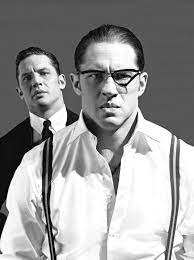
      There is a scene in Legend, the Tom Hardy Kray movie, where someone says they have the protection money from Ronnie Scott’s, which is erroneous – Ronnie and Pete never paid protection money. This was because Frith St, where their second club was and is located, was run by Albert Dimes, a Scottish-Italian heavy. Albert designated Ronnie’s club a neutral space, where rival gangsters could see a show without having to watch their backs too closely. He also gave them a bottle of Mumm champagne to seal this deal, and Ronnie and Pete said they’d open it when the club made a profit. It is still sits, unopened, behind the bar.

       So, with jazz historically providing the soundtrack to the thrills and bloody spills of the low life, it isn’t surprising that from the 1920s on, crime authors who wanted to give their novels a little authenticity peppered the narrative with jazz references.  This fertile ground is  the subject of a new book called Undertones by Nancy-Stephanie Stone (www.galileopublishing.co.uk) which is subtitled Where Jazz Meets Crime. It is a pitched as a reference book and is great fun to dip into sections on individual U.S. cities and peruse chapters on jazz spies, P.I.s and drugs). One of my favourite sections is the Jazz Discography chapter. So, for example, when a character in one of Ray Celestin’s excellent series (The Axeman’s Jazz, Dead Man’s Blues, The Mobster’s Lament, Sunset Swing) listens to Louis Armstrong play West End Blues, Stone suggests checking out Louis Armstrong on Okeh (Sony Legacy) to hear the tune for real. Elsewhere, there are plenty of unfamiliar novels and authors to check out (I never knew, for instance, that Clint Eastwood’s Play Misty for Me was a book before it was a movie or that there were several of pro drummer Bill Moody’s novels I hadn’t read). There are hours of sleazy, swinging fun to be had here. Although the author is American, it ranges far and wide and I was particularly pleased to see that the author has found plenty of room for NW5’s king of jazz-noir, John Harvey, whose books and short stories are soaked in the music, not least in some of the titles (Off Minor, Body and Soul). Incidentally, his excellent Darkness, Darkness covers much the same ground as the recent Sherwood TV series.  If you don’t know his work, get yourself down to your local bookshop in (in my case Owl Books in Kentish Town) and order a clutch of the jazz-loving Charlie Resnick series. And when they arrive put on Elmer Bernstein’s brilliant score for Johnny Staccato, a short-lived TV series where John Cassavetes starred as a piano-playing jazz detective. Honest.

TUNES IN THE KEY OF B3

Since this article was published Joey has died, aged just 51, which was a terrible shock as a few weeks before we had hugged outside Ronnie Scott’s and he had thanked me for the piece. . There is a heartfelt appreciation: here: https://londonjazznews.com/2022/09/05/joey-defrancesco-1971-2022-a-tribute-by-pete-whittaker/

Joey DeFrancesco is very young to be a jazz legend. But legend he is. Mention the Hammond B3 organ to any jazz fan and three names will come up – Brother Jack McDuff, Jimmy Smith, who put the sound at the centre of soul-jazz in the 50s and 60s, and Mr D. “Well,” Joey says from home in the US, “I started young, that’s why people think of me alongside Jimmy or Jack. But I’m only 51,” he mock protests.

More music from the master of the B3

Starting young is right. He was four when he started playing the organ, nine by the time he could reach the foot pedals, although he was already playing in clubs alongside his musician father. He was such a keyboard prodigy that by 17 he was in Miles Davis’ band. Like many people who heard that husky voice on the line summoning them to New York, he thought it was friends spoofing him. “I must have hung up on him four times.”

But eventually he went to that terrifying audition where Miles pointed to the piano and said: “Play something for me.” So he did and he was in the group (this being the late eighties Tutu era). I asked if Miles had given him any advice. “Yeah. I was playing a solo one night and he wondered over and said: ‘Leave some holes.'” Miles being the master of space in a solo.

Joey had to leave, though. “I had done my own record by then and Columbia wanted me to go on the road to promote it. Miles was mad at first, but he understood.”

That first album and his subsequent ones, plus a punishing touring schedule, meant that Joey brought the Hammond back front and centre after a few years in the jazz doldrums. “There were some people who thought I was the first to play it in jazz. It was Fats Waller back in the early 40s who was the first in with Jitterbug Waltz! But it was sort of phased out for a while. You had synthesizers, which are way more portable, then bands like Weather Report with a very different sound, which I love, and rock bands had gone towards the piano. But the Hammond was still there. All I did was remind people how great it sounds.”

On his latest album – his 39thMore Music, Joey demonstrates he is more than just a keyboard whizz. He also plays trumpet and sax. Well. “When I was with Miles I was playing trumpet in secret. He was Miles, you know? But I played him one of his lines one day and he said: You sound like me. Do it again. So, I did and he said:Iit was better the first time. But he was very encouraging. He gave me some of his mouthpieces and a couple of Harmon mutes. I still miss him, man. The best times were when we weren’t on stage, just hangin’ out.” The trumpet is a hard mistress, but seeing Joey playing Hammond with one hand and trumpet with the other a few years ago, I couldn’t help thinking – that’s almost Miles I’m hearing, jamming from the after-life.

Joey’s new band, which features a second keyboard player/guitarist, which frees him to take sax solos, that again are remarkably adept considering he has only been playing a few years, will be at Ronnie Scott’s in a few weeks. Don’t worry, his obvious affection for other instruments will not overshadow what he is best known for – expect plenty of funky, gospely, soulful and swinging organ. In others words, the classic, compelling sound of a B3 in full flight.

 Joey DeFrancesco played four shows at Ronnie Scott’s on 27th/28th July: see https://www.ronniescotts.co.uk/

KIND OF BLUE NOTE

There is a horrible neologism that I came across in a newspaper recently. In the article the term “premiumisation” was applied to scotch whiskey – it describes the process of rebranding/hyping a product to make it “investible” and “collectable”. Something very similar is happening in the world of jazz, specifically in the world of LPs. It began with coloured vinyl editions, which are nearly always promoted as limited, collectable and attract a few quid extra over and above their monochrome siblings. I fell for this for a while – I have clear, yellow, red, orange, blue and even camouflaged discs. I stopped going colour-crazy when a record company executive assured me that adding pigment can affect sound quality and longevity of the album.

       The other route to “premiumisation” is the re-mastered special edition. This is spiralling to quite frightening heights – there was a recent version of Miles Davis’s Kind of Blue, announced with typical fervour: Definitive handmade limited run reissue Ultra High Quality Record! 33 1/3 RPM LP release limited to 25,000 copies. Mastered directly from the original 3-Track master tapes by Bernie Grundman. Pressed at Quality Record Pressings using Clarity Vinyl® on a manual Finebilt press. Cost for all this? Around £150. I’m sure it’s a wonderful artefact but I already have six versions of that record, including one on cassette. I surprised myself by resisting it.

       Less eye-wateringly expensive is the Blue Note Tone Poet series, supervised by Joe “Tone Poet” Harley, and put out to celebrate 80 years of the label. These are  “all-analogue, mastered-from-the-original-master-tape 180g audiophile vinyl reissues in deluxe gatefold packaging. Mastered by Kevin Gray (Cohearent Audio) and vinyl manufactured at Record Technology Incorporated (RTI)” . The latter is considered one of the best pressing plants in the world. Artists getting the Tone Poet treatment include Herbie Hancock, Grant Green, Lee Morgan, Wayne Shorter, Dexter Gordon and many others.

       Again, they are beautifully done, but are they worth the £10 premium they attract (they usually retail at £31-34) over a regular LP? After all, over the years I have been seduced by claims of superior sound quality by Japanese-only Blue Note editions (or maybe it was the obi strip – that band of paper that wraps around the cover) and “Cadre Rouge Audiophile” featuring Direct Metal Mastering and French pressing. Do I need more tweaks?

McCoy Tyner

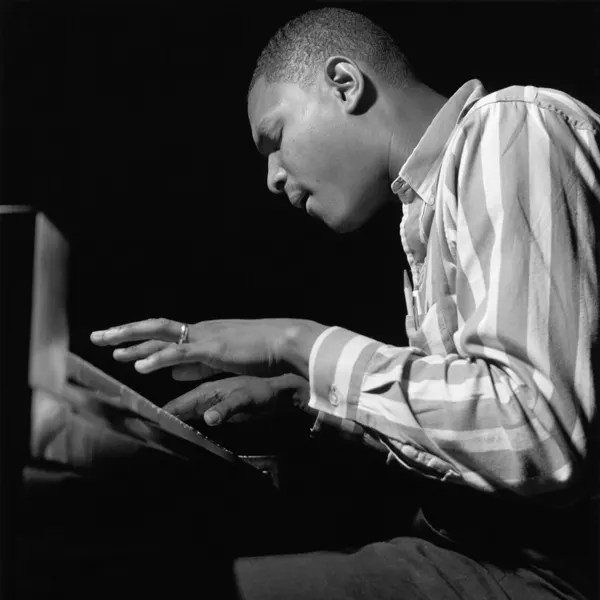
       One of the most recent batches of Tone Poets included McCoy Tyner’s splendid Expansions, which features the great Woody Shaw on trumpet, Wayne Shorter on tenor, Gary Bartz on alto and, unusually, clarinet, and bassist Ron Carter on an unexpected cello. It encompasses fast and furious modal jazz with the septet firing on all cylinders, Matthew Halsall-like Far Eastern tones and a piano/cello ballad. It was indeed an expansion of Tyner’s regular soundscape. I happen to have a 75th Anniversary re-issue of this, so I bought a Tone Poet one to compare and contrast.

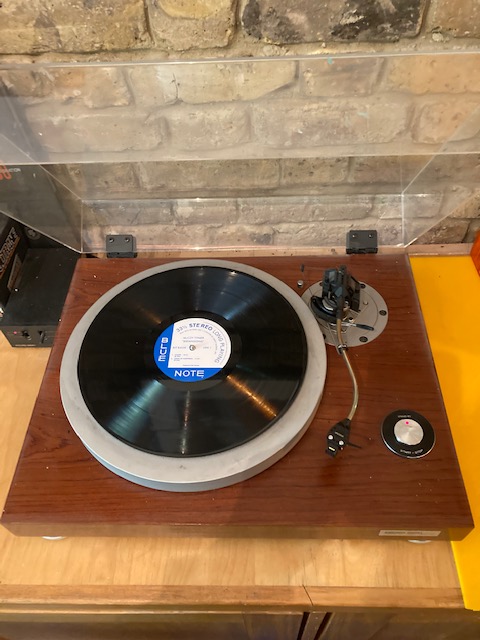
       I don’t have a particularly high-end audio system. At its heart is a vintage Quad and 1970s Japanese Micro-Seiki deck with SME arm which is maintained by Audio Gold in Crouch End (it was where I  traded a still-boxed CD player for it years ago, back when you couldn’t give record decks away). So not audiophile perhaps, but I do know its sound very well and thought I should be able to detect any differences/improvements in the new pressing.

       And I could. A more sonorous piano here, a richer woodier bass sound there, crisper horns in one or two places. But, I realised, paying such close attention and constantly repeating sections not only gave me a headache, but it also spoiled my enjoyment. I was like one of those oenophiles who can wax lyrical about the component parts of a wine without pausing to enjoy the whole (the same is true of some coffee drinkers I know).  I’m assured that the superior quality is best appreciated through headphones, but as that isn’t how I like to consume music, it’s a moot point. So, would I rush out to replace an album I already had with a Tone Poet version? No, probably not. But….

The great Lee Morgan

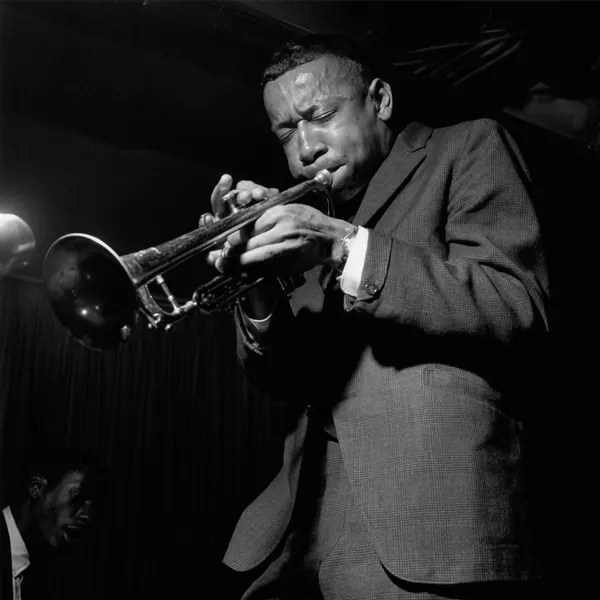
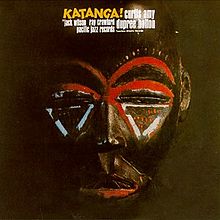
       And it is quite an interesting “but”. One of the welcome aspects about these re-issues is that Mr Poet hasn’t gone for the big ticket albums. So, no Sidewinder by Lee Morgan, but the more obscure Cornbread, no Maiden Voyage by Herbie Hancock, but The Prisoner and so on. Also Joe Harley has embraced other labels that were or are now in the Blue Note stable. So for instance, I have a Tone Poet of Chick Corea’s Now He Sings, Now He Sobs, which was on the originally on the Stateside label, and a recent release, Katanga! by Curtis Amy and Dupree Bolton, which was on Pacific Jazz.

       The latter is a fascinating album, because it highlights just how brilliant a trumpeter Dupree Bolton was, blistering fast yet astonishing accurate, with a hairs-up-on-the-back-of the-neck high-speed stratospheric excursions and brilliant tone. Bolton only made two real appearances on disc (Katanga! and The Fox by Harold Land, also recommended), frequently disappearing into the fog of drug addiction and subsequently prison. There isn’t space here to tell his whole tragic story of wasted talent, but if you are interested seek out Granta 69 (“The Assassin”). It includes a piece about Bolton by Richard Williams called Gifted, which is as fine and as moving a piece of jazz writing as you’ll find.

            So, given the quality and heft of the physical record, the heavy card used for the covers and, sometimes, the inserts with essays (as with Katanga!), I certainly would buy a Tone Poet if it was an album new to me or I only had it on CD and wanted an actual LP. Forthcoming releases for 2021 include Lee Konitz and Gerry Mulligan, Wayne Shorter, Joe Pass, Stanley Turrentine, Sonny Red and  more Grant Green, all new to me. I’ve got my extra tenners ready.

Double Exposure


BillyCobham_758x243px

Music, particularly jazz music, and photography have long enjoyed a healthy symbiotic relationship. Think of the evocative photographs of Herman Leonard, the bassist and snapper Milt Hinton or William Caxton, images of clubs, patrons and players so powerful you can almost smell the cigarette smoke, hear the splash of a cymbal, the tinkle of highball glasses.

The two art forms have something else in common – a powerful sense of their own history. Everyone who is serious about jazz studies the masters, be it the fiendishly mathematical complexity of Charlie Parker’s be-bop or the lyricism of Bill Evans’ piano. Photographers, too, are drawn back to the great practitioners of the art, the Robert Capas, Lee Millers and Bert Hardys, analyzing and sometimes imitating, until, like musicians, they find their own style.

I recently spoke to drum legend Billy Cobham, whose CV should just say “played with everyone who is anyone in jazz and beyond”, about his lifelong love of the photograph.

“I started shooting seriously in the army, back in ’64. That was my secondary military occupation, after drumming instructor. Then, when I left the army I never really stopped. I did my first album cover for Blue Note, for Horace’s Serenade to a Soul Sister in 1968.” Which meant he was following in the f-stops of Francis Wolff, another legend who shot many of the iconic Blue Note covers. “Absolutely I was. Big shoes to fill. I also did work with Count Basie and Gil Evans.”

320x320


For many years Billy shot with a classic Leica M3, especially while on the road. “With the Mahavishnu Orchestra,” says Billy, “we were touring for two years solid. I’d always get up early the day of a show and I’d walk round town with my camera and I’d be alone. When you are in band doing that many gigs, you are with the guys 24/7 and you need some space. Going out with my Leica helped me gather my wits, my feelings, about how I felt about me that day.’ Not everyone in the band shared his commitment. “John McLaughlin, I think he just used a compact camera for snapshots, while I was there with my Leica with a 150-280mm zoom with all the bells and whistles and he’d look at me like I was out to lunch.”

I first saw Billy Cobham with that band, at an open-air concert at Crystal Palace Bowl. I had never heard or seen anything like it. The guy in white with the twin-necked guitar, he was good, but the drummer was something else. Finding out about him led me to Larry Coryell and then back to Miles Davis and beyond. Billy Cobham sparked my interest in jazz. “So it’s my fault?” he laughs when I tell him this. I also followed his post-Mahavishnu work, including the seminal Spectrum album and his later bands, which sometimes included a young trumpeter from the UK called Guy Barker.

images-1


Billy still takes plenty of photographs, but these days he has embraced pixels. “I made the switch four or five years ago. I’ve retired my M3 and shoot with an M8 or, especially for documentaries like my recent Art of the Rhythm Section Retreat in Arizona, an S Typ 007. Everything I used to do in the darkroom, I can do in the camera now. And I don’t feel like I’ve been sniffing airplane glue for five hours.”

He thinks that photography has a way of enhancing his music . “For me, taking a photograph is like capturing an instant in my life, like a single “cel” in an animation, a frozen moment of my time of this earth. What it also does, it takes my primary mind away from what I am always thinking musically, and gives that part of my brain a rest for a minute while I do something visual. I’m still being creative, but in a different way. Then, when I come back to the music, it has more meaning.”

Billy wouldn’t be drawn on a favourite image, not even given a this-is-the-one-I’d-save-from-a-burning-house challenge. “I’m still exploring,” he insists. Which is true of his music, as you can experience when Billy plays Ronnie Scott’s with the Guy Barker Big Band  from June 25-30th (www.ronniescotts.co.uk).

Cobham-Barker-band-RS

From last time at the club… but much the same killer band

I have worked with Guy on the narrative of some of his large-scale compositions and Billy and the Big Band will probably play Guy’s brilliant arrangement of Stratus from the Spectrum album. You’ll recognise the dynamite drum motif, because it was sampled for Massive Attack’s Safe From Harm, which became the title of a novel I co-wrote (as R J Bailey). How many degrees of separation is that?


BELGIAN INTERLUDE

Berlin InterRail will be along shortly; meanwhile, here is some music….

There was a moment during Melanie de Biasio’s performance at the Purcell Room on the Southbank the other night when, as a fan of light framed her uplifted face, I felt as if I was watching Ingrid Bergman playing Joan of Arc re-incarnated with the voice of Abbey Lincoln fronting a Belgian version of The Necks.

29_melanie_de_biaso_0

Certainly anyone who popped along because of the tag ‘the Belgian Billie Holiday’ that she is often saddled with was in for a surprise. This was strange fruit all right, a cross pollination of jazz, blues, trip-hop, post-rock and late Talk Talk and it certainly wasn’t a singer showing off her chops with a succession of torch songs or standards. If anything, she used the power of her spine-tingly voice too sparingly, often simply breathing out phrases or single words to wrap around the repetitive, sometimes languorous patterns created by a band consisting of piano, keyboards (clavinet, synths) and drums. But that meant when she did let rip, it counted, and hairs stood up on necks.
In a short, intense, one-hour set she played most of new (also short) album No Deal (Play it Again Sam records) with parts of A Stomach Is Burning, her less minimal debut from a couple of years ago. It was effectively one single, stripped-down sixty-minute song, building to the wonderful I’m Gonna Leave You. The two keyboards players added mostly texture and a skeletal framework for the tunes – no long noodly jazz solos here – while drummer Dre Pallemaerts ably supplied the rhythmic heft (and the singer added smoky stabs of flute). It was an unsettling – on a good way – monochrome show, a little like the drawings that come with the album, and was brilliantly lit, creating a close, clubby atmosphere in the sometimes sterile Purcell Room.
It’s all too rare to come away from a gig thinking: well, I haven’t seen anything like that recently, but Melanie De Biasio (who is highly rated by Jamie Cullum and Gilles Peterson) will leave you scratching your head and producing weird combos of artists to explain her to those who don’t yet know her sound. Although possibly none as odd as Joan of Arc.
http://www.melaniedebiasio.

Kyle Eastwood: New York, Paris and Ken Clarke

The latest issue of Man About Town features a piece by me about Kyle Eastwood, Clint’s bass-playing son, which includes a look at the history of jazz on Manhattan, as well as a recommended list of ‘Live in NYC’ jazz albums. Also what happened when Ken Clarke turned up to see Kyle play at Ronnie Scott’s. Plus a lovely illustration by Liselotte Watkins.
Screen Shot 2013-11-19 at 12.54.34

And you get James McVoy:

mat2See http://www.manabouttown.tv.