THE RETURN OF SHERLOCK HOLMES v TROLL BOY

I first met the vivacious Carla Valentine at a crime event at the British Library. The ever-lovely Laura Wilson (A Capital Crime, Stratton’s War) aside, she was by far the brightest thing on a stage of mostly dressed-down middle-aged men (me, Mark Billingham, Barry Forshaw) and also managed to captivate the audience with statements such as: ‘I’ve always been interested in death’.
This utterance was in response to a question from Barry, asking how she had come to advise on TV shows such as Silent Witness and films like Resident Evil.
Fascinating though that is, her day job is equally intriguing. She is the Technical Assistant Curator at St Bartholomew’s Pathology Museum. Her domain is a stunningly dramatic Victorian room, an open space with three galleries or mezzanine levels, topped off with a vaulted glass roof. On the shelves that line this hall are endless jars of specimens, dating back to the 18th century, of everything from a ravaged scrotum (a cancer known as chimney sweep’s disease) to various foreign bodies pulled out of people (you’ll have to find out where the artillery shell was found and what it was doing there for yourself). The museum’s original purpose was as a teaching aid for training doctors in the various pathologies of the human body; Carla’s role is to conserve and re-catalogue the collection, which had been sorely neglected over the years.

TKpic2CNN

Her crowded office was believed to be where Arthur Conan Doyle once wrote and as any Sherlock Holes fan knows, St Bart’s is where Watson and Holmes first meet (in the disused Path building next door to the museum) in A Study in Scarlet. When I visited, Dr Lucy Worsley, she of the cardigans and hairclips and troublesome Rs (which she winningly talks about on her blog – http://www.lucyworsley.com/blog/) was filming a BBC documentary in the main room, so Carla took me up to her work space, which some might think a Little Workshop of Horrors, full of glass and plastic jars housing organs in various stages of repair and conservation.

Personally, I loved it –I used to be a biologist back when DNA was still an exciting new discovery – but there was one item that fascinated me more even than that Sherlock Holmes link. In one cylindrical jar stood a homunculus, just shy of a foot high, which appeared to be Not Of This Earth. In fact, it looked like the sort of model WETA Studios might make for an orc-like being in Lord of the Rings – imagine the Creature from the Black Lagoon shrunk to a seventh of its size. Carla has no idea who ‘he’ is or where he came from or how he was created, as the label has long gone (and yes, it has crossed my mind that it was a hoax to humiliate gullible people like me). He has a nickname, “Troll Boy”, and, although I would love to show you a picture, the Human Tissue Authority (yes, really) might take a dim view if it is a humanoid less than 100 years old.

Sadly, Troll Boy isn’t on display in the main gallery, but even if he was, the museum isn’t open to the public. However, Carla curates a variety of events, including taxidermy courses, lectures on surgery, pathology and medicine and ‘skull art’ workshops a la Damien Hirst – see http://www.facebook.com/bartspathologymuseum. She is also running a blog with more information on the collection, its past, present and future: http://potts-pots.blogspot.co.uk/. So if you want to see the soaring inside of the building and those endlessly fascinating specimens, book in to one of the events – there is one featuring Dr Watson (and me) coming up in November, details follow – but plenty before that, too.

A SIDE ORDER OF CHOWZTERS

Sadly we didn’t have room to fit in all the good fast food recommendations from Chowzters’ (www.chowzter.com) bloggers in the Sunday Times article on April 21. So here is what you were missing:
NEW YORK
Blogger: Yvo sin
Blog: http://feistyfoodie.com/
White BearYvo Sin 135-02 Roosevelt Ave, Flushing, NY 11354
(718) 961-2322
White Bear may be a hole in the wall, but #6 – wontons with spicy chili oil (12 for $4.50/£2.95) – makes overlooking the tiny space totally worth it. The wontons are quickly steamed, topped with pickled mustard greens and a slick of chili oil (fiery red, but not particularly spicy), and then handed to you on a Styrofoam plate (if it’s to stay) or in a Styrofoam container. Ambiance and decor isn’t the focus here, and that’s all obvious once you take your first bite.

HONG KONG – Juliana Loh
http://www.julianaloh.com/
Aberdeen Fish Market Canteen
102 Shek Pai Wan Road, Aberdeen, Hong Kong
This place is open at the crack of dawn, and as it’s eponymous name suggests, the owner Ar Lo gets the freshest daily catch from the market next door and this local dive doubles as a canteen for those working at the fish market. There is no formal lunch menu here, tell the owner your budget and what you’d like to eat and he puts together a menu for you. Some signature dishes to order here include the salt and pepper calamari, garlic and vermicelli with scallops, scampi with fried garlic, stir fried clams with black beans and chili sauce, deep fried abalone and a range of catch of the day fish to choose from. If you’d like a little variety away from seafood, there are side dishes like stir fried vegetables and fabulously well done French toast – Hong Kong style with caramelized condensed milk drizzled generously over. Beer needless to say goes well with your seafood orders, a Chinese beer like Tsing Dao goes pretty well with it. A meal for two would set you back about 700HKD aprox = 90USD / 60 pounds.

BERLIN -Suzan Taher
http://foodieinberlin.com/
Curry 36Mehringdamm 36, 10961 Berlin, (www.curry36.de)
Don’t be put off by the perennial queue it moves fast and in no time you will be feasting on this Berlin institution on a cardboard plate.
Steckerlfisch & Co
At markets around Berlin, (www.steckerlfisch.com)
Charcoal grilled fish served on paper with blobs of seaweed and dill mayonnaise.
Hamburger Heaven
Graefestrasse 93, 10967
(www.hamburgerheaven.de)
Standing out among the many independent hamburger shops for serving hand cut fries, fresh mayonnaise and house made ketchup. Pick from regular, free range or organic patties.

BUENOS AIRES – Alexandra LazarAli Lazar http://www.eatingthaifood.com/
Parrilla, Rodriguez Peña 682, Recoleta
Recommended dish: Peña Empanada de carne frita
A down to earth neighbourhood parrilla (steakhouse) that specializes in grilled meats, Parrilla Peña also offers a complimentary fried beef empanada at the beginning of each meal. It’s one of those perfect crispy, doughy, fried, flavourful bites where you wish you could go home with a dozen more, but then realize you have a massive steak dinner coming out next (order the bife de lomo, or tenderloin).

ISTANBUL – Tuba Satana
http://www.tubasatana.com

Karadeniz Pide Doner Salonu
Mumcu Bakkal Sok No: 6, Beşiktaş.
In the middle of Beşiktaş Food market, lies one of the best döner places in the city. Order a portion on top of pide, and enjoy the heavenly taste of the succulent meat, great with pickles, onions and ayran. Hurry, it sells out very quickly and it’s only open for lunch. Around £5.40, with ayran yoghurt drink.

ROME -Tavole Romane
http://www.tavoleromane.it/foodtours/en/

Cesare al Casaletto,

Via del Casaletto 45. Price: average 30€ plus wine. After a full day of walking and some time to relax take the 8 tram reaching the end of the line to have dinner at Cesare al Casaletto. It’s a perfect trattoria to enjoy an authentic local experience, with a menu including dishes that change according to season and Roman calendar days. Choose your sauce and preferred pasta shape (mezze maniche with carbonara is recommended). Don’t miss also fritti misti, deep fried starters. It also has an excellent wine selection.

Gelateria del Teatro
Via di San Simone 70 (another shop in Lungotevere dei Vallati 25-27).
If you are still hungry after dinner I recommend a visit to the historical center of the city and an evening stroll near Pantheon and Navona square followed by a refreshing natural gelato at Gelateria del Teatro. Liquorice and sage & raspberry are two of their fantastic non-traditional flavours. A cone is a shade over £2.

RIO DE JANEIRO – Tom Le Mesurier

Homepage

Nova CapelaSAMSUNG
Avenida Mem de Sá, 96 Lapa
00 55 (21) 2252-6228 ‎
Nova Capela is renowned for selling the best Bolinhos de Bacalhau in Rio. Inside the crisp golden shell you’ll find a luscious mix of delicious salt-cod, potato and herbs. For an authentic taste of Rio, add a few drops of fiery chili oil and wash it down with an ice cold draft beer. Price (per bolinho): R$3.50 £1.20).

Tacacá do Norte
Rua Barão do Flamengo, 35 Flamengo
00 55 (21) 2205-7545‎
Tacacá is an amazing Amazonian soup, brought to Rio by Amazonians who moved the city looking for work. The soup features huge, juicy shrimps in a base of jambú, a tangy leaf with strong anaesthetic properties. This delicious combination is served in a traditional drinking gourd and will leave your lips numb and your tongue tingling. Price: R$13 (£4.30)

Cervantes
Rua Barata Ribeiro, 7 Copacabana
Tel: +55 (21) 2275-6147
The sandwiches of Cervantes are legendary among late night revellers in Copacabana. Inside the lightly toasted milk bread you’ll find layer after layer of juicy filet mignon, topped with a massive slab of melted cheese and Cervantes’ signature addition, a slice of gently grilled pineapple. Sounds strange but this combination really works, as evidenced by the queues leading out the door after midnight. Price: R$23 (£7.70).

* The Chowzter/Coca Cola Fast Feasts Awards, hosted by Alexander Armstrong, take place at East London’s Village Underground on April 28 and tickets cost £25 including drinks plus the chance to buy food from some of London’s best food trucks (Pizza Pilgrims, Big Apple Hotdog, Spit and Roast). See chowzter.com/awards for tickets. Winners will be announced on the website.

AN (OLD) CHAT WITH IAIN BANKS

This piece is of an age now, not long after Iain had ripped up his passport in an anti-Blair protest, but I still remember it as one of my favourite interviews with another author, even though we never really got onto books (at least not on the record: it was for ‘My Hols’ in the Sunday Times) and remembering it made the news about his illness all the more sad and depressing.

“There was no great moment of epiphany, no blinding light when I decided it was time to go ‘green’. It was more like a straw that broke the camel’s back. Perhaps it was thirty years of reading New Scientist, which has been going on about global warming for all that time, but one day one of the cars needed an MOT and I thought: why don’t I just get rid of them?
In some ways I felt like I’d got the fast cars out of my system and the same is possibly true of travelling. I have a fair number of miles under my belt. I do love driving, especially on holiday. One of the best trips I ever had was Highway One from Los Angeles to San Francisco. I hired a car and it was a terrible thing. It would change gear at the slightest incline and start labouring like I was asking it to go up a cliff. But I ended up really enjoying the journey, because the views were so wonderful and driving next to the ocean just can’t be beat. And if you are driving fast and concentrating, you miss all that, you daren’t take your eyes off the road. I have even found that in Scotland, having a slower car means I take in a lot more of my surroundings. And the scenery is the thing here, of course.
Another wonderful driving experience, again in the USA, was when I did a drive-away. That’s when you drive someone else’s car from one side of the States to another, because they have moved and want to take it with them. I had an uncle, a mate of my dad’s rather than a blood relative, in Washington DC and I flew there, then picked up a car to be delivered to Los Angeles. You had to do six hundred miles a day, which is no small amount, but it was a wonderful feeling, Highway 40 all the way, the ultimate open road. You hit Tulsa, Oklahoma City, Amarillo, Albuquerque, all these great places, although you didn’t have much time to do much other than get out and stretch your legs. I did make a small detour for the Grand Canyon, though, but still got it there on time and with less than maximum permitted miles.
I enjoy travelling alone. Perhaps because I am an only child, I am happy with my own company. The first couple of times I went abroad was either side of my time at Stirling University, when I hitched in Europe. I’d read somewhere a single man travels faster – although, of course, a single women travels even further – and so I went by myself. Like all those kind of trips, it is probably better in recollection than it was at the time, but I enjoyed it and I didn’t have any scrapes or misadventures. I am naturally suspicious, so I didn’t take sweets from any strangers or anything like that.
I have never really enjoyed very hot countries. I don’t like the heat. Anything over sixty is a heatwave as far as I am concerned. For me the tropics begin somewhere around Nottingham. It’s genetic, I’m sure: my dad is very pale skinned and when he was younger he had red hair, so he’s not big on sun either. Friends have pushed me to holidays on the Greek Islands and Gran Canaria and the Algarve. I even did a Nile cruise Egypt, but I spent most of the time lying in the shade panting like a dog.
So for the past few years my holidays have been on Barra, jewel of the Outer Hebrides, and they probably would have been, passport or no. It’s perfect for me – quiet, no great social scene, good walking and wonderful beaches where you can just stare out over the Atlantic. At night you go to sleep with the sound of those waves in your ears.
[In response to a question about not flying and selling his collection of fast cars for a hybrid:] I don’t have any kids but plenty of my friends do, and I’d like to be able to look them in the eye and say: yes, my generation did do this, we did screw up the planet, but at least some of us have made a start, no matter how small, on trying to do something about it.”

Another Fine Room You’ve Got Me Into

Unknown

It was over dinner at Manoirs de Tourgéville that I discovered a yawning chasm in my wife’s cineaste credentials. ‘What do you mean you have never seen it? A Man and A Woman? Un Homme et Une Femme.’ I make an inadvisable stab at singing the theme: ‘Da-ba-da-ba-dab-ee-dab-.’ Stop that. Never seen it.
Normally such an admission would result in a shrug and a resolution to get the movie through Netflix or Love Film or some such. But I marched to the desk of the hotel and asked if they could arrange a showing and so, later that evening over digestifs, in a 50-seat basement cinema we had to ourselves, we watched Anouk Aimee and Jean-Louis Trintignant fall ever so tentatively in love.
It has to be said this wasn’t pure luck. The Manoirs de Tourgéville does not have a library of every classic French film ever made. It is just that the hotel is based around the former home of the writer/director of that movie, Claude Lelouch and, in fact, some of it was filmed up the road in Deauville, the sometimes cloyingly chi-chi town on the Normandy coast that nevertheless comes with a great beach and a more workaday sibling, Trouville, just over the bridge.
The Manoirs de Tourgéville is not in town but a ten-minute drive into the hinterland. It gives it the feeling of a private bolthole, a welcome breather from the promenading of the seaside, and a perfect quick does of Normandy countryside and cuisine, less than an hour from London City airport (Cityjet is now flying to Deauville year-round). The main building, built in the seventies in the style of a grand Norman manor-farmhouse, is arranged around a grassy courtyard. It contains 57 rooms a mixture of doubles, duplex and triplexes. The latter, which be warned come with lots of stairs, also have full working fireplaces for when the autumn chill bites. Rooms here are named after glamorous film stars – Jean-Paul Belmondo, Jean Harlow – although my wife and I were given Laurel & Hardy. We tried not to read too much into that.
The remainder of the rooms are in annexes. The modern extension is often the curse of a hotel converted from existing buildings, but here they have created a series of four outbuilding that look as if an alien race has built hollow-centered flying saucers that were entirely influenced by the Norman vernacular – imagine Close Encounters of the Half-Timbered Kind. These slate-roofed UFOs each contain eight rooms, four on the lower, which have terraces in the ‘hole’ in the doughnut, and four on the upper level. Slightly bizarre maybe, but these pods work – so much so that Claude Lelouch has mimicked the style for his own new home nearby.
The hotel’s restaurant, 1899, which forms a satellite to Lelouch’s old place, is in a similar, circular design. It’s a high, grand room, full of rich fabrics and elaborate chandeliers, which, for Deauville, is surprisingly good value, with a set menu of two courses for £26 or three for £35. True, the more inventive dishes are on the a la carte, but then so are the big prices.
The hotel also has an indoor swimming pool, sauna, small gym, free bicycles for exploring the countryside and two under-used tennis courts. And, of course, that cinema. But don’t worry, if you’ve both seen Un Homme et Une Femme – you can always bring your own DVDs to project.

DETAILS: Cityjet (0871 66 33 777, cityjet.com) flies twice weekly to tiny Deauville airport from London City. A car is useful. Holiday Autos (0871-472 5229, holidayautos.co.uk) has a pick-up point near the hotel, from £69 for three days. Rooms at the Manoir de Tourgeville (00 33 2 31 14 48 68, lesmanoirstourgeville.com) start at £123, room-only.

Bruce Reynolds: In His Own Words

Unknown

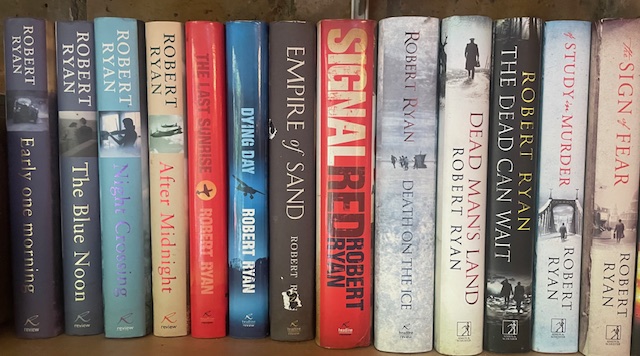
When Bruce Reynolds had finished the manuscript of my novel Signal Red, he asked if he could pen a postscript ‘just to set the record straight’. This is what he gave me, written in a shaky hand from his sick bed (he had flu) on foolscap paper. It can be found in the end pages of the novel.

“A Glasgow to London mail train was stopped and robbed in Buckinghamshire early today. It happened at Cheddington, near Tring, at about 3am. The driver and the fireman were attacked and injured and two coaches of the train were detached. They contained mail of all kinds, including registered post, said a police spokesman a short time ago. It is believed a large number of men took part and that they got away with a considerable amount of cash. Neither the driver nor the fireman was seriously injured. Senior officers of Buckinghamshire police are now at the scene.”

Above is the original transcript of the BBC’s first radio broadcast concerning the theft from the Royal Mail of 2.6 million in used notes on August 8, 1963. It was initially known at The Cheddington Mail Train Robbery, but this was deemed not snappy enough. Instead, they lifted the title of The Great Train Robbery from an American film dating back to 1903. With massive public interest in the event, the authorities became angry and agitated. There were questions in Parliament, with the reverberations spreading through the country and across the globe like a distant but persistent drumbeat. The words echoed down the corridor of power: ‘They must be caught and convicted’.
So, the police were given carte blanche, and the ‘big boys’ called in, notably the Flying Squad, with Tommy Butler as the Thieftaker General. It was a job he was admirably suited for, as he remarked with conviction to his colleague ‘Nipper’ Read: ‘We’ll get the bastards.’ The hunt was on.
Rumours were rife. Informed sources said the organiser of the robbery was an ex-commando, Major Johnny Rainbow; others claimed that Billy Hill, the self-proclaimed King Of The Underworld, was involved. Both wrong, of course. Names were bandied about, reputations besmirched, with plenty of winners and losers in the media frenzy that surrounded the robbery. The biggest losers, of course, were the men who robbed the train.
None of the actual robbers appreciated the full consequences of their actions; it only became apparent at a later date just how determined the authorities were. The scale of the manhunt, the size rewards offered and, especially, the eventual sentences were all unprecedented. Thirty years was unheard of, even for terrorist bombers.
But ‘stone walls don’t a prison make, nor iron bars a cage’. And so it proved. Charlie Wilson and Ronnie Biggs refused to accept their dire situation and promptly escaped. The media revelled in this turn of events and the hunt stepped up a gear. As did the whole story of The Great Train Robbery, which went through peaks and troughs of public interest, subsiding when the chase went quiet, thrusting its way back into the limelight with Ronnie’s rip-roaring adventures in Rio. The public applauded this cheeky chappy, their emotions switching from curiosity, through admiration to envy: who wouldn’t want to live a free and easy life adjacent to Copacabana in Rio?
The story has been told many times now, but continues to fascinate the media and readers, perhaps because it ‘all begins with intrigue and ends in mystery’.
Now, Robert Ryan has fictionalised the tale based on known facts but using imagined situations and dialogue, a technique he has used before in his novel Death on the Ice, about Captain Scott, and with Lawrence of Arabia in Empire of Sand. They were both key characters from my boyhood days, which is what attracted me to his work. The story he tells in SIGNAL RED is impeccably researched and the salient facts are all there. However, for his characterisation he had to rely on contemporary accounts, memoirs, other writers’ descriptions and conclusions (many of the major figures on both sides of the law being deceased) and his own interpretations, and that doesn’t always fit into my own memories of some of the personalities.
That is not to say he is wrong. In fact, he could be correct. At the time I might well have been blinkered: the light that he shines illuminates some dark corners whilst throwing shadows on others. But while my memory and his version don’t always see eye-to-eye, he captures the times perfectly and particularly the essence of camaraderie which existed and flourished under the banner of crime, specifically robbery. When a group of men embark on a nefarious series of enterprises that will, almost certainly, see some of them in prison, losing everything, then your relationship with your fellow robbers become the most important element of the undertaking. Being able to trust them is of paramount importance (and remember, none of the robbers turned Queen’s Evidence or co-operated with the police in any way).
Ultimately, as a robber, you are facing losing your freedom, but I don’t think you fully appreciate what this means until it is taken away from you. That realisation comes too late, even though you are aware every time you go to ‘work’, it might be your last job. The mind plays tricks on you anyway, about the consequences of your action and the chances of being caught. Is it worth the risk? you might ask yourself. But if you’re a grafter, you’ll dismiss the risk factor and go for the adrenaline. That’s the addiction.
True, old-fashioned greed is also a motivating factor, whether it is for money, power or reputation. I guess we all craved one or more of those categories, and some of us embraced them all. Upon reflection, I realise that I never, at the time of the robbery, questioned people’s motivation for being ‘at it’. In fact, I hardly know them now.
Charlie Wilson lived in the next street to mine in Battersea and we went to school together. He was younger than me, and we were pals without being bosom buddies. I only really got to know him in his twenties. In my eyes, he never changed: always cheerful, game for a lark and totally reliable. A very sound man.
I was shocked to hear of Charlie’s death, shot by the side of his swimming pool at his home in Marbella, evoking the end of Gatsby. The theft of his life only led to retribution and further theft of lives. The moral there is, no matter how big you are, there is always someone bigger and with more power.
Charlie was buried in Earlsfield, local to us Battersea Boys. The service closed with a final flourished of bravado, as the coffin was accompanied by Sinatra doing his version on My Way. That was Chas all right.
Roy James had one ambition when he received his 30-year sentence: to get out of prison and pursue his motor racing career to his ultimate aim, becoming World Champion. He embraced Seneca and the Stoics’ principals, as defined by prison doggerel: ‘If you can’t do the time, don’t do the crime’, or my favourite ‘Eat your porridge every day and do your bird the easy way.’
Nice constructive sentiments, but nobody serves a decade inside without physical and mental damage. In spite of Roy’s pursuit of his physical fitness, something had gone when he finally got out. He transferred his ambitions in other directions, and was very successful financially, but perhaps less so emotionally. He had a long-term relationship that broke up and eventually ended up marrying a younger woman and fathered two daughters. It appeared he had made it. He had the country house, complete with ponies and stables, an attractive young wife and lovely girls. But somehow, it was not enough. Nothing satisfied him. Probably because the grand ambition – to win the World Championship – was lost and gone forever.
What caused his confrontation with his wife and father-in-law and the events that followed is a mystery, yet such events are all too common in the real world of domestic discord. Ignominiously Roy (forever saddled with the media-invented, or at least media-popularised, nickname of The Weasel, which he hated) went back to prison.
Inside, his physical condition declined. He had seen Bill Boal – innocent of the crime, yet convicted – die inside. He had seen Biggsy kidnapped from Brazil and promptly stolen back by Brazil. He had seen Buster’s tragic suicide. He must have asked himself, as most of us of a certain age do – what is it all about?
He died in hospital of a heart attack. He was 62.
Roy’s mantra was best expressed as pitting yourself against the world, going to the extreme to see if you can hack it. Will you match up? It’s a hard code to live by. There is a consolation: I now know you don’t recognise success unless you have first experienced abject failure. Your ambition to drive to the edge of the abyss, to seek the impossible and make it possible, certainly invites failure. But if you do fail, it’s an honourable failure.

Bruce Reynolds, author of Autobiography of A Thief (Virgin Books)
BRUCE REYNOLDS & ME

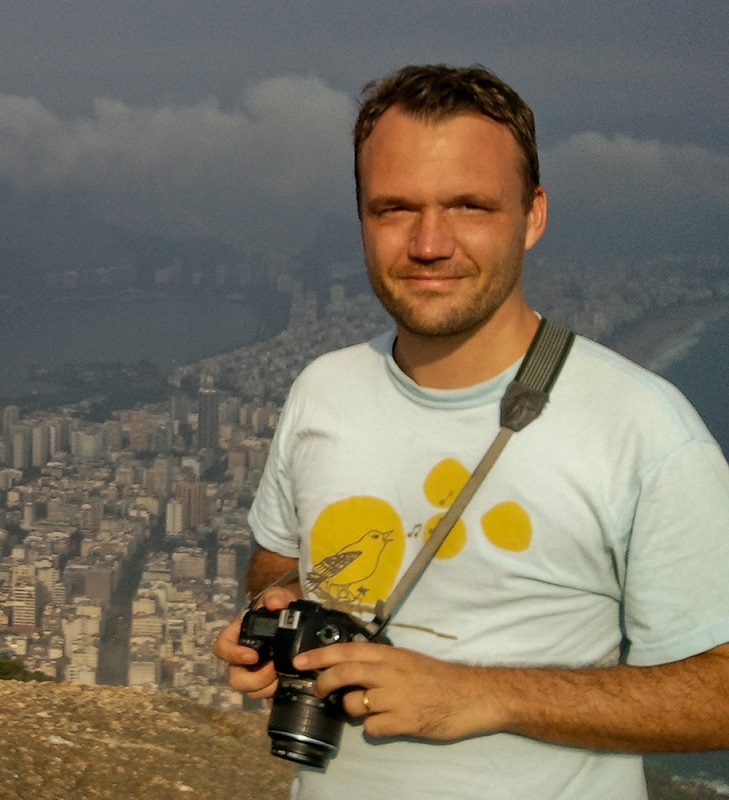
UnknownI met the Great Train Robber Bruce Reynolds, who died in his sleep this morning at the age of 81, a couple of years ago. I had written a novel about the robbery called Signal Red and he had gone through the manuscript and had a ‘few corrections’. I suggested we meet at the Groucho Club and we had a four-hour lunch (he was on spritzers, I was on red wine). He was very generous about the novel but suggested I tone down the ‘heavier’ side of Charlie Wilson’s character (he insisted he was hilarious, which I am sure he was.. to his friends) and agreeing that I had pretty much nailed Roy James, the racing and getaway driver. He was also quite happy with my portrayal of him. ‘Although it seems all that happened to a different person now,’ he said. ‘I suppose I was a bit of a fantasist.’
As we were leaving the club a statuesque blonde burst through the doors – small diamond choker round her neck, tiny black dress and a cleavage that would put Jordan to shame. As she cruised by Bruce whispered in my ear: ‘They’re not real’. What? I asked. Her breasts? ‘Naaah,’ he replied. ‘The diamonds.’

SHERLOCK IN THE DOCK

Unknown
A few years back I bought a hugely entertaining collection of stories ‘Inspired by the Holmes Canon’ called A Study in Sherlock. It contained tales by Lee Child, Charles Todd and Neil Gaiman and was edited by Laurie R King and Leslie S. Klinger (the man behind the indispensable New Annotated Sherlock Holmes). What I didn’t know at the time was that the Conan Doyle Estate had threatened to block the book unless a fee was paid, which it duly was. Now, in the USA some of the stories in the final collection, The Case-Book of Sherlock Holmes, are still in copyright, thanks to an extension to copyright law there some years back (in the UK the entire canon is in the public domain), but Leslie Klinger – who is also a lawyer – was certain this did not mean the characters were protected. The ACD Estate begged to differ.
When Laurie R King and Leslie Klinger decided to produce a sequel to A Study in Sherlock (In the Company of Sherlock Holmes, with Val McDermid, Sara Paretsky, Jeffery Deaver, Michael Connelly and others contributing), their publishers received a letter from the ACD estate, threatening to block distribution to certain outlets unless, again, a fee was paid. This time Leslie Klinger decided to draw a line in the sand – last week he filed a civil action in Illinois against the Conan Doyle Estate to establish once and for all whether the characters are protected, and payment due, or if Holmes and Watson are in the public domain. Klinger says: “This isn’t the first time the Estate has put pressure on creators. It is the first time anyone has stood up to them. In the past, many simply couldn’t afford to fight or to wait for approval, and have given in and paid off the Estate for ‘permission.’ I’m asking the Court to put a permanent stop to this kind of bullying. Holmes and Watson belong to the world, not to some distant relatives of Arthur Conan Doyle.”
If nothing else, legal clarification to those of us paying royalties to one or other of the various claimants to Holmes & Watson would be most welcome and Klinger deserves our support. You can read more on http://www.free-sherlock.com.

A review from Kirkus

The action moves from England to northern France in Robert Ryan’s Dead Man’s Land. It’s 1918, and Dr. John H. Watson—following an emotional split from Sherlock Holmes—has been commissioned as a

major with the Royal Army Medical Corps. Though now in his mid-60s, he’s been dispatched to the deadly front lines as “an expert in the new techniques of blood transfusion.” In the face of persistent shellings and unrelenting carnage, Watson feels satisfaction in helping the war effort. Yet it’s his skills as a sleuth as much as a surgeon that come in handy here.

homepic1

After a British soldier perishes from a bizarre ailment that turns his skin blue and his hands into claws, Watson’s transfusion techniques fall under suspicion. He’s convinced, though, that another explanation exists. So when a similar death does occur, Watson starts digging into the victims’ history, looking for connections between them. He’s aided in this effort by a volunteer nurse with the Red Cross, the resourceful Georgina Gregson, whose past clashes with the law may make her an unreliable ally. As the violence of war swirls about their heads, and snipers keep a lethal vigil in the bleak no-man’s-land between opposing armies, Watson pursues a murderer with old grudges and no compunction against adding Holmes’ onetime chronicler to the count of battlefront casualties.

Author Ryan’s depiction of combat-zone privations and the peculiar society of the trenches radiates with authenticity, and his portrayal of Dr. Watson is sufficiently faithful to have won Dead Man’s Land the authorization of Sir Arthur Conan Doyle’s estate. I understand a sequel is already in the pipeline. Perhaps by then, this UK release will have found a U.S. publisher. Fortunately, it’s easily available now from online sources.

J. Kingston Pierce is both the editor of The Rap Sheet and the senior editor of January Magazine.

One Critic I Definitely Had To Please

This is from Sue Light’s excellent blog which gave me lots of background to the medical situation in WW1. See http://greatwarnurses.blogspot.co.uk/.


The Last Patient
“I’m a great reader of crime fiction, often to the exclusion of doing other, more important things.  On the whole I stick to British authors, like complex plots, skip over too much gratuitous violence, and prefer to arrive at the end actually understanding what’s gone on in the middle. So about eighteen months ago I was intrigued and rather flattered to be asked by Robert Ryan if we could meet up to discuss a new book he was working on (these days a bit of flattery is so very welcome).  He intended to include ‘some plucky VADs’ and wanted to make sure that they would be appearing all present and correct.

Over the next months I was kept up to date with the progress of the book and then asked to check the first draft to see how the VADs were doing.  Anyone who has read this blog on a regular basis will know that of all the bees that float around my bonnet, the indiscriminate placement of VADs in Casualty Clearing Stations on the Western Front is the one that stings hardest, and in this book their inclusion in very forward areas was going to be essential to the plot. If I have learned one lesson from the exercise, it’s this.  If you’re a writer of fiction and make fundamental errors because of inadequate research and blissful ignorance, the wrath of pedants will be unleashed upon you.  On the other hand, if you include factual inaccuracies and weave them in an intelligent way, in full knowledge of your sins, you will always be forgiven (fingers crossed).

Dead Man’s Land was published at the beginning of this month with the full approval of the Conan Doyle estate. It follows Dr. John Watson’s travels around the Western Front during the Great War, and where Dr. Watson goes, death and intrigue are right on his heels. By most estimations he must be getting on a bit in age, but his physical limitations are highlighted, not glossed over, and his place as an elderly medical practitioner in wartime never seems extraordinary. The military setting is sound, and the depiction of hospitals and casualty clearing stations in wartime is thorough. The VADs are skilfully introduced into a place where they would never actually have been, with the difficulties and regulations surrounding their employment made clear. Even I was heard to clap. The story is unusual and absorbing, it has complexity, but with enough clarity to prevent it becoming confusing, especially for those who don’t usually dabble in ‘war,’ and it should appeal to everyone who enjoys crime fiction of any era, but perhaps especially to devotees of Sherlock Holmes.  Yes, of course he’s there as well.

And my thanks to Rob for his kind words in the acknowledgements where he accepts all errors as his own.  May I take this opportunity to clear my conscience and admit that there might just be one that’s mine!”

THE ELK AND THE OYSTER: EATING IN W. SWEDEN

Gothenburg is, so they told me, much like my home town of Liverpool – a once thriving port, with its own dialect, music scene and quirky sense of humour. I forgot to ask if it had an underperforming football team, too. But I wasn’t there for similarities, I was there for differences. Unlike Liverpool, Gothenburg is somewhere you go for great food, especially seafood and it is perfectly positioned geographically and culturally to take advantage of the current thirst for all things Nordic and locavore. I was here to eat.

If you want to see the legendary Gothenburg bounty from the sea, you visit Feskekörka – the Fish Church, which really does look like a Piscean house of worship  – market on the riverside, where the downturned mouths and black-button eyes of dozens of marine species stare back at you from their marble resting places. Better yet, you climb the stairs to the mezzanine level, where tiny Restaurant Gabriel (00 46 31 139051, restauranggabriel.com, lunch only, approx £30pp) takes the produce from the slabs below and cooks it as simply as possible – if at all.

gabriellogo

Chef Johan Malm won the World Oyster Opening Championship in Galway in 2010 (and came a close second in 2012) and he apologises profusely that he has no Swedish bivalves to offer me, blaming ‘lazy divers’ (all Swedish oysters are hand-harvested and, in fact, there have been storms). Instead, he serves up six fat French numbers and a perfectly poached piece of hake. ‘People don’t really believe this, but our menu is just a guide. If you see a fish you want downstairs, tell me how you would like it cooked, I’ll buy it and I’ll do it. It’s as close as you can get to eating straight from the sea.’

The best way to get to Ulf Wagner and Gustav Trägardh’s Sjömagsinet (Adolf Edelsvärds gta 5, 00 46 31 7755920, sjomagsinet.se) is to take a trip on that sea, or at least along the river towards the sea, out past the fish market, the giant Stena ferries and the new waterfront developments to Klippen. Here, in an old East India Co. warehouse, is a very different take on using the local produce.

c161b7b5369b9a26299478fcd1073cd1_232x200

Sjömagsinet is unashamedly fancy food, not so much in the cooking techniques – there’s no molecular trickery – but in the combination of flavours. So expect baked anglerfish with chipotle jus, ragout of piglet shank and black salsify or saddle of venison with oyster vinaigrette. It was Ulf who told me that Gothenburg has the best seafood on the planet. At Sjömagsinet the meat’s pretty damn’ good too. A set menu is around £65; matching wines doubles that.

It is a long way from hip and heaving Harlem to nature-loving Gothenburg – the nearby archipelago is one of the city’s great attractions – but for Jimmy Lappalainen it is a homecoming. Born in a small village up the coast, as a young cook he went to New York and managed to secure a position with Marcus Samuelsson (Ethiopian born, Swedish-raised in Gothenburg, American culinary star), who opened the ground-breaking Red Rooster up at 125th St, Harlem in 2010, with Jimmy as chef. When Samuelsson was invited to oversee the restaurants at the new Clarion Hotel Post in Gothenburg, he brought Jimmy with him to be Executive Chef in situ (Samulesson pops over from Harlem every other month), although he has since moved up to be overall Food & Beverage manager for the hotel. ‘Obviously I’ve shipped some of New York back with me, too,’ he says. Not least in the scale of the room, which feels like a NYC public building.

norda_logo

The hotel is a new-ish (opened January 2012) conversion of the grand old city post office, and Norda (00  46 31 619060, nordabargrill.se), its restaurant, is located in the former postal hall, all soaring pillars and panelled ceilings, draped with great swathes of deep red curtains, giving it a vast, theatrical feel. The food is Swedish with an American twist – the classic hot dog is still in a bun, but it’s a wild boar sausage in brioche with home cured pickles (£12), or there’s elk carpaccio with maple syrup (£15). And, again, there is very good plain seafood: ‘Some things you just let talk for themselves,’ says Jimmy. And the oysters all say: ‘eat me’.

GETTING THERE: SAS (0871-226 7760, flysas.com) flies to Gothenburg from Heathrow. The Clarion Hotel Post (00 46 31 61 90 00, clarionpost.com) has doubles from £130, room only.

FURTHER INFORMATION: Visit Sweden (www.visitsweden.com) and Gothenburg (www.gothenburg.com).