Category Archives: Uncategorized

POLES APART

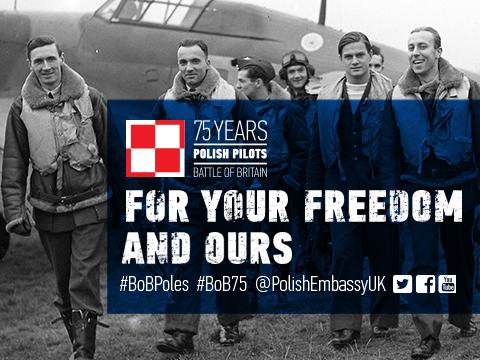
The Polish Embassy (@PolishEmbassyUk) has begun a Twitter campaign to raise awareness of the role played by Polish pilots in WW2’s Battle of Britain. Using the hashtags BoBPoles and BoB75 (it is the 75th anniversary of the battle) it will publish daily images and info celebrating their contribution to a battle every bit as decisive as Waterloo.

 CH4KTdcWwAA5Lcd

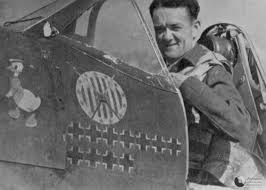
      For the past two years I have been working on a script, with an Anglo-Polish production company, about Jan Zumbach, one of the pilots who flew with the most well known outfit (mainly because it was the first made operational; there were sixteen in all), 303 Squadron, which operated out of RAF Northolt, not far from the Polish War Memorial. Below is part of an early funding submission.

   Like Agincourt, Waterloo and Trafalgar, The Battle of Britain has become part of Great Britain’s modern creation myth. But like all such legendary tales of derring-do, time (and a few obfuscations and exaggerations) has knocked off some of the rougher edges of the story, leaving a smooth, one-sided narrative, an easily digested piece of jingoism. The truth, as is often the case, is messier and more compelling than the usual tale of British, blue-eyed, blond public schoolboys in Spitfires fighting Nazis in the skies over Southern England (with a little help from the British Empire in the form of Aussies, Kiwis, Canadians and South Africans). Because the Battle of Britain was also the Battle for Europe, as many of the pilots were fighting for their own homelands, trying to defeat Germany so that France, Holland, Czechoslovakia and Poland could be free.

         The members of 303 Squadron had fought over their own country, and in France before it was overrun, and then made a last stand with the RAF. Older and more experienced than most of the pilots that the host country could provide, they were fighting on several fronts at once – against the Luftwaffe, against unfamiliar planes (the controls were reversed; they were not used to using R/T) and protocols, and against the British prejudice that saw them as demoralized and defeated at best, uncivilised savages at worst. They were also lonely and homesick, as well as constantly worried about what was happening to their families back in Poland. They overcame all those adversities to become the highest scoring squadron in the Battle of Britain, even though the RAF’s reticence to deploy them meant they entered the fray relatively late.  And they did this not in the sleek, graceful Spitfire, but the more quotidian Hurricane, the Shire horse to the Spit’s thoroughbred.

WB4

       Like all the Polish squadrons, 303 initially had RAF commanders – ex-stockbroker Ronald Kellett was Squadron Leader – he famously who fitted the men out with uniforms from his Savile Row tailor and paid their wages when the government didn’t – and under him Flight Lieutenants Johnny Kent and Athol Forbes. To make matters even more complicated, the highest scorer in the squadron was not a Pole, but a Czech, Sgt Josef František. He ended his career with 15 kills, but died just as 303 was stood down for rest and re-equipment in October 1940, ploughing his plane into a hillside for no apparent reason. It is possible he was suffering from the sort of combat stress Geoffrey Wellum described so well in his memoir ‘First Light’.

Lotnictwo Polski na Zachodzie. Piloci z dywizjonu 303 .

        The squadron was stuffed with interesting characters, but I decided to concentrate on Jan Zumbach, because he began the war as an idealist with an adventurous streak and ended it as a cynic, with mercenary tendencies (he was a gunrunner, diamond smuggler, and one-man airforce for various African rebel groups). It was an understandable arc for a man who felt the contribution of his countrymen was undervalued and who, after all the fighting for its liberation from Germany and Russia, saw his country ‘gifted’ to Stalin at the end of the war.

Jan Zumbach, who went on to become 303's Squadron Leader later in the war and later the one-man Biafran Airforce.

Jan Zumbach, who went on to become 303’s Squadron Leader later in the war and later the one-man Biafran Airforce.

          The story of 303 also has a powerful contemporary resonance, in that, as “immigrants”, the Polish pilots were faced with prejudice on arrival in the UK, followed by, eventually, acceptance when it transpired they were simply people, with the same hopes and fears as the Brits, who happened to be very good at shooting down Germans. Yet when the economic and political circumstance changed at the end of the war, as outsiders they become convenient scapegoats once more (and accused, in all-too-familiar rhetoric of “taking our boys’ jobs”).  The tale of Britain’s treatment of the Poles who served and of those who came as refugees during and after the war is not very edifying. We didn’t even thank them properly before pushing them off to Canada or Rhodesia or Poland or corralling them into camps.

The script opens with a radio announcer commentating on the Victory Parade that took place in London in June, 1946. It is taken almost verbatim from the broadcast at the time:

“I can see the Allied marching columns approaching now and what a sight! A two-mile procession made up of units from every corner of the globe, of every colour, race and creed, over 21,000 fighting men and women. The representatives of Allied forces are led by the United States, whose contingent includes the Marine Corps. After the American contingent come the troops of China and behind them a bewildering variety of flags and uniforms – France, Belgium, Brazil, Czechoslovakia, Denmark, Egypt, Ethiopia, Greece, Iran, Iraq, Luxembourg, Mexico, Nepal, Netherlands, Norway and Transjordan. “

But no Poland. The reason being, Stalin was busy subjugating the East and did not want ‘Free’ Polish forces celebrated and he put pressure on the British to make sure they were not represented. I think I am right in saying that the RAF Polish squadrons were invited to take part, but declined once they realised the other Polish services were forbidden from participating. 

178th-1

           This is the ‘card’ (or end caption) that finishess the script.

The 147 Polish pilots who served in the Battle of Britain claimed 201 aircraft shot down, around 20% of all Luftwaffe bombers and fighters destroyed.

      After the war an opinion poll showed that 56% of the British public thought the Poles should repatriated.

      Many of those who did return were persecuted, executed, imprisoned or deported to work camps.

       Not until 1992 was the contribution of the Poles serving with western forces recognised in their home country.


24 HOURS IN SOHO @BBCCO

 On Tuesday 18th November the BBC Concert Orchestra will be performing at the Queen Elizabeth Hall with Trish Clowes, Norma Winstone and Guy Barker as part of the EFG London Jazz Festival. It is also being broadcast live on BBC3. My contribution was to produce a narrative for Guy’s new composition. An outline of that will appear in the concert programme, but this a more comprehensive version of what went into the creation of his Soho Symphony.
tbg2

Earlier this year, I received a phone call from Guy Barker, saying he had a hankering to write a new orchestral piece for the BBC Concert Orchestra (he is Associate Composer there). However, he was staring at a blank page and needed a framework. We have done this before, with dZf, a re-working of the Magic Flute, and last year That Obscure Hurt, a Henry James/Britten-inspired piece. I give Guy a narrative; he builds his music around it. This time all he had was ‘Soho’ as a theme.

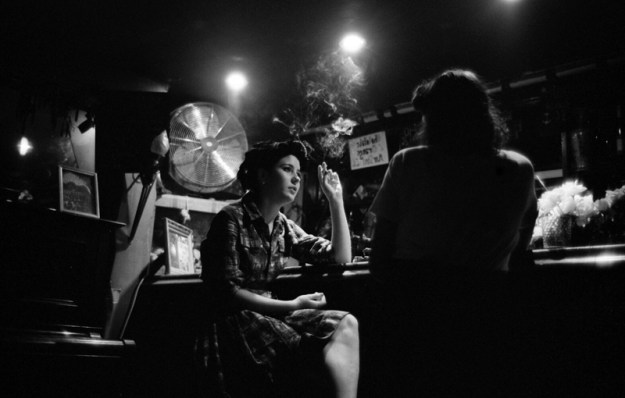
Guy wanted to mention and somehow reference in the piece some of his formative and favourite places and people and we came up with a very long list, most of which involved alcohol (often at the much-lamented Black Gardenia, above) or music or frequently both. And so I wrote a short story that is (very, very loosely) inspired by James Joyce’s Ulysses, about a boy failing to meet a girl and spending 24 hours wandering around the streets of Soho, among its ghosts, its music and its memories. Of course, once subjected to the alchemy of Guy Barker, where base stories become musically precious, things changed. So here is a guide to the thematic waymarkers in the piece, which consists of seven (part six is divided into two) sections.

  1. BACON & BOHEMIA

I opened the story with our hero living in Fitrovia and being disturbed by the smell of breakfast:

  “I am always woken early by the smell of bacon, climbing the stairs from the kitchen below, wafting under the door like a fog of temptation, tickling my nose. So I always awake with a craving for a bacon butty. But I don’t mind the premature start today. I have a date with a beautiful woman. 8am. Bar Italia.”

But it is well before the appointed hour and in this section Guy conjures up a stroll through the streets of Soho before sunrise. Bottles roll in the gutters, the garbage trucks patrol the alleys, many of the area’s characters are just waking up, others going to bed – some tired and happy, others reflecting on a night gone awry. The boy wanders down Wardour St, killing time, looking at film posters in the production houses, listening to the ‘dawn chorus’ chatter of stall-holders in Berwick St, until it is time for coffee on Frith St.

Unknown-2

  1. MOZART & MOCHA

The music here takes on a frantic quality. On the way to Bar Italia for his rendezvous he confronts the tide of workers rushing into the area, marching to their desks and workstations and shop floors, a mass of humanity on the move, blocking and knocking him, until he turns the corner sees Bar Italia (and the music takes on a touch of Fellini-esque romance).

A dominant 7th chord announces his sanctuary in this slice of La Dolce Vita, with cheeky Italian barmen serving him ‘the best espresso in town’. And serving it again. And again. No girl yet. More coffee? Why not?

Nerves jangling from too much caffeine, he leaves the bar and looks up, noticing the blue plaque declaring that a young Mozart once lived on Frith St. Here, the orchestra gradually falls away to leave a string quartet, which plays 12 bars derived a short Mozart piano piece composed by Mozart when was four.

His limbs jerky from his espresso-overload, the boy struts up Frith, past Ronnie Scott’s, Garlic & Shots, the Dog & Duck, until he comes to Soho Square, and thinks of Fifis.

  1. FAITH & FIFIS

A ‘Fifi’ was the slang name for the working girls, often of French or Belgian extraction (or pretending to be), who inhabited Soho in the pre- and post-war years.

“I light a cigarette and lean against the railings outside Église Protestante Française de Londres, the last Huguenot church in London. Would the Fifis have worshipped here? Probably not, most of those girls who came over in the ‘30s, 40s and ‘50s would have been Catholic, I guess. I look across to St Patrick’s, where maybe the Fifis confessed their sins and along to the House of St Barnabas, once a charitable organization for émigrés run by nuns, then, post-WW2, a women’s hostel, where I am sure the odd Fifi would have fetched up.”

 images-1

These thoughts on religion are suggested by a brass chorale. But it moves on to something darker, for Soho in the thirties had its own version of Jack the Ripper or the Boston Strangler – a serial killer was at work, with victims in Archer, Lexington, Rupert, Old Compton and Wardour streets, all strangled with their own silk stockings. “Jack the Strangler” was never caught.

Musing on this, he sees the ghosts of the dead Fifis, grey, pale-faced corpses. As the instruction to the orchestra on the score has it: ‘Soho Square has become an open air charnel house’.

  1. RHYTHM, BLUES & BEYOND

What Guy calls a ‘psychedelic’ start signals a section where the boy is moving from Soho Square, considering drowning his sorrows at being stood up, and thinking of all the drinking and music clubs in Soho. But on his travels he comes across Jeffery Bernard, furious at just being barred from the Colony Room, who marches him to the Coach & Horses, where Norman, the rudest landlord in London, plies them with gin and insults. Further enraged by the drink, Jeff marches off (which you’ll hear clearly in the music) and ‘borrows’ a window cleaner’s ladder. He takes it to outside 41 Dean St and leans it against the first floor window. He scuttles up it. Bangs on the glass. When the window is open he addresses those (the Bacons and the Farsons) gathered within: ‘You are all a bunch of…’

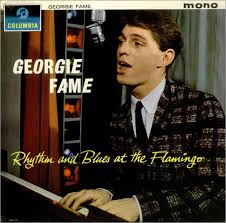
And off Jeff goes, sliding down the ladder and marching off again, the young man in tow. Here, a bluesy 12/8 section suggests the other type of club in Soho, the music ones, especially the Flamingo, and Georgie Fame’s R&B all-nighters.
Unknown-1

They pass by Kettner’s, where two men dressed in black are at work – Kenny Clayton is playing stride piano, Bill Mitchell singing. From there Jeff doubles back, heading for Jerry’s, the other famous Soho haunt of the alcoholically adventurous, and when he reaches it, there is a slowing of the music, signalling his now weary descent down the stairs into the warm, crepuscular embrace of the drinking den.

  1. GIG & GIRLS

Later, much later, there is a head that needs clearing, and our boy walks towards Archer St, which he finds populated by musical ghosts. As it is explained in the story:

“From the twenties through to the sixties, jazz musicians would crowd this street. Wall to wall it was. The snooty London Orchestral Association had it headquarters there. And they wouldn’t allow dance band musicians in. Too populist, you see. But outside, in this street here, it was like a musicians’ Labour Exchange. You wanted a gig or to get paid or to hear the gossip, you came down here.”


Archer Street

Archer Street

So you will hear this in a section reminiscent of the bright, optimistic hustle and bustle of a Pathé News reel, as the musicians crowd the streets, shooting the breeze and a line, until.. hold the phone, what’s this? Romance – or at least sex – has raised its pretty head in the score.

Archer St, you see, intersects with Windmill St, and musicians always used for the doorways that allowed them to see the famous Windmill Girls come and go. There were other women there, too. As Ronnie Scott put it years later: “These days you’d call them groupies. Back then we just thought of them as jolly good sports.”

Fired up by such thoughts, the lad, still the worse for wear, hightails it back to Dean St and Sunset Strip, one of the few remaining original strip club for which the area was once notorious. What you might call “Music To Disrobe By” is a feature in this section, with appropriate – or perhaps inappropriate – contributions from the orchestra.


images

  1. A GIRL, A GARDENIA & A GAGGIA

 a. A PEARL ON DEAN

Sobriety brings self-loathing. He doesn’t want to see girls, naked or otherwise he wants to see A particular girl.

Leaving the club, he sprints up Dean St, towards the Black Gardenia where he first met her, and BOOM! There she is, standing outside in all her tattooed glory. They speak, sweetly.

l_3d40ceb698e929cd79c2323ea9824a38

And he discovers he has been an idiot. When she said she’d meet him ‘a week today’ for an early coffee, it was well after midnight – but he was thinking of the previous day, when he had started the evening. He had turned up at the Bar Italia 24 hours too early.

After a drink at the Gardenia, they go back to Frith St, where those cheeky barmen are still serving the best espresso in town.

b) ESPRESSO SUNRISE

And so, exactly 24 hours after he left his flat in Fitzrovia, they walk out of the Bar Italia together, into the promise of a Soho dawn. The day has come full circle, and so has the piece.


A BERLIN HIGH LINE?

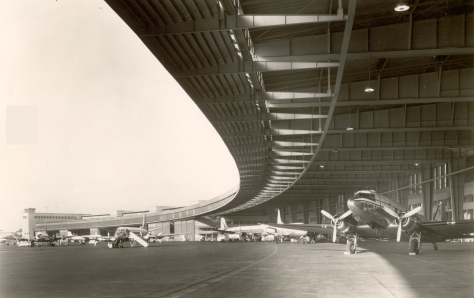
I have a soft spot for Berlin’s Tempelhof Airport, which was built between 1934-36 and mothballed seventy-odd years later. Yes, it is a symbol of Nazi Germany but, even though its pedigree is suspect, the audacious sweep of the curved building, the 50m-wide canopy to cover the aircraft and its intimidating scale – like all Nazi-era public buildings it was intended to make you feel very small indeed – was and is very impressive.

Souce: Berliner Flughäfen/Archiv

Souce: Berliner Flughäfen/Archiv

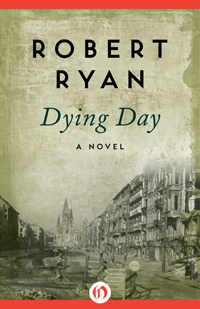
Sir Norman Foster called it the ‘mother of all airports’ – after all, the main terminal building is a stunning 1.2 kilometres long. It also featured in my novel about the Berlin Airlift of 1948, Dying Day, re-issued this week by Open Road as an e-book in the USA (see http://www.openroadmedia.com) and I spent a fair amount of time back in 2006-7 poking around the airport.

img-dying-day_125819593762

So I thought it was a shame when Tempelhof closed to air traffic in 2008. Since then it has entered a twilight phase – the main runways have morphed into a popular public park, but the vast and iconic terminal buildings are only used for ad hoc fashion and music events. A recent conversation with Burkhard Kieker, CEO of Berlin Tourism, however, suggested that there might be an interesting future for the building.  ‘A long section of the roof was designed to support a hundred thousand people – so they could welcome Hitler when he landed and listen to his speeches. My vision is to turn that into something like the High Line in New York – an aerial park, with trees and shrubs and cafes.’

It’s a great idea. Much is being made by Berlin of the 25th anniversary of the wall coming down in November. 2018, though, is the 70th anniversary of the  Airlift, an almost equally important bookmark in the city’s history. It would be very apposite to have something opening on the roof of Tempelhof by then, overlooking the field where the constant flights saved the city from starvation.

Review of Dead Can Wait in The Times

This from Marcel Berlins’ crime round-up:

The Dead Can Wait by Robert Ryan
Dr John Watson was not, it seems, quite as dim as he’s portrayed in the Sherlock Holmes stories. Robert Ryan (with the consent of the Conan Doyle estate) reveals his true mettle. The Dead Can Wait is in no sense a pastiche, but a seriously good, very readable, well-researched novel incorporating the First World War, detection and espionage. It is 1916. Watson has become an expert on the injuries and mental traumas suffered by soldiers in battle. The British are secretly developing a new kind of weapon. But, in its first test, seven men involved become insane, then die spectacularly. The sole survivor is rendered mute. Watson is commanded to discover the causes of the tragedy, but there are foreign spies around and enemies within.
The Dead Can Wait by Robert Ryan, Simon and Schuster, 463 pp, £18.99. To buy this book for £14.99, visit thetimes.co.uk/bookshop or call 0845 2712134

The novel is partly set on ‘the most lethal road in England’, of which more later:

images

First Great Train Robbery Trailer Released

The BBC has released the first trailer (below) for the two-part Great Train Robbery film, ‘inspired by’ (as the credit have it) my novel Signal Red (as in ‘kickstarted’, which was its actual role; the finished product isn’t a film of the book). The first of the pair, A Robber’s Tale concentrates on Bruce Reynolds (Luke Evans); the second, A Copper’s Tale, centres on the dour but dedicated policeman Tommy Butler (Jim Broadbent). The screenplays are by Chris Chibnall (Dr Who, Camelot, Law & Order, United, Broadchurch), but with different directors, DOPs and editors, each has a strikingly different feel, although they both have at their core a powerful central performance from the lead actor. They are scheduled to be shown ‘soon’ – most likely before Christmas. STOP PRESS: Films now due to be shown on December 18th and 19th.

JANIE DEE, DR WATSON AND ME

Well, talk about last minute, but we finally got a working edit of the new promo trailer for Dead Man’s Land. It features actress/singer Janie Dee reading Mrs Gregson’s little ‘rant’ early on in the book. It was recorded in her kitchen, with builders above and children doing homework, making drinks and chatting below and it is remarkable that it came together at all. Yet after every interruption, the talented Ms Dee dropped seamlessly back into character (about which she had extracted more than I knew I knew from me). There were a few volume issues, mainly because I kept moving the microphone (yes, I should have done it in a studio – everyone, including Janie, told me that), but I think that is sorted. So, I am going to show it (there are visuals as well) at the Barts event on Wednesday 13th, along with the new silent Sherlock short. Book here: http://www.eventbrite.co.uk/e/autumn-seminar-6-dr-watson-in-the-spotlight-tickets-7847286445?aff=eorg

Unknown-1

A little housekeeping on the event from organiser Carla Valentine if you are coming along:

Dear All,
To those who have not attended before (and also those who have) there are some works going on in the courtyard at Barts Hospital. They won’t cause a problem for you entering the museum but may make visibility of the correct entrance more difficult. 

All the directions are on our museum info page as usual: http://www.potts-pots.blogspot.co.uk/p/museum-info.html and they will make it incredibly easy for you to find the entrance to the museum from the Main Gate (Henry VIII Gate)
If you don’t enter the courtyard via the main gate (which is the one on West Smithfield, opposite the meat market, consisting of a huge concrete arch) then I suggest just circulating the courtyard until you reach it and going from there.
I look forward to seeing you tomorrow,
Regards,
Carla

DR WATSON STARS IN NEW SHERLOCK SHORT

There is an evening of “Dr Watson in the Spotlight” at the Bart’s Pathology Museum coming up. This venue, as regular readers will know, is the rather wonderful former teaching space in Bart’s Hospital that looks like a set from the latest series of Ripper Street. It is in the same complex of building where Sherlock Holmes is reputed to have first met Dr Watson (‘You have been in Afghanistan, I perceive’) and where Conan Doyle both worked and wrote. On Wednesday November 13, there will be the premiere of a short silent film by Celine Terranova called Sherlock Holmes and the Stolen Emerald, done in ‘steampunk’ style and filmed at the museum. That will be followed by a talk from me about Watson’s medical career in World War 1 – how he came to be there and what he would be doing. There might also be a new trailer for Dead Man’s Land if we edit it in time. And a raffle to win the film and the book. The doors open at 6.30pm for a 7pm start (finish by 9pm) and costs £6.50, including refreshments (wine or soft drinks). As the museum is not open to the public, coming to an event is the only way to get past the doors into this wonderful world of medical curiosities. See http://potts-pots.blogspot.co.uk and book on http://bartsautumn6-eorg.eventbrite.co.uk.
And here is another chance to see Assistant Technical Curator Carla Valentine explaining about Bart’s and Holmes and Watson: