This coming weekend (from April 13) the Montreux Jazz Festival is landing on the banks of the Thames (so it’ll be smokin’ on the water.. sorry Deep Purple fans) for a three-day collaboration between the Southbank and the legendary Swiss festival. The Montreux Jazz Festival was founded by the late and much-missed Claude Nobs in 1967 and was and is known for the breadth of its programming. The London collab is equally eclectic. It includes Theo Croker’s Mixtape, an imaginative reworking of Miles’ electric legacy by the trumpeter (Friday 13), with, on the same night, the excellent vocalist Lucy-Anne Daniels in the Purcell Room, showing why she won 2025 Tina May Young Jazz Musician Award. She appears on stage alongside another of our favourite horn players, young Poppy Daniels (it’s part of the Women in Jazz strand). There’s also future-facing Scottish trombonist/electronica whizz corto-alto on the 15th – always innovative and entertaining at the same time – with Swiss-Palestinian drummer/composer Ramzi Hammad fusing Arabic, hip-hop and London jazz influences over in the Purcell. There’s lots more in between, including talks and discussions.
We spoke to Jane Beese, Head of Contemporary Music at the Southbank Centre, to about the origins of this unique residency, which is an ongoing project and the state of modern jazz.
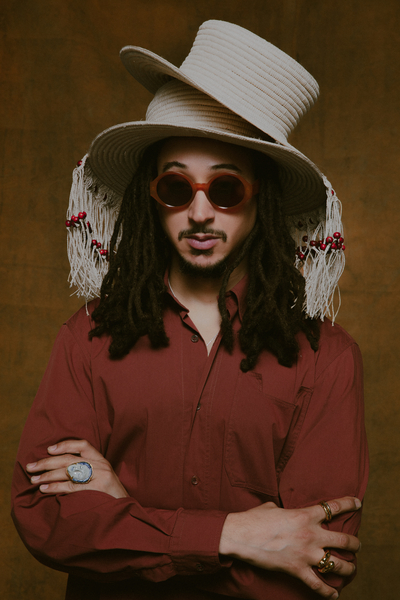
Theo Croker (Photo: Bruno Barretto)
How did the Montreux Jazz Festival link come about?
Our relationship with Montreux Jazz Festival grew from a shared curiosity about where jazz is headed and showcasing the talent that is pushing jazz in new directions. Both the Southbank Centre and Montreux have long histories of presenting pioneering music, and when we started exploring how to present a multi-faceted, diverse line-up of jazz, it became clear a sustained partnership could do more than just bring artists across international borders – it could create an exchange of ideas and approaches to jazz as a genre.
It also feels fitting to think about the future of jazz during a landmark anniversary that marks 75 years since the Southbank Centre’s founding event: the Festival of Britain. For 75 years, our stages have hosted some of the most influential figures in jazz, from Nina Simone performing here in the late ’60s and ’70s to Miles Davis who performed here no fewer than eight times. That legacy gives context to thinking about the future and what the jazz of tomorrow sounds like. The residency lets us honour jazz’s history while amplifying voices who are shaping the next chapter of the music.
One of the key concerts is Theo Croker’s re-working/re-imagining of Miles Davis’s electric legacy. Why, after all this time, does Miles matter?
As an icon of the genre, Miles Davis really did push the boundaries of jazz and remains an important cultural touchstone when thinking about multifaceted approaches to jazz and its direction. He wasn’t just a brilliant trumpeter – he was a pioneer, always asking what jazz could become next. From bebop to cool jazz, to electric fusion, he didn’t just follow trends, but set them, and challenged musicians and audiences to hear music differently. This year marks the centenary of his birth, which is a great moment to reflect on the scale of his influence. Even today, his legacy is felt in the way artists take risks, blend genres, and rethink what jazz can be. Miles’ legacy reminds us that jazz is alive, evolving, and never finished, and that ethos is what keeps the music vibrant today.
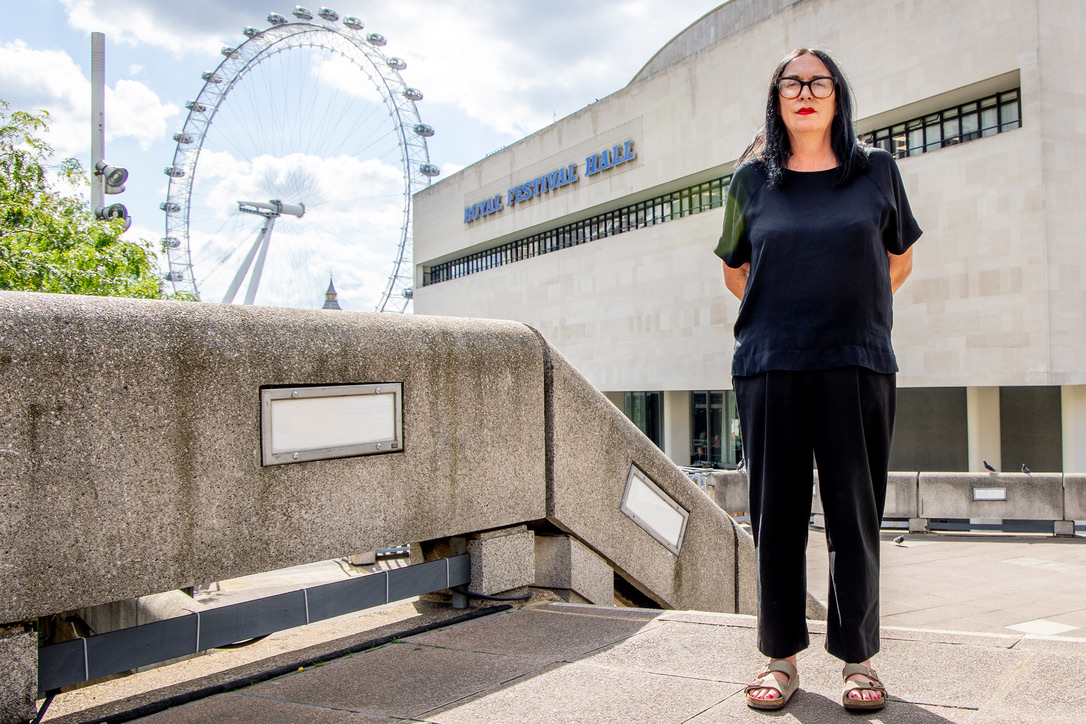
Jane Beese Head of Contemporary Music at the Southbank Centre (Photo: Pete Woodhead )
What guided the choice of artists for the residency?
Since the residency is all about presenting a multi-faceted take on jazz, we wanted to work with artists who are stretching the form – drawing on other genres, cultures, and experiences – and wanted to think about jazz as an evolving musical language rather than a fixed style. You can really see that in the line-up: Theo Croker’s music moves fluidly between jazz and hip-hop; corto.alto brings an experimental approach that leans heavily on jazz’s improvisational tradition. Each artist in the residency is asking questions about the music, the moment, and the audience, which feels very much in the spirit of Miles and in line with what the Southbank Centre has always tried to do: creating space for bold, forward-thinking artistry. It’s been a joy to curate a programme of jazz this year that is so eclectic and yet feels very of the moment. I can’t wait for people to come down to the Southbank Centre to experience it!
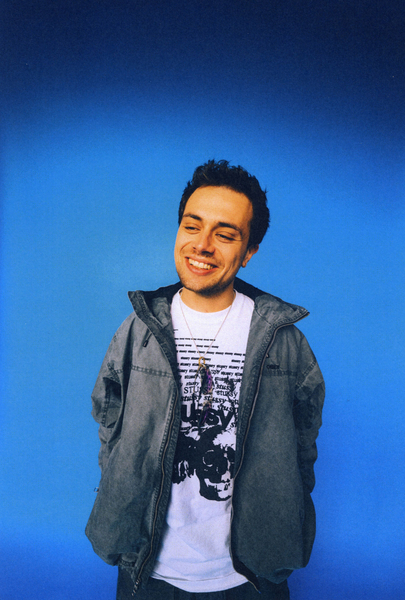
corto.alto (Photo: James Pearson-Howes)
How do you feel about the state of jazz in the UK at the moment? And how important have Tomorrow’s Warriors been?
It’s no secret that our Resident Organisation Tomorrow’s Warriors have had an incredible impact on the UK, and arguably beyond the UK too. Through their hard work and 35 years of dedication, they’ve helped produce artists like Soweto Kinch and the brilliant Ezra Collective, who have themselves really pushed the genre to a greater breadth of the public. It’s a privilege to work closely with Tomorrow’s Warriors, as a resident whose work is rooted in equity of access to opportunity, mentorship, and talent development. I can’t wait to hear them join forces with Children of Zeus, as part of the festival residency.
What else are you looking forward to in the jazz sphere and why?
One of the best things about jazz festivals in the UK today is the breadth of talent they platform. You can look across a line-up and be spoilt for choice. We’re very lucky to host the famed EFG London Jazz Festival at the Southbank Centre each year, which is always a highlight in the music calendar for any jazz fan, and yet another great chance to hear fantastic live jazz performance, particularly from artists in the early stages of their career too. It’s set to be a fantastic year for boundary-pushing jazz.
I have been in Ronnie Scott’s many, many times, but never on a Saturday afternoon and have certainly never had my heart broken there. Ronnie’s is all about elation, not regret. But then, on a recent Saturday, I was about to give something precious away. An instrument.
(PHOTO: JONATHAN FUTRELL)
Some years ago, I was working on a novel [Trans Am] set in a trailer park in the US. I wanted the hero to be a trumpet player and, at some point, to have to sell his horn in order to fund a search for a young lad who had gone missing from the park. I tracked down top trumpet player Guy Barker, whom I had seen and heard at Ornette Coleman and Billy Cobham gigs and asked him if he would help with some technical details. Yes, he said. When we went to get taxis home, it turned out we lived in parallel roads in Muswell Hill (he’s in Chiswick now and I’m in Kentish Town). We became friends and have even collaborated on projects since then.
I eventually bought myself a rather careworn trumpet and set about practicing not just the playing but the stripping down and cleaning rituals (prior to the hero hocking it). My wife Deborah even bought me lessons, from a young man called Henry Collins who went on to play in the Amy Winehouse Band. In fact, he still does – they are regulars at places like Koko in Camden and are currently touring what we used to call The Continent.
When I finally delivered the book, my editor loved it. Apart from one thing. “Lose the trumpet player,” he said. “But I’ve just learned to play Love Theme from Spartacus,” I protested, to no avail. My protagonist became a guitarist. But I didn’t buy a guitar. I wasn’t going to make that mistake twice.
During the course of my over-research into the trumpet, I had mentioned how much I loved the warmer, more melancholic sound of the slightly larger flugelhorn, as played by Kenny Wheeler, Art Farmer and Ian Carr. Me and my big mouth. I had a big birthday coming up and, unbeknownst to me, Deb plotted to buy me one.
She went to a well-known brass instrument and explained what she wanted and was duly presented with a shiny Flugel on the counter top. “Hold on,” she said. “I’m not sure. Do you mind if I make a phone call?” The assistant shrugged. Deb called Guy, who was in Hong Kong. “Put the server on,” he said. Deb handed her phone over, saying “It’s Guy Barker.”
The assistant went pale. After some spluttering, he said “No, Guy. Yes, Guy. You’re right, this isn’t the flugelhorn she’s looking for. I’ll sort it.”
And he did. It’s a lovely instrument, but I simply don’t do it justice. I sort of played it at my daughter’s wedding recently, although luckily Guy stepped out from behind a curtain to perform Cole Porter’s I Love You as intended.
Guy Barker (PHOTO: JAMES CHRISTOS)
It has mostly been back in its case since then, although I sometimes lift it out to give it a polish and oil the valves. The thing is, hanging around with Guy and people like Nathan Bray and Tom Rees-Roberts and listening to Mark Kavuma, Poppy Daniels or Sheila Maurice-Grey, I know I’ll never be in the same trumpet universe as them, even if I did have the wherewithal to put in the hard hours. And the other thing is, that flugel should be played. It demands to be played. I feel like those people who buy beautiful vintage cars, lock them in a garage and never drive them.
Which is how I ended up at Ronnie Scott’s on that recent Saturday afternoon. For the past ten years the club has run a non-profit charitable foundation which supports jazz and young jazz musicians. One of the initiatives is the Musical Instrument Amnesty, which happens every two years or so. You turn up at the club and hand over your unwanted, unloved, criminally underplayed saxophone, guitar, trumpet, violin..whatever. Ronnies then finds a home for it with a struggling musician. Where do they end up? Ada Ologbosere of the RS Foundation explains:
“We distribute instruments through our extended networks, primarily by holding school workshops at the club and providing grants to youth music charities. For example, this year, we funded several organisations across the country, including Serious Trust, to host jazz-focused workshops during the EFG London Jazz Festival. We have also committed to ongoing funding for Kinetika Bloco, a youth music charity comprising young brass and woodwind players, drummers, steel pan, and dancers.
Our outreach program, ‘Ronnie’s On The Road,’ allows us to partner with various schools and organisations across London. This initiative enables us to connect with young adults who, for various reasons, cannot or choose not to leave their borough.”
It isn’t just the UK – Ronnie’s has sent instruments to Africa via Brass For Africa – https://www.brassforafrica.org/) and to Europe (via Sistema Europe – https://www.sistemaeurope.org/). So, who knows where my flugel will end up? Well, I hope I will.
I arrived quite late in the afternoon of donations and the room was pretty rammed with around a hundred instruments. The standard jazz joke would be to say they were all trombones, but there were guitars, keyboards, drum sets, violins, trumpets… and the odd trombone. Each instrument is assigned a number at check in and those that are particularly notable are given a star. My flugel got one of those, which means Ronnie’s will do its very best to keep track of where it ends up and who will play it. Ada kindly offered me the chance to go up onto that hallowed stage and give one last toot, but my mouth went dry at the very thought, especially as RS Orchestra’s estimable Pete Long was in the room checking out the instruments. So, I simply waved it off as it disappeared upstairs.
And yes, I did ask Deborah’s permission before saying goodbye to her gift.
You can contact the Ronnie Scott’s Charitable Foundation on foundation@ronniescotts.co.uk to find out when the next amnesty will be, although it is also announced on social media – just follow the club on whatever platform (links on http://www.ronniescotts.co.uk). But if you have an instrument burning a hole in its case right now, North London’s Young Music Makers charity (which offers subsidised music lessons) will take it off your hands see: https://www.youngmusicmakers.co.uk/.
It wasn’t until recently that I discovered that film director Jack Bond had died at the age of 87 on December 21st, 2024. It was a shock, because I had last spoken to him a couple of months ago on the phone, and he seemed as irrepressible as ever. We said we would meet up soon, but soon never came.
I first met him back in the mid-nineties, when researching a short story for Esquire. It was about “Williams” the man who won the inaugural Monaco GP in 1929 and who later became a Special Operations Executive operative in wartime France, alongside two other talented race drivers – Robert Benoist and Jean-Pierre Wimille.
I had begun my research by contacting Gervaise Cowell, the SOE Advisor to the Foreign & Commonwealth Office, an archivist role, SOE itself having been wrapped up with possibly undue haste at the end of WW2. Frustratingly, the files I obtained were heavily redacted. At the time I thought Cowell was simply being wilfully obstructive, although after his death in 2000 I discovered that he was something of a Smiley figure – he had been Our Man in Moscow in the early sixties. I think secrecy was in his blood.
One day Valerie, who was Cowell’s assistant in the SOE office, called and told me someone else, a Jack Bond, was researching the same resistance circuit, at which my heart sank. (In fact, there were three of us – Joe Saward, whose non-fiction TheGrand Prix Saboteurs book on the drivers is highly recommended – was already taking an interest.) Valerie offered me Jack Bond’s name and number. I rang him and he invited me to his office near the British Museum.
Somehow (that word features a lot in any account of Jack’s career), somehow he had managed to persuade a well-known hotel chain to open a film division, with him in charge, and they funded the offices. The company’s first project was to be Early Morning, named after a painting by William Orpen, who was a character in the real-life story of Williams (in reality William Grover-Williams) and his wife Yvonne. It quickly became modified to Early One Morning.
At that meeting Jack and I discussed the story. I had been chatting to Peter Howarth, my editor on Esquire, and had told him about my difficulties in extracting the exact facts from SOE. “Make it up,” he said. “we’ll publish it as fiction.” Which I did, and it appeared in Esquire as The Man with One Name. Jack wanted to do something similar but didn’t have a script. Would I write it?
I had never tackled a sceenplay before, but Jack had, of course – he had a long string of successful projects behind him.
What was he like? At that first encounter, he reminded me of a cross between Terence Stamp, Richard Harris and Ian McShane in Lovejoy (Jack loved a leather jacket). There was a disarming, almost rogue-ish charm and a sophistication about him that made you happy to be in his company. He was also a born storyteller, most of them tales drawn from a life well lived. There was always the feeling that here was a man who had enjoyed a rich and varied life, both creatively and personally, and that yours was somewhat dull in comparison.
An accountant at the hotel company eventually asked Why have we got a film division? Good question. So, the offices and financing disappeared. But we did write a script and its fate became another picaresque story among the many that dotted Jack’s life. It was bought by Granada Film who subsequently went bust – not because of how much they paid us, but due to the poor performance of several of its films. We went into the dreaded turn-around. At one point Jack phoned me and told me he had sold it on to an Irish film company that had never made a film. And, as it turned out, never would.
Frustrated at the lack of progress, I decided, with Jack’s blessing, to combine the short story with some plot points from the script and produce a novel, also called Early One Morning. It was my fourth book, and the first to become a Sunday Times bestseller. I still get calls asking to option it as a movie and I have to explain that, thanks to its chequered history, it comes with some baggage.
Jack carried on making films and I carried on writing books, but we would meet now and again to discuss ways to revive the project and Jack never lost the ability to surprise me. I remember us drinking a coffee on Wardour Street when an elegant 1960s Bentley glided by. “I used to have one of those,” Jack said. “When?” I asked. “When I was a millionaire,” came the reply.
But that’s another story for another time. Goodbye, Jack.
*The picture of Jack was taken by his partner, cinematographer and photographer Mary-Rose Storey
Some news on the Inferno 67 show with the Guy Barker Big Band at Ronnie Scott’s on September 17-19, with script and some lyrics (mercifully few – that’s not an easy gig) by me. Due to filming clashes, Clarke Peters can no longer take on the role as The Narrator. Fortunately, Clarke recently appeared in a lauded production of King Lear with the mighty Danny Sapani (Misfits, Penny Dreadful, The Crown) at the Almeida Theatre in Islington.
That’s Danny as Lear on the left with Clarke as The Fool. So, Clarke asked Danny if he could step in and pick up the baton, which we are thrilled to say he has. He joins Demetri Goritsas and Emer Kenny on stage at Ronnie’s, along with Joe Stilgoe and Vanessa Haynes on vocals and a mere 18 musicians, plus Guy Barker conducting and cueing. There’s an interview with myself and Guy talking to Ian Shaw about the show coming up on JAZZ FM soon – details later.
Meanwhile, Ronnie Scott’s has re-opened on time after its refurbishment during August and is looking very refreshed. This is me on the re-opening night, loitering with intent to go in.
Rob Ryan on the re-birth of a “nu-jazz” pioneer as he switches instruments to ride the new wave of ambient jazz.
There is no stronger indicator of jazz’s current ascendancy than the introduction of a new nightly show (Mon-Fri) on BBC Radio 3 called Round Midnight, hosted by Soweto Kinch and dedicated to this once widely derided genre. I listened to several of the broadcasts in the first week and Soweto – an accomplished tenor player and rapper – is a warm, inviting and, of course, knowledgeable presenter, with an admirably broad choice of music that ranges far and wide, but always includes generous helpings of home-grown talent. It well worth catching, either live, or, if 11.30pm is past your bedtime, on BBC Sounds.
One of the key architects of the current jazz renaissance was Shabaka Hutchings with his bands The Comet is Coming and Sons of Kemet. I still recall the awesome power of his saxophone when I caught the former at Gilles Peterson’s Worldwide Festival in Sète, France, the hypnotic riffs blasting across the night sky like aural fireworks. So, like many, I was surprised and a little bereft when Shabaka (he has a single name now) announced he was laying down his saxophone in favour of the flute.
He has spoken extensively about this somewhat surprising decision, and it boils down to this: he felt he had exhausted the possibilities of his sax playing (for now, at least) and he wanted to challenge himself and move the music forward into pastures new. After initial disappointment I found myself admiring the courage of the change and enjoying the music he produced late last year. Shabaka is eloquent, erudite and impassioned about his craft and his questing reminds me of John Coltrane’s search for a spiritual enlightenment in his music. Shabaka’s path, though, is far gentler and more ethereal than Coltrane’s latter take-no-prisoners cosmic explorations, creating serene, ambient soundscapes often featuring the fiendishly difficult shakuhachi, an end-blown Japanese bamboo flute. You can hear his new direction on the just-released album Perceive its Beauty, Acknowledge its Grace (Impulse!), which has a raft of star guests, including Outkast’s Andre 3000, another recent convert to the flute, and Shabaka’s father, reading one of his poems on the last track. It’s an involving album that really rewards repeated listening (just as a guide, if you enjoy Matthew Halsall’s more meditative tracks, you’ll love this). Shabaka brings his shakuhachi (and no doubt some of his 64 other flutes and possibly his dad) to The Barbican on May 9th for what should be an intriguing concert, marking a new beginning for him and his fans. Details: https://www.barbican.org.uk/whats-on/2024/event/shabaka.
This review first appeared in the Camden New Journal
My wife suggested that a vanishingly small number of readers would appreciate the headline to this piece. So, here goes – it is a play on a track called Dedicated To You.. But You Weren’t Listening on Soft Machine Volume Two (also used for the title of an album by the Keith Tippet Group, which featured Softs men Elton Dean and Robert Wyatt). It came to mind because guitarist John Etheridge of this parish (you may see him crossing the Heath most days), and the de facto frontman of the current Softs line-up, dedicated the band’s performance on Wednesday night to long-term, masterly drummer John Marshall, who played his final gig at Ronnie’s last year with the band and died in September 2023. Marshall wasn’t actually on Volume Two or the Tippett album but the latter in particular is a masterpiece of the kind of jazz-rock that Marshall excelled at.
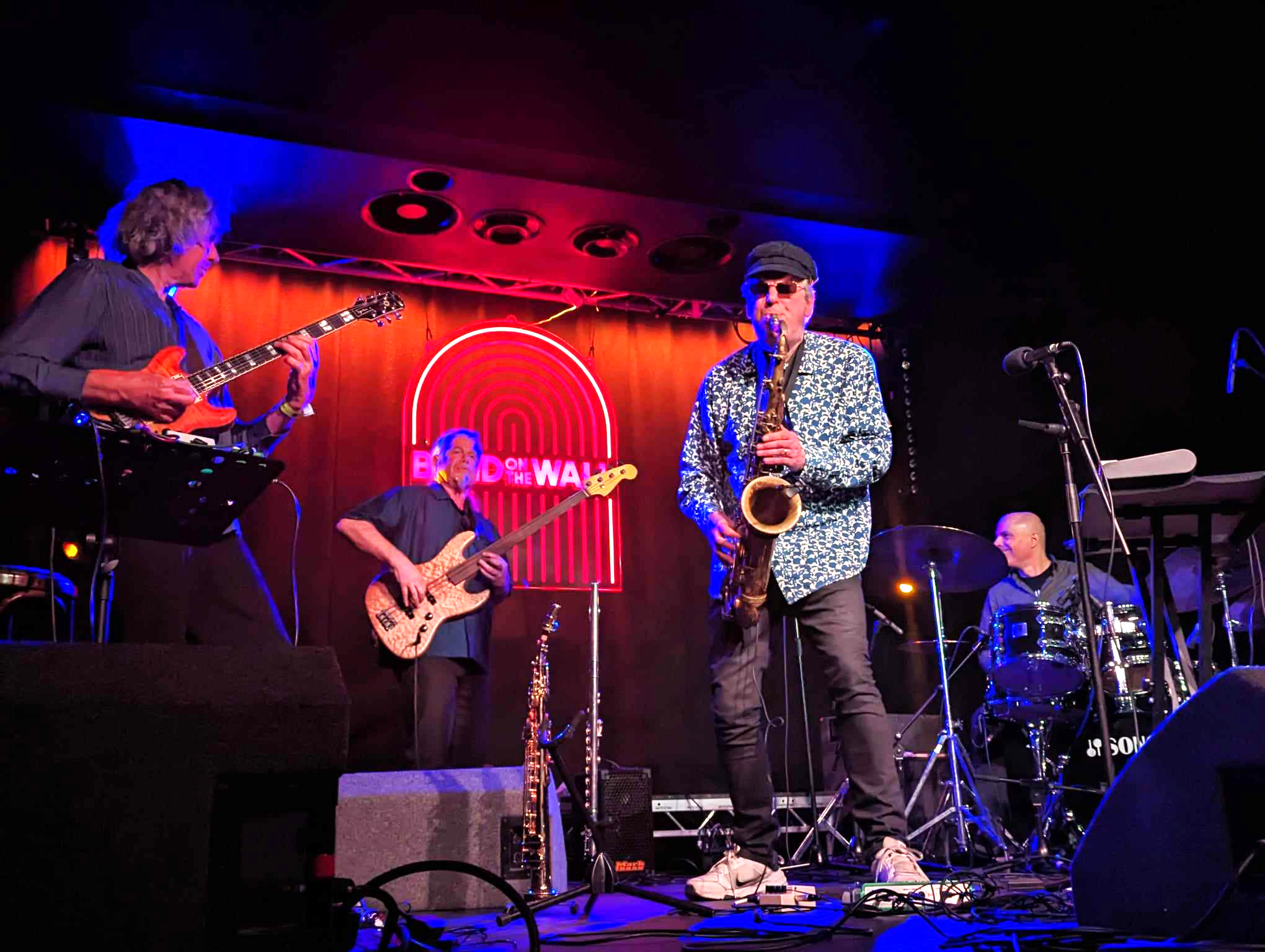
The latest iteration of the Softs (above, pic by P Howitt) played the first show at Ronnie’s – 6.30-8pm -a slightly early slot for jazz. It was ”Just after nap time” as Etheridge, who joined the band in 1975, making him the elder statesmen, put it. Whether he had partaken of a snooze himself wasn’t clear, but something put fire in his belly, because he was on blistering form, whether trading licks with the versatile sax/flute/keys man Theo Travis, indulging in a McLaughlin/Cobham like interplay with drummer Asaf Sirkis or turning out fiery finger-shredding solos on former member (Sir) Karl Jenkins’ Tales of Taliesin from the ninth album Softs.
With no original personnel left, there are those who think the group is like Trigger’s famous broom in Only Fools and Horses – if all the parts have been replaced, is it still the same brush? In this case, though, the better analogy would be something like the Porsche 911 that has evolved over time into a new, yet familiar, beast. Hardly any components remain from the original in the current 911 model, yet the DNA they share is obvious. Soft Machine began in 1966 but the 2024 version has a similar genetic connection to the original.
Etheridge went to great lengths to explain how the new boys – drummer Sirkis with his five crash cymbals and bass player Fred Baker – slot into the history of the band, although a hand-out of a Pete Frame-like family tree would certainly help beginners to the Canterbury scene. Baker, incidentally, may look like he’ll be off to sell shooms at Glastonbury, but he demonstrated that he and his fretless bass are worthy (farm) successors to Hugh Hopper and Roy Babbington. The latter retired recently with hand problems, but he can be heard guesting on the excellent new record Other Doors, which has all the knotty time signatures, ethereal soundscapes and earworm melodies that any long-term fan could desire.
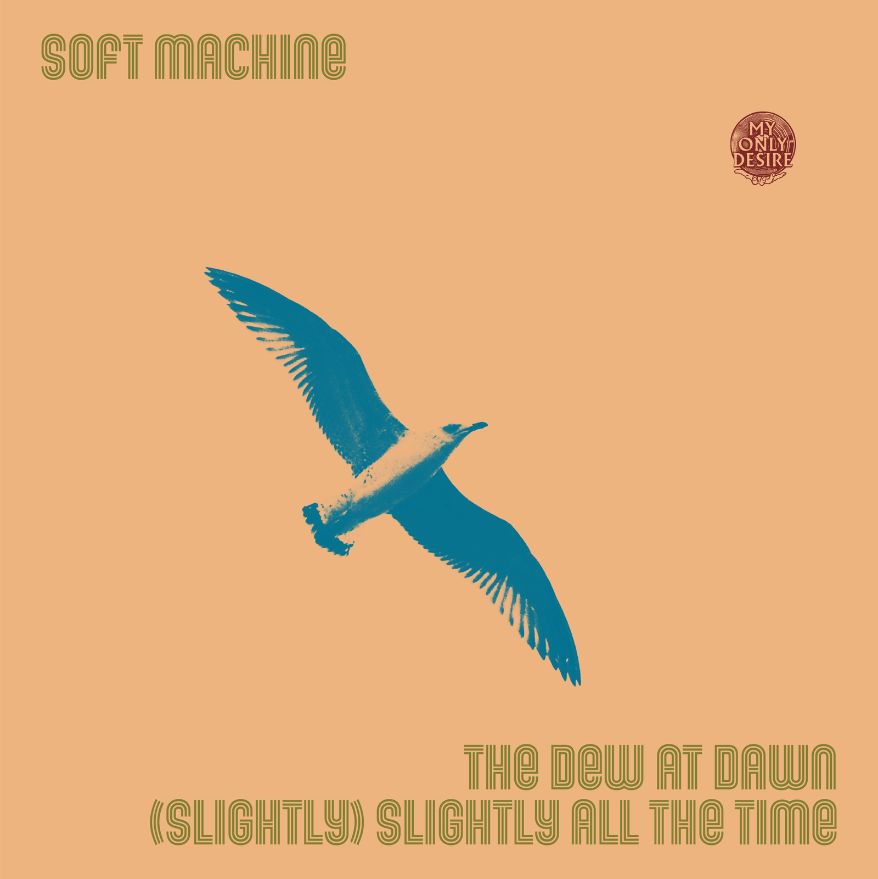
The set was a canny mix of old and new, going back to the sixties for Joy of a Toy – also revisited on Other Doors – and taking in the seminal Third with Facelift and ranging from the abstract and angular (Travis’s The Visitor at the Window) to the serenely beautiful (a flute-driven version of Hopper’s Kings & Queens from Fourth – the flute harks back to the days when the enigmatic Lyn Dobson was a short-lived addition to the “classic” Dean/Hopper/Ratledge/Wyatt line-up). Odd that the new single wasn’t featured. It’s a proper 7-inch 45 rpm number with Harry Becket’s lilting The Dew at Dawn backed with a reworking of that old Mike Ratledge-era favourite, Slightly All the Time. Still, it was for sale in the foyer for those who missed it being included.
The evening finished with a medley that spanned decades, where the multi-talented Travis let rip a la Elton Dean, beginning with 10.30 Returns to the Bedroom, the final track on Soft Machine Volume Two, and climaxing with a furious Hazard Profile Part One from the Bundles album. The full house loved it and, as on the new album, the band demonstrated this music, rather than being an exercise in prog-rock nostalgia, still has a winning vitality and relevance. Ronnie’s is closing for a refurb over the summer – let’s hope they invite Soft Machine back to the spiffed-up club, perhaps this time in the later slot, not just after nap time.
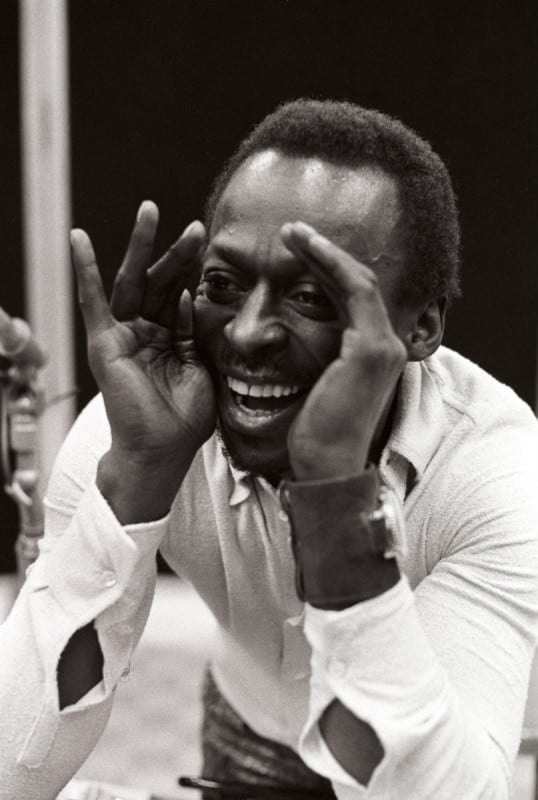
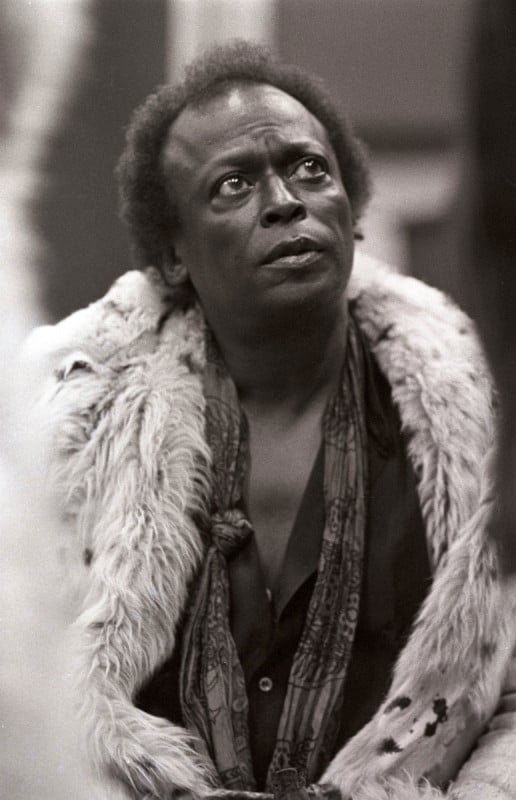
This was originally written for a fashion company. It is here because on November 13th there is a playback of Kind of Blue using the UHQR (Ultra High Quality Record) vinyl version that plays at 45rm (and consists of two discs) in a North London pub. Details at the end of the article. Photographs are from the official Miles Davis site (https://www.milesdavis.com/gallery/miles-davis-photos/)
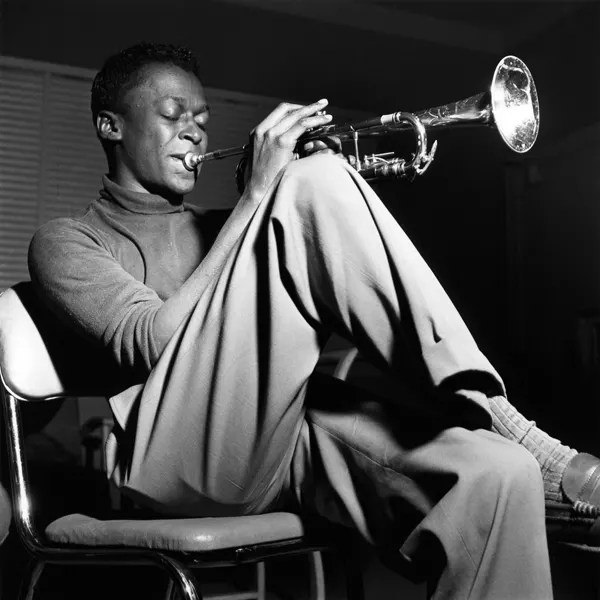
Miles Davis, as well as being one of the most influential jazz musicians in the world, was also one of the most stylish. Looking good was as much an obsession as the sound of his trumpet. “For me, music and life are all about style…. you’ve got to have style in whatever you do – writing, music, painting, fashion, boxing, anything.”
Herbie Hancock remembers: “Miles was always the hippest guy around. The way he moved, the way he walked, the way he stood when he played, what came out of his horn, and the cars he drove [Ferraris and Lamborghinis], all of that was stylish. That was part of his persona.” Saxophonist Wayne Shorter once told the New York Times: “He always dressed well, always in tune with fine things, and he didn’t see any reason why fine things should be denied to anyone. He grew up that way.”
Davis himself confirmed Shorter’s assertion that his embracing of the high life had its roots in his upbringing in a middle-class, aspirational family in East St Louis. “[My mother] had mink coats, diamonds,” Miles wrote in his autobiography. “She was a very glamorous woman who was into all kinds of hats and things. She always dressed to kill. I got my looks from my mother and also my love of clothes and sense of style.”
Still, he needed a little fashion advice when he went out into the world to earn a living as a musician. Future saxophone great Dexter Gordon, always known as a dapper dresser, took him aside and told him to ditch the over-sized suits he was wearing. Miles protested that he had paid a lot of money for them. “It ain’t about money,” replied Gordon. “It’s about hipness.”
Miles responded positively to the criticism, not always a given (one of his favourite brush-off phrases – “So what?” -provided the name of a pivotal tune on Kind of Blue, his ground-breaking, best-selling modal album). “So, I created a kind of hip, quasi-black English look: Brooks Brothers suits, butcher boy shoes, high-top pants, shirts with high tab collars.” In the mid-Fifties he moved from Brooks Brothers to frequenting the Andover Shop in Cambridge’s Harvard Square, where tailor Charlie Davidson dressed him in jackets of English tweed with narrow lapels and natural shoulders, woollen trousers, broadcloth shirts with button-down collars, thin knit ties and Bass Weejun loafers. As anthropologist and jazz scholar John Szwed explains: “It was a look that redefined cool.”
Like his music, which in the space of ten years moved from bop to post-bop to orchestral “third stream” to modal and back to chordal, Miles’s fashion sense was in constant flux. Downbeat magazine once said Miles wore “what the well-dressed man will be wearing next year”. Unlike other jazzers, he regularly featured high in both the Esquire and GQ best-dressed men lists. Why?
In their book Clawing at the Limits of Cool, Farah Jasmine Griffin and Salim Washington argue that (as Dexter had advised him) it was as much how he wore his clothes as his choices that made Miles the fashion plate he became: “They were more than bolstered by his physical beauty and sartorial elegance, his complicated relationships with beautiful women, and most of all, his don’t give a [damn] attitude.”
This, they suggest, was a man who could take a simple, well made, white button-down shirt with the sleeves pushed back and elevate it new heights of sartorial semiotics. “The shirt is tucked neatly into his pants,” they write of his appearance in the Kind of Blue sessions, “He is tight and fit, in full control, in top form… [it is] an aesthetic statement.”
But then so was the green button-down with the rolled-up sleeves with flat-fronted pants he wore on the cover of Milestones the previous year, an uncommonly confident and uncompromising pose -look at that stare – for a black jazz artist at the time. In fact, Miles was showing that he could carry off any number of shirt combos – collarless with a scarf or ascot, a scalloped collar under a seersucker jacket and checked, open-necked numbers, which were a particular favourite for a while.
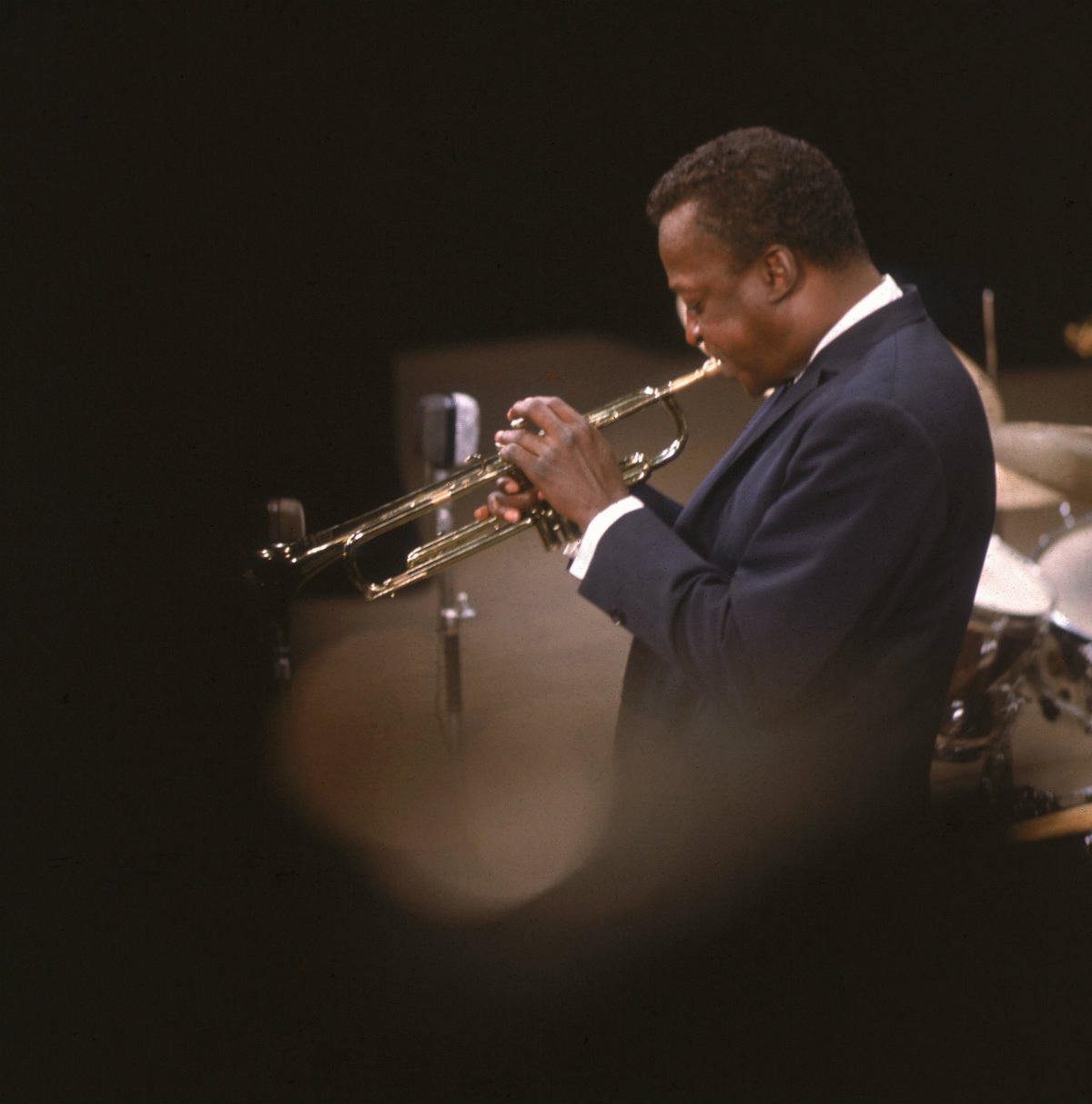
On stage, the Ivy League look of plaid jackets and trim trousers quickly gave way, especially after he had performed in Italy, to a clean, European style of slim-cut dark suit with unfussy white shirt and narrow tie. A pocket handkerchief was usually provided a flash of colour. This outfit, with subtle changes to jacket length and profile, would see him through the sixties and the years of his peerless Second Classic Quartet (Shorter, Hancock, Ron Carter, Tony Williams, Miles). Check out its ’64 concert in Milan on YouTube. It is the timeless Miles look almost all of us think of when his name is mentioned.
As the sixties ended, so his music started to change again, this time even more radically, and Miles would evolve his performance wardrobe with it. The exquisite ballads, the Harmon mute and the complex but satisfying Wayne Shorter tunes were phased out; processed trumpet and long jams came in. This gradual change to electric Miles (which began, tentatively, on 1968’s Miles in the Sky and reached its apotheosis on Bitches Brew in 1970) risked alienating older fans with a genuinely innovative, if often jarring, sound that was courting a new rock audience. So what?
As the music became more groove-based and melody-free, Miles’ stage outfits morphed to reflect the dense patchwork that producer Teo Macero and Davis created from disparate tracks spliced together in the studio. By the time of the once much-derided but now feted funk-draped On the Corner in 1972, we had the furs, the cobra skin, the wrap-around sunglasses, suede trousers and the broad-shouldered, fringed leather jackets. Miles was still ahead, but few wanted to follow, unless they were self-assured enough to carry it off (as Lenny Kravitz and Prince eventually did).
Interestingly, Miles might have invested in flamboyant outfits from the likes of Kohsin Satoh and Issey Miyake in later years, but he never fully abandoned the shirt. There is a famous photograph by Anthony Barboza of Miles in front of his wardrobe and a cascade of belts, scarves and shoes that almost looks as if someone has tossed a hand grenade into it. But, amid the African-inspired tops and leather trousers, in the top left-hand corner.. what’s that? A row of long-sleeved white shirts, of the sort he wore during the Kind of Blue sessions. In Michael Stradford’s book MilesStyle Barboza told the author that the trumpeter still liked expensive shirts but if he wore them in concert, they would get so sweaty “he’d throw them away. So, you never saw him in the same shirt twice. And he wasn’t spending $20 on them.” Maybe that’s why, eventually, they stayed in the wardrobe.
Miles died in 1991, aged 65, by which time he had gone back to ballads (Human Nature, Time After Time) and had finally come to terms with his past, even exploring, thanks to Quincy Jones, some of his fabulous Gil Evans-arranged recordings (from Miles Ahead, Sketches of Spain and Porgy & Bess) at a Montreux concert shortly before he died
The mercurial, oft-troubled trumpeter was, as he admitted in his memoir, far from a perfect human being. Nevertheless, Miles changed the face of jazz across five decades as well as re-calibrating public opinion in the US about what a black musician could achieve – prestige, adulation, wealth – and how they could influence the wider public’s tastes. Most jazz people are remembered for a single thing, one great album or evergreen tune. Miles’ legacy is a dazzling kaleidoscope compared to others’ monochrome. Why the restlessness that dominated his life? “I have to change,’ he once said. “It’s like a curse.” And, in the end, our good fortune.
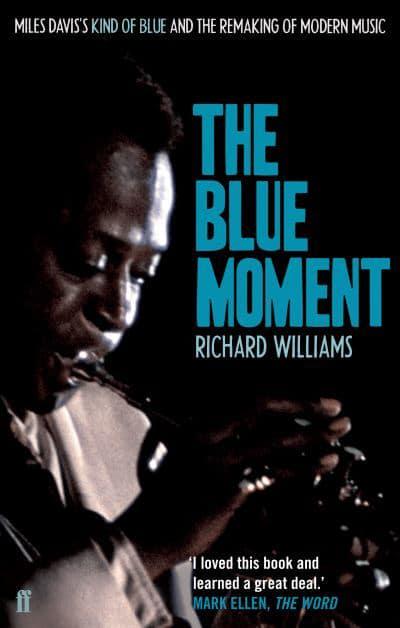
The Dartmouth Arms is on York Rise, NW5. The session is free. If you want to know more about Kind of Blue and its lasting influence I heartily recommend Richard Williams’ The Blue Moment.
This is a (very) expanded version of a piece that appeared in the Camden New Journal
The venerable Blue Note catalogue – home to timeless gems by Art Blakey, Lee Morgan, Horace Silver, Donald Byrd and dozens of others – is one of the greatest archives in jazz history. The record label, having settled down after some turbulent times in past decades and now under the direction of Don Was, is not shy about exploiting its reputation as the guardian of a great jazz legacy nor in marking itself out as progressive label that looks forward as well as backwards. To serve these two masters, in 2020 it invited a raft of young UK jazz artists to revisit and remake tracks from the vaults, in the way Madlib and Us3 had done in the past. The result, Blue Note Re:imagined, was an enjoyable if widely varied set, where some artists restructured the songs/tunes entirely (as with Poppy Ajudha’s fast-and-loose reboot of Herbie Hancock’s Watermelon Man), while others played it pretty straight, such as Ezra Collective with its nicely woozy version of Wayne Shorter’s Footprints.
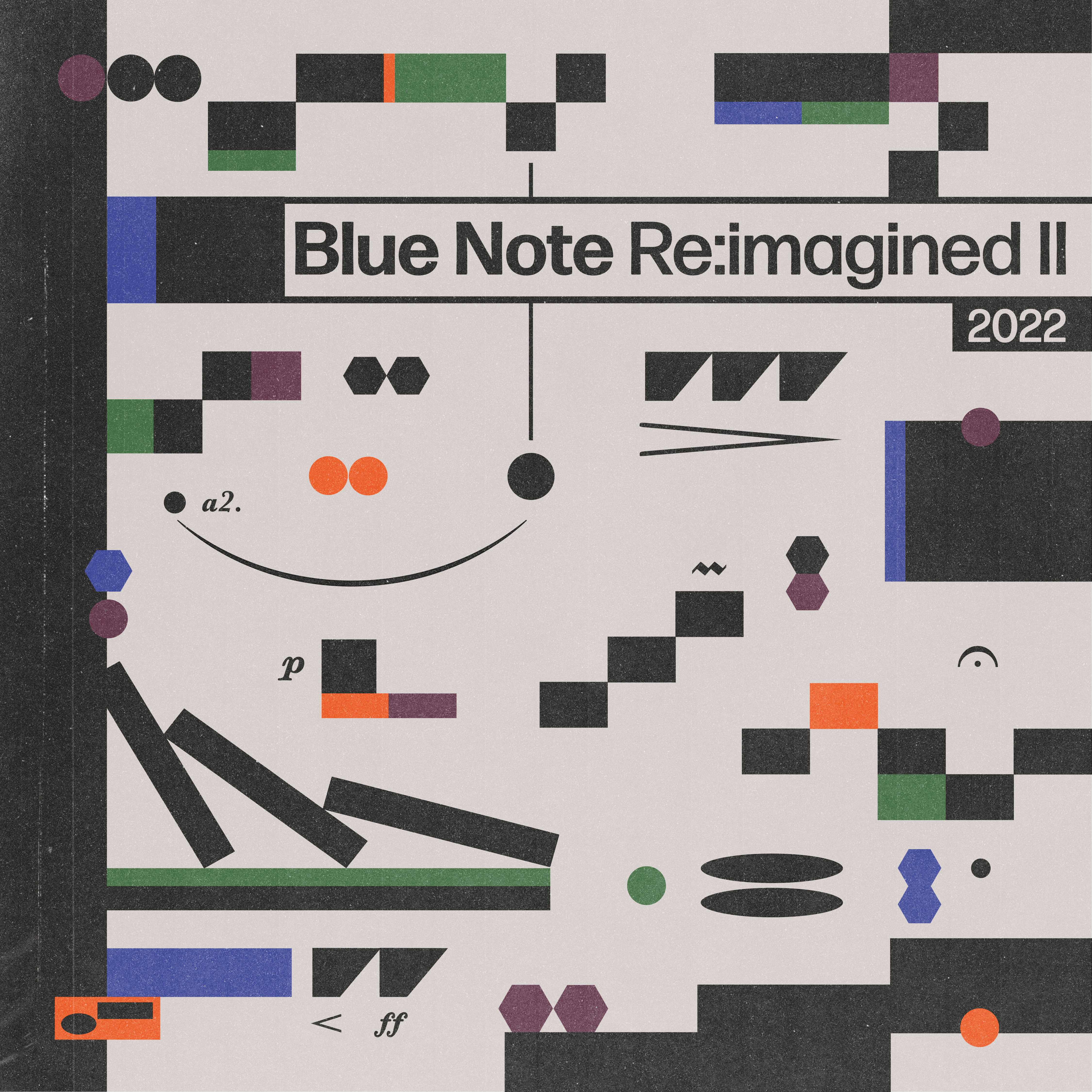
Later this month, available for pre-order now, comes Blue Note: Re-imagined II, where a fresh batch of up-and-coming tyros (Ego Ella May, Nubiyan Twist, Celeste etc) are let loose in jazz heaven. One of them, soul-jazz-R&B star Reuben James (Sam Smith, Disclosure, Roy Ayers, Joni Mitchell – in her living room! – and his own combos), admits that although it sounds like bliss for any jazz geek, the sheer width, breadth and heft of the heritage can be daunting. “Yeah, they called up and said I could choose anything from the Blue Note catalogue and I was like.. whoa. There’s just too much choice. It’s kind of overwhelming.”
I asked some of the other featured artists about the process of choosing and re-imagining a classic Blue Note track. Some were brief, others were, well, fulsome (yes, Nubiyan Twist) but all were insightful. The comments appear in the same order as the tracks on the album.
Yazz Ahmed “It” – From Chick Corea The Complete “IS” Sessions (2002).
RR: The original track is just 30 seconds long. It’s a fascinating album. How did you go about expanding and did you take cues from the other tracks?
YA: One of the approaches I often take to composition is to work with short fragments of melody and rhythm. Once I’ve arrived upon motifs that resonate with me, I mess around with these ‘cells’, adding notes, inverting patterns and improvising on the themes. It’s like being a child, discovering new things by experimenting through play. It occurred to me that I could use the same process with It, using fragments of the material to create a collage, something personal to me, from Chick’s miniature masterpiece.
Whilst working on this arrangement, I was listening to quite a bit of Turkish music and also Standards by American post-rock band, Tortoise, which undoubtedly inspired me to go for heavy sounding guitars, played by Samuel Hällkvist, and crunchy, virtuosic drum grooves performed by Martin France. I always like to compose with particular musicians in mind and for this project it felt perfect to invite my friend, and Chick’s long-time collaborator, Tim Garland, to join my musical family on bass clarinet.
Creating this track has been such a fun experience and I hope people enjoy my proggy-jazzy Turkish take on Chick Corea’s It.
Yazz Ahmed
Conor Albert “You Make Me Feel So Good”– From Bobbi Humphrey Fancy Dancer (1975).
RR: Did you know about Bobbi Humphrey? And why this track? The album was not well received by jazz critics at the time – how do you think this stands up now?
CA: No, I actually didn’t know about Bobbi Humphrey. Rachel from Decca actually suggested I had a listen to this album and I thought a lot of it was really cool! There’s this other tune called Please Set Me at Ease that I also really enjoyed. It reminded me a lot of Headhunters era Herbie Hancock, which I’m a massive fan of. It’s interesting that it wasn’t received well. I seem to remember a lot of jazz critics didn’t like the new jazz funk fusion stuff that happened in the 70’s, as they thought it was too mainstream and thought artists were selling out. I don’t know much about Bobbi’s history but maybe it was something to do with that? I think it stands up great now. It sounds SO 1970’s, in a great way. Super nostalgic and all the sounds are so idiomatic of the time. I just really loved the harmony throughout the record, some pretty weird choices at times but super fun to play!
Parthenope
Parthenope “Don’t Know Why”– From Norah Jones Come Away with Me (2002).
RR: How challenging was it to tackle one of the most familiar songs on the album and how did you go about making it “yours”.
P: I spent a lot of time figuring out which song would work best for me to recreate. I love making music that feels nostalgic and dreamy and felt ‘Don’t Know Why’ naturally lends itself to that. It’s just a great song – I’ve known it since I was a kid and was so inspired to work on it.
When beginning my arrangement, I started to hear ways I could subtly play around with parts of the track in order to offset the original but keep the essence and beauty in its simplicity. What I ended up with was a cover of ‘Don’t Know Why’ that grows from being heavily influenced by the original into something completely different throughout the song, with chord reharmonisation, huge backing vocal stacks and improvisation until it takes you somewhere else as a listener. There is a satisfaction when the song returns to back to the familiar last Norah verse and then brought to a close by a dreamy and thoughtful outro.
I really wanted to maintain everything I love about ‘Don’t Know Why’ in my version. Though it was daunting at first to take on such a big song, I’m so glad I worked with the challenge as it really pushed me creatively and I think it came out great in the end.
Swindle “Miss Kane” – From Donald Byrd Street Lady (1973),
Producer Swindle was unavailable, but both versions are great jazz-funk tracks. The original dates from when Byrd was working with the Mizzell brothers.
Nubiyan Twist
Nubiyan Twist “Through the Noise (Chant No.2)” – From Donald Byrd A New Perspective (1963)
RR: This is one of the most dramatic reworking from a dramatic album. Can you tell me how Chant became Chant No 2. especially about the new rhythm track.
NT: We were excited by the unusual marriage of heavy swing found in both Jazz and UK Garage and 2 step. A connection we hadn’t consciously made before but one that became an exciting backdrop for influences of broken beat, afrobeat, bebop, synthesis and sampling culture that found their way into the composition. We liked the idea of taking a track that might not be an obvious choice and Nick Richards found himself writing lyrics for Donald Byrd’s ‘Chant’ and sketching a beat on his analogue drum machines, Tom Excell then developed new sections in his Sheffield studio, followed by Luke Wynter writing reharmonized chords for a C section. It continued in this fashion as a remote, chain-reaction writing process (begrudgingly adopted due to covid restrictions) which was all compiled and produced by Tom along the way. We got together at Nave studios in Leeds where last minute additions to the composition were made, such as Pilo’s Brazilian-Portuguese rap and BV’s from Ria Moran before finally recording the tune together and getting to hear live band sound. It was a whirlwind process as Tom was due to have his first child around the time of making this tune. Given the grandeur of the artists on Blue Note we put a lot of pressure on ourselves however there’s always something nice about committing to initial ideas and not overthinking or intellectualizing music. It becomes an encapsulation of that moment, even if you feel it’s not finished yet, it’s an honest snapshot. Having a new life about to enter the world whilst composing this conjured up a lot of thoughts about letting go of your ego and passing on the torch to the next generation, reimagining what’s come before in a way that honours and preserves the best parts of the past. It was an honour to have this opportunity to rework ‘Chant’ by Donald Byrd and we’d like to dedicate it to baby Zebedee and his mother Kathy.
Like a lot of the material that we compose as a band, Chant 2 was written collaboratively. We had already become quite used to sending tracks back and forth to one another over the years and this was certainly true over the pandemic.
When we were invited by Blue Note to contribute to the project, we all thought about the tunes we felt most inspired by and started to demo some ideas. I think we explored some Art Blakey material originally as we thought the horn heavy arrangements would work well in our ensemble. At around the same time I started to demo an arrangement of ‘Chant’ by Donald Byrd. I wanted to avoid selecting a tune that I already knew very well and especially stayed clear of my favourite tracks. Chant was a tune that I had heard before, but it was fresh enough in my ears to begin ‘reimagine’ it as a contemporary composition. First and foremost, when I sat and listened to the track, I instantly felt inspired. It was the honesty of human voice and the melancholic mood of the tune. It was haunting! Reflecting on it now, I think it really resonated with the times and what everyone was and is going through.
Musically, the original has a very strong melody, so it made sense to try and write lyrics. In the process of the lyric writing, I tried to explore the whole experience of feeling as though these jazz greats were communicating to us through the music, what were they trying to say? The 2 step, Garage feel to the track wasn’t necessarily a conscious decision, but I think it’s a sound that is so unique to the UK! I don’t think that any of us really wanted to explore a classic jazz swing feel to the track as that would have been too in keeping with the original and could have sounded like a bit of a pastiche. That being said, it is funny how we ended up having a shuffle and swing to the beat through the Garage feel. There is a strange parallel!
Once we had established the main feel of the track, we started to share ideas for B sections, a bridge and some horn figures also. Tom Excell is our band leader and producer. It really is inspiring watching him bring together everyone’s ideas to create a cohesive arrangement. By the time it came to record our parts as a band, we already had a good idea of what the form would be. Tom facilitated a session at the incredible Nave studios in Leeds, the city where the band had been conceived. This was one of the first times we had all been together since the pandemic, so it was really special. During this session Oli (keys), contributed a beautiful piano solo and Pilo (percussion, vocals), a passage of Brazilian-Portuguese spoken word, which really dances around the whole rhythmic feel of the track. Ria Moran has been featuring with the band over the last couple of years, so it was important to have her presence on the track. She contributed some beautiful backing vocals and ad libs. Once the tune had been recorded, we had our good friend and mixing engineer Oli Barton-Wood pull everything together.
I think we jammed a lot into this tune, which is pretty typical for the way we write and arrange as a band. There is a lot of us and it’s important that everyone features in a meaningful way. Although we were paying homage to Donald Byrd’s original tune, I think we were able to take it to another space, using our own influences and musical culture, which is the whole point of the genre. It’s about pushing forward, innovating and seeking ways to express ourselves in the most honest way possible.
Ego Ella May “The Morning Side of Love” – From Chico Hamilton Pereginations (1975).
Ego Ella May was not available for interview, which was a shame as it would be interesting to hear a vocalist’s take on a percussionist’s album..
Ego Ella May
Oscar Jerome & Oscar #Worldpeace “(Why You So) Green with Envy” – From Grant Green, Green Street (1961).
Oscar Jerome was not available for intereview.
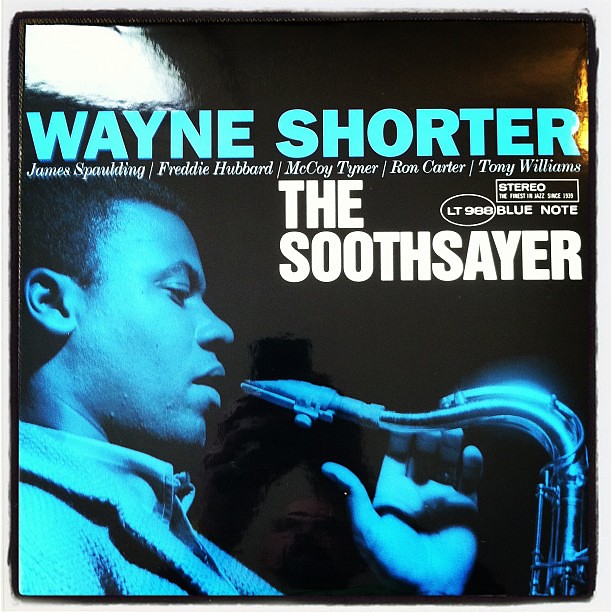
Daniel Casimir ft. Ria Moran “Lost”– From Wayne Shorter The Soothsayer (1979)
RR: The Soothsayer is a very good album that languished in the vault for years. Can you talk about the appeal of this band (and maybe a word about Ron Carter in particular)? And why/how you went for this quite significant (and successful) reconstruction of this track.
DC: The reimagining of Wayne Shorter’s lost album was quite difficult (it took me around 11 attempts) simply because I have such a great affection for the track and the album as a whole. My goal wasn’t to modernise the music (which I feel is impossible), but to imagine what the track could potentially sound like if Wayne Shorter was born in West London. I am truly grateful to collaborate with vocalist and writer Ria Moran, Who I feel really captures the mood of the original piece in this setting. Another difficulty about covering this track is that each personnel on the original recording is an icon in Jazz . I had the pleasure of watching Ron Carter at this year’s North Sea Jazz, and it is truly an honour to cover piece that he has performed on.
Theon Cross “Epistrophy”– From Thelonious Monk Genius of Modern Music (1952).
The innovative tuba player as unavailable for interview.
Maya Delilah
Maya Delilah “Harvest Moon” – From Cassandra Wilson New Moon Daughter (1995)
RR: Many of your listed inspirations come from outside pure “jazz” as, of course Neil Young is (until Cassandra got hold of him). Did you know or like the track (either version) before? How did you approach putting your own spin on it?
MD: I’ve known and loved ‘Harvest Moon’ for a long time as every year me and my family sing it at Christmas (weirdly so as it’s not a Christmas song) but because of that it’s always been a nostalgic song for me. I’m a fan of both versions of the song but wanted to take attributes from Cassandra’s version and start the song off in a similar style to her slow mesmerising cover. I always love making funky sections and love an unexpected switch up so decided to take the second half in that direction.”
Kay Young “Feel Like Making Love” – From Marlena Shaw Mama Got a Bag of Her Own (2006).
RR: In the past you have quoted Janis Joplin as an inspiration. Marlena Shaw is altogether smoother prospect – can you describe what you get from her?
KY: They are actually quite similar in styles. You’ll hear the similarity more on Marlena Shaw’s ‘Women of the Ghetto’ which is quite electrifying. What I love about Marlena Shaw and why I was drawn to her …is her ability to switch that energy on and off.
Kay Young
Venna & Marco Bernardis “Where Are We Going” – From Donald Byrd Blackbyrd (1973).
Venna & Marco were unavailable for interview.
Reuben James “Infant Eyes” – From Wayne Shorter Speak No Evil (1966).
RR Why this track? With added lyrics?
RJ: I found a few vocal versions online with lyrics, I think it’s Jean Carne [It is-RR]. That really inspired me to do my own take and version on this classic and really put it into a more modern soundscape. Herbie Hancock is the GOAT (Greatest of All Time) for me with his feel and choices, second to none really what his sound brings to the original on that [Wayne Shorter record], it’s just ridiculous. I think Herbie’s every piano player’s favourite piano player basically. I actually got to meet him recently, he’s very humble, super sweet and encouraging. I hope you guys enjoy my rendition. It’s really appropriate cause my sister had just had a baby and I’m soon to have my first and it just felt like a right moment to do this song, big up to Wayne Shorter for the composition as it’s just unbelievable harmony. It’s so lush, the chord choices are so ahead of its time and it’s still so hip even today, it just wows me every time.
Reuben James
Binker Golding “Fort Worth” – From Joe Lovano From The Soul (1992).
RR: Perhaps because of the American title I can hear a link from the original to your style on some tracks on your new album, Dream Like a Dogwood Wild Boy. The reworking sounds to me like it straddles that and Feeding the Machine. Can you tell me what your aims were on taking this track on? And why Lovano?
BM: Why Lovano? To me, he is one of the most inspiring saxophonists working today & the record “From the Soul” & particularly the track “Fort Worth” from the early 90’s have always been inspiring to me. It’s a beautifully written, played and recorded number. It’s incredibly simple, but at the same time successful in telling a story that really works. Lovano’s playing and writing are superb in general. So, it was never a difficult choice in that sense. Just difficult to live up to.
“Fort Worth” does have a fairly American feel to it & of course the title does help. I wanted to pick a track which tied into where I am now musically. There are no chordal instruments on the original & this was the big difference I made with the cover. We also played in a more aggressive fashion which changed the mood of the track somewhat. I simply felt that the dissonant, distorted guitar sound would add a fitting new dimension to the song. Binker & Moses’ “Feeding the machine” is certainly a more aggressive album than “Dream like a Dogwood Wild Boy” and it’s possible I still had one ear in that world [of B&M] when making this arrangement.
Cherise “Sunrise” – From Norah Jones Feels Like Home (2004).
A very interesting choice – not an album that was well received at the time, thanks mainly to the increased “country” element. Cherise has moved it back towards a jazzier feel. She was not available for interview.
Franc Moody
Franc Moody “Cristo Redentor”– From Donald Byrd A New Perspective (1963).
RR: This album was Byrd’s attempt to address religion/spirituality in a new way. Does that resonate with you? Or was there another attraction?
FM: Donald Byrd’s, Cristo Redentor is an undeniably transformative piece of music. It has that very special quality of being able to stop your brain whirling in its tracks, cut out the background noise and take you on a journey. Those choral voices are so confident and beautiful but have a vulnerability to them. Byrd references music we’re more used to hearing in a place of worship and yet delivers it within the cool tones and the aesthetic of Blue Note jazz.
Like Donald Byrd (in our own slightly ham-fisted way), we strive for our music to take listeners to a different place. Whether through the mediative grooves of dance music, the scene setting of lyrical hooks, or (without looking into it too much) just trying to offer up a good time on a dance floor somewhere. There’s probably some sort of connection with Donald Byrd’s influences and ours. Growing up surrounded by the choral music of Herbert Howells and John Tavener, the first time I heard Cristo Redentor I was blown away and so inspired by how he had integrated these sounds, space and depth into his music. To be honest we were very scared we would butcher this glorious piece. It’s a very dangerous thing re-imagining a masterpiece!! But we hope that one or two people can get lost in our take on it for a few precious minutes.
Blue Note Re:imagined II is released on September 30th, but you can preview the tunes and compare them to the originals by clicking on the playlist at https://www.bluenote.com/announcing-blue-note-reimagined-ii/. IF the vinyl arrives in time (never a given), Rob Ryan will be doing some back-to-back comparisons of new and old Blue Note at Camden New Journal’s talkin’/jazz stage at the York Rise Street Party NW5 on September 11th. There will also be a tickets to shows at the Pizza Express (https://www.pizzaexpresslive.com/), the Hampstead Jazz Club (https://hampsteadjazzclub.com/) and Camden’s Jazz Café (https://thejazzcafelondon.com) up for grabs.
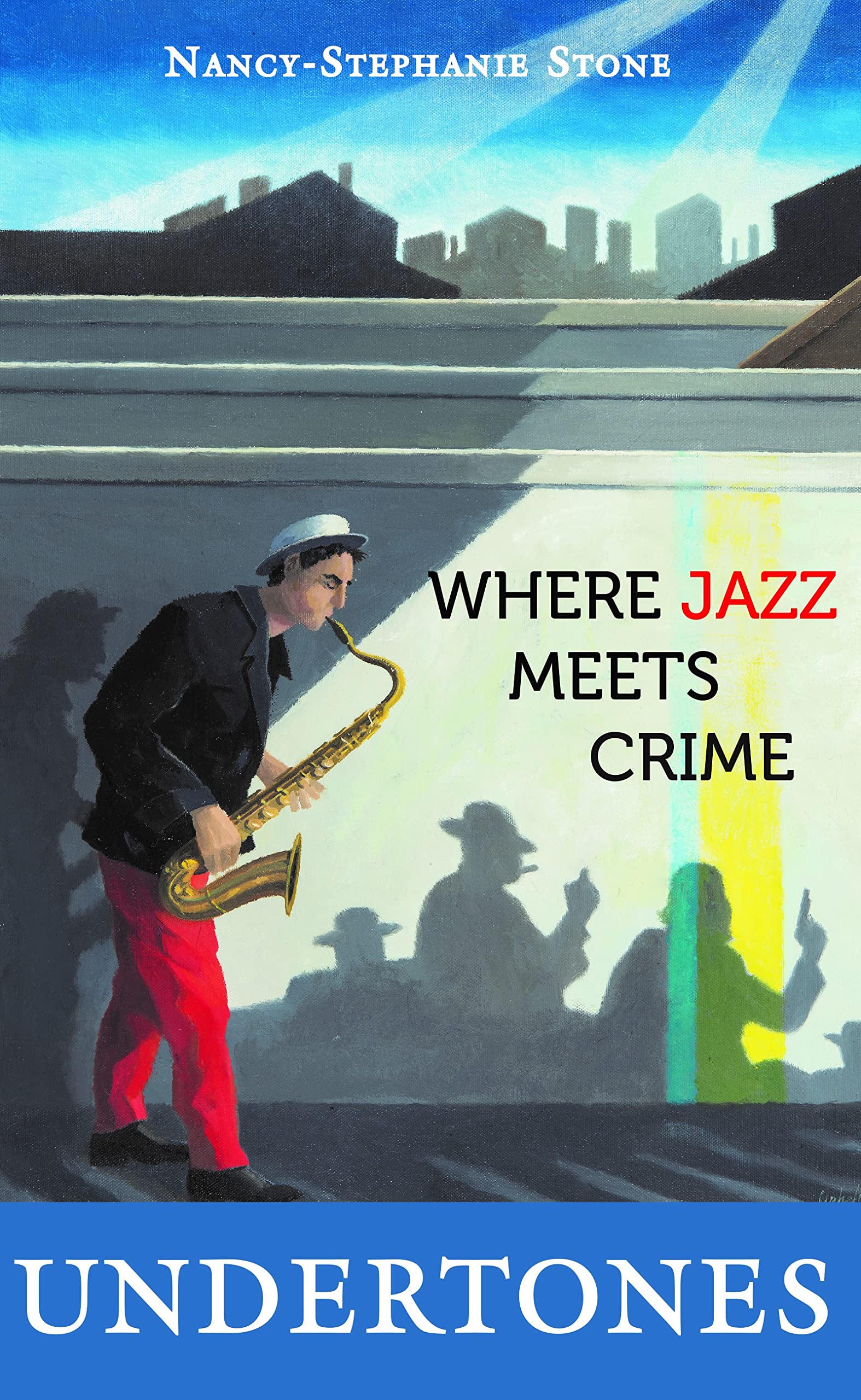
UNDERTONES -Where Jazz Meets Crime by Nancy-Stephanie Stone
There are obvious reasons why crime and jazz are intimate bedfellows in both fact and fiction. Syncopated music initially began its journey to the four corners of the earth in the wrong part of town (Storyville, the red-light district of New Orleans) and the clubs where it flourished in pre-WW2 Kansas City, Chicago and New York were generally Mob run (The Cotton Club in Harlem was owned by British-born bootlegger Owney Madden). Later, Las Vegas was also heavily Mobbed up. Just ask Frank. Even London wasn’t immune, what with Ronnie Scott’s being in Soho, most of which was run by the likes of the Maltese Messina Brothers and with the Krays owning El Morocco club in Gerrard Street (they once offered Scott and partner Pete King a club to manage further west, but Ronnie wisely decided his heart was in Soho).
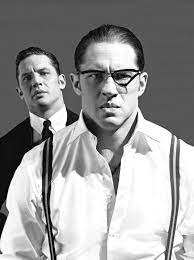
Double trouble
There is a scene in Legend, the Tom Hardy Kray movie, where someone says they have the protection money from Ronnie Scott’s, which is erroneous – Ronnie and Pete never paid protection money. This was because Frith St, where their second club was and is located, was run by Albert Dimes, a Scottish-Italian heavy. Albert designated Ronnie’s club a neutral space, where rival gangsters could see a show without having to watch their backs too closely. He also gave them a bottle of Mumm champagne to seal this deal, and Ronnie and Pete said they’d open it when the club made a profit. It is still sits, unopened, behind the bar.
So, with jazz historically providing the soundtrack to the thrills and bloody spills of the low life, it isn’t surprising that from the 1920s on, crime authors who wanted to give their novels a little authenticity peppered the narrative with jazz references. This fertile ground is the subject of a new book called Undertones by Nancy-Stephanie Stone (www.galileopublishing.co.uk) which is subtitled Where Jazz Meets Crime. It is a pitched as a reference book and is great fun to dip into sections on individual U.S. cities and peruse chapters on jazz spies, P.I.s and drugs). One of my favourite sections is the Jazz Discography chapter. So, for example, when a character in one of Ray Celestin’s excellent series (The Axeman’s Jazz, Dead Man’s Blues, The Mobster’s Lament, Sunset Swing) listens to Louis Armstrong play West End Blues, Stone suggests checking out Louis Armstrong on Okeh (Sony Legacy) to hear the tune for real. Elsewhere, there are plenty of unfamiliar novels and authors to check out (I never knew, for instance, that Clint Eastwood’s Play Misty for Me was a book before it was a movie or that there were several of pro drummer Bill Moody’s novels I hadn’t read). There are hours of sleazy, swinging fun to be had here. Although the author is American, it ranges far and wide and I was particularly pleased to see that the author has found plenty of room for NW5’s king of jazz-noir, John Harvey, whose books and short stories are soaked in the music, not least in some of the titles (Off Minor, Body and Soul). Incidentally, his excellent Darkness, Darkness covers much the same ground as the recent Sherwood TV series. If you don’t know his work, get yourself down to your local bookshop in (in my case Owl Books in Kentish Town) and order a clutch of the jazz-loving Charlie Resnick series. And when they arrive put on Elmer Bernstein’s brilliant score for Johnny Staccato, a short-lived TV series where John Cassavetes starred as a piano-playing jazz detective. Honest.
There is a horrible neologism that I came across in a newspaper recently. In the article the term “premiumisation” was applied to scotch whiskey – it describes the process of rebranding/hyping a product to make it “investible” and “collectable”. Something very similar is happening in the world of jazz, specifically in the world of LPs. It began with coloured vinyl editions, which are nearly always promoted as limited, collectable and attract a few quid extra over and above their monochrome siblings. I fell for this for a while – I have clear, yellow, red, orange, blue and even camouflaged discs. I stopped going colour-crazy when a record company executive assured me that adding pigment can affect sound quality and longevity of the album.
The other route to “premiumisation” is the re-mastered special edition. This is spiralling to quite frightening heights – there was a recent version of Miles Davis’s Kind of Blue, announced with typical fervour: Definitive handmade limited run reissue Ultra High Quality Record! 33 1/3 RPM LP release limited to 25,000 copies. Mastered directly from the original 3-Track master tapes by Bernie Grundman. Pressed at Quality Record Pressings using Clarity Vinyl® on a manual Finebilt press. Cost for all this? Around £150. I’m sure it’s a wonderful artefact but I already have six versions of that record, including one on cassette. I surprised myself by resisting it.
Less eye-wateringly expensive is the Blue Note Tone Poet series, supervised by Joe “Tone Poet” Harley, and put out to celebrate 80 years of the label. These are “all-analogue, mastered-from-the-original-master-tape 180g audiophile vinyl reissues in deluxe gatefold packaging. Mastered by Kevin Gray (Cohearent Audio) and vinyl manufactured at Record Technology Incorporated (RTI)” . The latter is considered one of the best pressing plants in the world. Artists getting the Tone Poet treatment include Herbie Hancock, Grant Green, Lee Morgan, Wayne Shorter, Dexter Gordon and many others.
Again, they are beautifully done, but are they worth the £10 premium they attract (they usually retail at £31-34) over a regular LP? After all, over the years I have been seduced by claims of superior sound quality by Japanese-only Blue Note editions (or maybe it was the obi strip – that band of paper that wraps around the cover) and “Cadre Rouge Audiophile” featuring Direct Metal Mastering and French pressing. Do I need more tweaks?
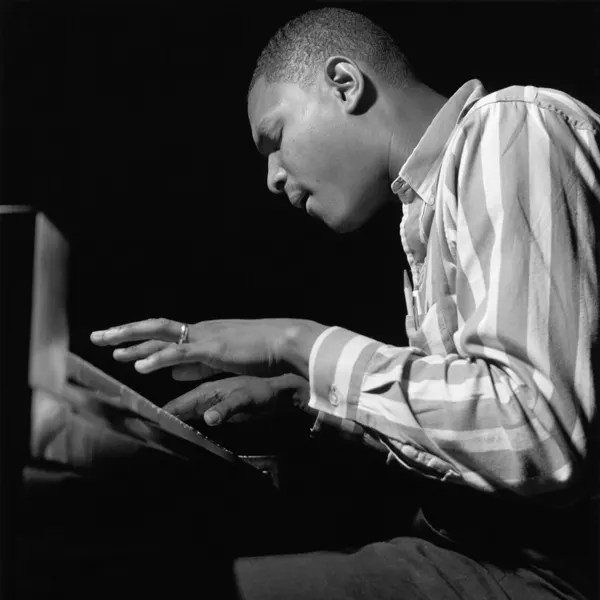
McCoy Tyner
One of the most recent batches of Tone Poets included McCoy Tyner’s splendid Expansions, which features the great Woody Shaw on trumpet, Wayne Shorter on tenor, Gary Bartz on alto and, unusually, clarinet, and bassist Ron Carter on an unexpected cello. It encompasses fast and furious modal jazz with the septet firing on all cylinders, Matthew Halsall-like Far Eastern tones and a piano/cello ballad. It was indeed an expansion of Tyner’s regular soundscape. I happen to have a 75th Anniversary re-issue of this, so I bought a Tone Poet one to compare and contrast.
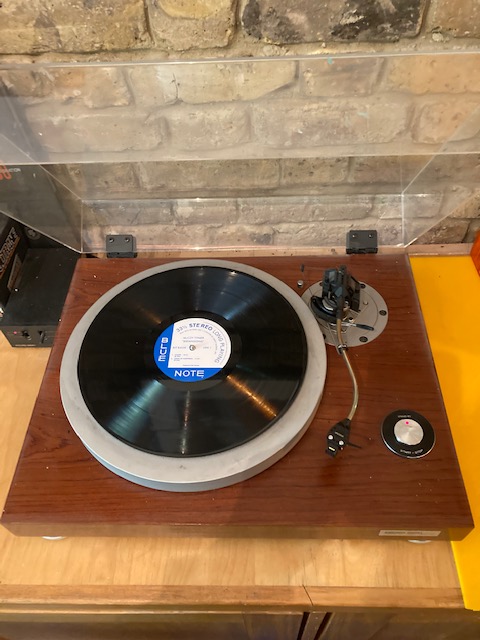
I don’t have a particularly high-end audio system. At its heart is a vintage Quad and 1970s Japanese Micro-Seiki deck with SME arm which is maintained by Audio Gold in Crouch End (it was where I traded a still-boxed CD player for it years ago, back when you couldn’t give record decks away). So not audiophile perhaps, but I do know its sound very well and thought I should be able to detect any differences/improvements in the new pressing.
And I could. A more sonorous piano here, a richer woodier bass sound there, crisper horns in one or two places. But, I realised, paying such close attention and constantly repeating sections not only gave me a headache, but it also spoiled my enjoyment. I was like one of those oenophiles who can wax lyrical about the component parts of a wine without pausing to enjoy the whole (the same is true of some coffee drinkers I know). I’m assured that the superior quality is best appreciated through headphones, but as that isn’t how I like to consume music, it’s a moot point. So, would I rush out to replace an album I already had with a Tone Poet version? No, probably not. But….
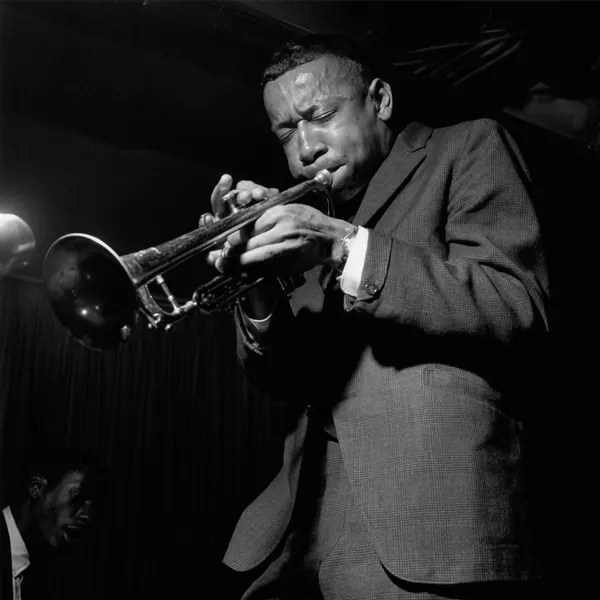
The great Lee Morgan
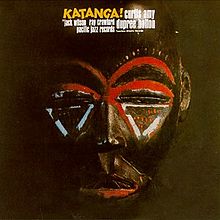
And it is quite an interesting “but”. One of the welcome aspects about these re-issues is that Mr Poet hasn’t gone for the big ticket albums. So, no Sidewinder by Lee Morgan, but the more obscure Cornbread, no Maiden Voyage by Herbie Hancock, but The Prisoner and so on. Also Joe Harley has embraced other labels that were or are now in the Blue Note stable. So for instance, I have a Tone Poet of Chick Corea’s Now He Sings, Now He Sobs, which was on the originally on the Stateside label, and a recent release, Katanga! by Curtis Amy and Dupree Bolton, which was on Pacific Jazz.
The latter is a fascinating album, because it highlights just how brilliant a trumpeter Dupree Bolton was, blistering fast yet astonishing accurate, with a hairs-up-on-the-back-of the-neck high-speed stratospheric excursions and brilliant tone. Bolton only made two real appearances on disc (Katanga! and The Fox by Harold Land, also recommended), frequently disappearing into the fog of drug addiction and subsequently prison. There isn’t space here to tell his whole tragic story of wasted talent, but if you are interested seek out Granta 69 (“The Assassin”). It includes a piece about Bolton by Richard Williams called Gifted, which is as fine and as moving a piece of jazz writing as you’ll find.
So, given the quality and heft of the physical record, the heavy card used for the covers and, sometimes, the inserts with essays (as with Katanga!), I certainly would buy a Tone Poet if it was an album new to me or I only had it on CD and wanted an actual LP. Forthcoming releases for 2021 include Lee Konitz and Gerry Mulligan, Wayne Shorter, Joe Pass, Stanley Turrentine, Sonny Red and more Grant Green, all new to me. I’ve got my extra tenners ready.
















 robtryan