Category Archives: Books

SHERLOCK IN THE DOCK

Unknown
A few years back I bought a hugely entertaining collection of stories ‘Inspired by the Holmes Canon’ called A Study in Sherlock. It contained tales by Lee Child, Charles Todd and Neil Gaiman and was edited by Laurie R King and Leslie S. Klinger (the man behind the indispensable New Annotated Sherlock Holmes). What I didn’t know at the time was that the Conan Doyle Estate had threatened to block the book unless a fee was paid, which it duly was. Now, in the USA some of the stories in the final collection, The Case-Book of Sherlock Holmes, are still in copyright, thanks to an extension to copyright law there some years back (in the UK the entire canon is in the public domain), but Leslie Klinger – who is also a lawyer – was certain this did not mean the characters were protected. The ACD Estate begged to differ.
When Laurie R King and Leslie Klinger decided to produce a sequel to A Study in Sherlock (In the Company of Sherlock Holmes, with Val McDermid, Sara Paretsky, Jeffery Deaver, Michael Connelly and others contributing), their publishers received a letter from the ACD estate, threatening to block distribution to certain outlets unless, again, a fee was paid. This time Leslie Klinger decided to draw a line in the sand – last week he filed a civil action in Illinois against the Conan Doyle Estate to establish once and for all whether the characters are protected, and payment due, or if Holmes and Watson are in the public domain. Klinger says: “This isn’t the first time the Estate has put pressure on creators. It is the first time anyone has stood up to them. In the past, many simply couldn’t afford to fight or to wait for approval, and have given in and paid off the Estate for ‘permission.’ I’m asking the Court to put a permanent stop to this kind of bullying. Holmes and Watson belong to the world, not to some distant relatives of Arthur Conan Doyle.”
If nothing else, legal clarification to those of us paying royalties to one or other of the various claimants to Holmes & Watson would be most welcome and Klinger deserves our support. You can read more on http://www.free-sherlock.com.

One Critic I Definitely Had To Please

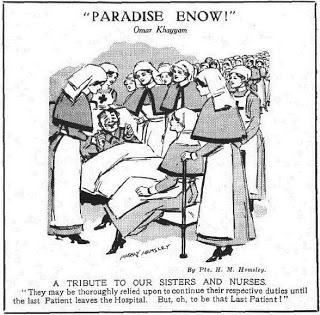
This is from Sue Light’s excellent blog which gave me lots of background to the medical situation in WW1. See http://greatwarnurses.blogspot.co.uk/.


The Last Patient
“I’m a great reader of crime fiction, often to the exclusion of doing other, more important things.  On the whole I stick to British authors, like complex plots, skip over too much gratuitous violence, and prefer to arrive at the end actually understanding what’s gone on in the middle. So about eighteen months ago I was intrigued and rather flattered to be asked by Robert Ryan if we could meet up to discuss a new book he was working on (these days a bit of flattery is so very welcome).  He intended to include ‘some plucky VADs’ and wanted to make sure that they would be appearing all present and correct.

Over the next months I was kept up to date with the progress of the book and then asked to check the first draft to see how the VADs were doing.  Anyone who has read this blog on a regular basis will know that of all the bees that float around my bonnet, the indiscriminate placement of VADs in Casualty Clearing Stations on the Western Front is the one that stings hardest, and in this book their inclusion in very forward areas was going to be essential to the plot. If I have learned one lesson from the exercise, it’s this.  If you’re a writer of fiction and make fundamental errors because of inadequate research and blissful ignorance, the wrath of pedants will be unleashed upon you.  On the other hand, if you include factual inaccuracies and weave them in an intelligent way, in full knowledge of your sins, you will always be forgiven (fingers crossed).

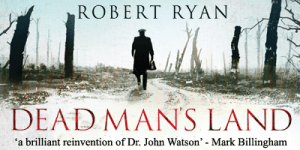
Dead Man’s Land was published at the beginning of this month with the full approval of the Conan Doyle estate. It follows Dr. John Watson’s travels around the Western Front during the Great War, and where Dr. Watson goes, death and intrigue are right on his heels. By most estimations he must be getting on a bit in age, but his physical limitations are highlighted, not glossed over, and his place as an elderly medical practitioner in wartime never seems extraordinary. The military setting is sound, and the depiction of hospitals and casualty clearing stations in wartime is thorough. The VADs are skilfully introduced into a place where they would never actually have been, with the difficulties and regulations surrounding their employment made clear. Even I was heard to clap. The story is unusual and absorbing, it has complexity, but with enough clarity to prevent it becoming confusing, especially for those who don’t usually dabble in ‘war,’ and it should appeal to everyone who enjoys crime fiction of any era, but perhaps especially to devotees of Sherlock Holmes.  Yes, of course he’s there as well.

And my thanks to Rob for his kind words in the acknowledgements where he accepts all errors as his own.  May I take this opportunity to clear my conscience and admit that there might just be one that’s mine!”

THE STRANGE CASE OF SANDY DENNY, BENJAMIN BRITTEN AND THE POWs

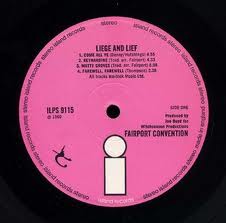
There is a report by John Dugdale in the Guardian today (gu.com/p/3daqd/tf) on the author event I took part in last Monday with Barry Forshaw, Mark Billingham, Laura Wilson and pathologist Carla Connelly at the British Library. He correctly says we discussed violence in our books at length and considered any taboos in our writing. I forgot to mention that in Dead Man’s Land there was to be a scene of gang rape. I sat at the head of that chapter for days thinking: my wife and kids are going to read this. I really didn’t want to write it. Yet it was a pivotal inciting incident. Then the solution came to me: tell it in song. Not some cheery ditty, but a murder ballad (or rape ballad I suppose). In the end I re-worked the lyrics of Fairport Convention’s Matty Groves (a sort of Lady Chatterley’s Lover tale with added murder, marvellously sung by Sandy Denny) and had one of the characters sing that. I checked with Joe Boyd, who produced the album Liege and Lief,

images-1

that I wasn’t breaching any copyright by keeping one line of the original words in as a clue to its origins, but he assured me it was a traditional piece. I was subsequently asked (of which more later) to help with a piece for the forthcoming Benjamin Britten centenary at Snape Maltings near Aldeburgh. And I discovered that Britten, too, had used a version of the Matty Groves story in a piece called The Ballad of Little Musgrave and Lady Barnard (for male voices and piano). If you look up that piece, it will say, bizarrely, that the world premier was at Oflag V11b, a POW camp in Germany. Britten composed it in 1943 or Richard Wood, the husband of one of Britten’s singers who was a POW at the camp at Eichstätt, Bavaria. He organised a music festival for the prisoners between February and March 1944 and Britten’s work – sent out in a Red Cross parcel – was performed at seven of the concerts. The Imperial War Museum has the original score. As part of the Britten centenary celebrations Jon Boden, BBC Radio 2’s ‘Folksinger of the Year’ 2010, weaves a new work into The Ballad of Little Musgrave and Lady Barnard at Snape Maltings on August 11 (see www.brittenaldeburgh.co.uk). My efforts – with someone else supplying the music – will be at the same venue on June 12.

FAME’S GAMES

The new novel Dead Man’s Land (out today, January 3rd) is dedicated to Clive Powell, “a genuine Leigh pal”. Some of you may know that Clive Powell is the real name of one of Leigh’s most famous sons, Georgie Fame. I have met him several times over the past few years and his famed all-nighters at Soho’s Flamingo club in the early 60s were referenced in my book Signal Red, about the Great Train Robbery.

images-1

This time I wanted his help because the regiment in the new novel is a ‘Pals’ battalion, one of the units of Kitchener’s New Army that were raised to replace early losses, and consisted of men from the same village or profession. So there were Salford Pals, Liverpool Pals, Taxi Driver, Artist and Footballer Pals. There wasn’t, however, actually a Pals from the cotton town of Leigh, although I’ve invented one. Originally I used quite a lot of ‘Lanky’ dialect and local phrases for the soldier’s conversations, and Georgie was going to help out by checking their authenticity. Sadly, early readers said they found those sections impenetrable and I re-wrote them in more straightforward language, meaning I no longer needed Mr Fame’s help. Still, Georgie’s concerts have given me much pleasure of late and, coming up to 70, he shows no sign of stopping – his new record Lost in a Lover’s Dream is a laidback corker and he will be playing Ronnie Scott’s for the week starting April 8th, where he’ll no doubt telling stories about the Zagreb club owner and vibes player who inspired the new album.

Tickets: www.ronniescotts.co.uk

Album: www.juno.co.uk/labels/Three+Line+Whip/


deadmansland


FOUR PLUS ONE

In my introduction to the Complete Sherlock Holmes e-book (available for free – http://tinyurl.com/c9hp4ww), I seem to have inadvertently upped the number of novels in the Conan Doyle canon from four to five. One of the joys of e-books is that, unlike with print versions, such glitches can be easily fixed. Yet I knew very well there were four novels – A Study in Scarlet, The Sign of Four, The Hound of Baskervilles, The Valley of Fear – and I can only assume I was so taken in by reading Anthony Horowitz’s House of Silk, I added it to the tally. House of Silk, like Dead Man’s Land, has the blessing of the Conan Doyle Estate, although unlike DML it is written in the style of ACD. Most Holmes ‘continuation’ novels read like a pale imitation of the original, or are so reverential they end up wooden and stilted. Not House of Silk – Horowitz nails the classic characters and doesn’t forget to add a rip-roaring plot. Highly recommended and best read by gaslight.

THE NEXT BIG THING

The omni-talented Barry Forshaw, head honcho of Crime Time (www.crimetime.co.uk) and author of Death in a Cold Climate: A Guide to Scandinavian Crime Fiction, British Crime Film and Guns for Hire: The Modern Adventure Thriller, among many others, asked me to get involved in this round-robin called The Next Big Thing.

The idea is that I answer the following questions about my writing then recommend other authors who also answer the questions and they in turn recommend other authors until the world begs for mercy. You can find Barry’s answers on the Crime Time website, and my “tag” authors at the end of the questionnaire, who should be posting within the week.

1) What is the working title of your next book?

Dead Man’s Land, out on January 3.

 2) Where did the idea come from for the book?

Dead Man’s Land is inspired by a line from Conan Doyle’s His Last Bow, set in 1914, in which Sherlock Holmes says that Watson intends to ‘rejoin his old service’ – by this time the Royal Army Medical Corps. So it is Dr. Watson’s adventures in WW1.

3) What genre does your book fall under?

Historical thriller.

4) What actors would you choose to play the part of your characters in a movie rendition?

The central character is Dr John Watson – Holmes’s sidekick – but without the Great Detective. It roughly follows Conan Doyle’s (sometimes wayward) chronology of his heroes, so I need an actor in his 60s, someone like Tom Wilkinson, martin Shaw or Michael Kitchen. I’m thinking Kelly Riley (too young?) or Alex Kingston as his flame-haired nurse.

5) What is the one sentence synopsis of your book?

With thousands dying every day on the Western Front, what better place to commit a murder..

6) Will your book be self-published or represented by an agency?

It is published by Simon & Schuster.

7) How long did it take you to write the first draft of the manuscript?

About seven months.

8) What other books would you compare this story to within your genre?

Despite having Dr Watson in it, not Conan Doyle, more Len Deighton or early Robert Harris.

9) Who or what inspired you to write this book?

My editor at S&S, Maxine Hitchcock said they were looking for a novel based on ‘a detective in the trenches’. She set me on the road to recalling that Dr Watson had served in WW1.

10) What else about your book might pique the reader’s interest?

Winston Churchill is a pivotal figure in the novel, because after Gallipoli he went into the army and served on the front line.

To see how other authors tackle this list, go along and visit:

Dean Crawford, a British Michael Crichton and author of science-thrillers Apocalypse, Covenant and Immortal at www.deancrawfordbooks.com.

Howard Linskey, who brings Get Carter and crew bang up to date in The Drop, The Damage and The Dead on http://howardlinskey.blogspot.co.uk/.

Frank Barnard, ace WW2 flying chronicler (Blue Man Falling, Band of Eagles, To Play The Fox) and, with A Time For Heroes, WW1 as well, at www.frankbarnard.com.deadmansland

221b or not 221b

As a tie-in to the imminent release of the Dr Watson novel DEAD MAN’S LAND, Simon & Schuster has made available a free e-book of the Complete Sherlock Holmes. As part of the package they asked me to write an introduction, which I duly did. Then the artwork came. You do realise, I told them, that it wouldn’t say 221b above the door? That the ‘b’ signified Holmes’s and Watson’s lodgings, not the whole building? There would be a doorbell or door pull marked ‘b’. We’ll get letters, I said. My editors thought for a minute and said: We’ll get letters if we don’t put it there. Apparently Stephen Moffat and Mark Gatiss had similar discussions with their BBC Sherlock re-boot. In the end they decided the address was so iconic, the ‘b’ had to stay. And if it’s good enough for them….


Sherlock Holmes Ebook version 2

http://books.simonandschuster.com/Complete-Sherlock-Holmes/Arthur-Conan-Doyle/9781471127182


http://www.amazon.co.uk/The-Complete-Sherlock-Holmes-ebook/dp/B00AHEMYEY


THE LOST PICTURE SHOW

Next year Bloomsbury Reader is to re-release one of Gavin Lyall’s titles from the sixties – The Most Dangerous Game. That’s good news, he deserves to be re-discovered. It’s just that it is the wrong book. It’s not that TMDG is a bad thriller. It has most of the tropes familiar from early Lyall: the ex-RAF pilot slowly going to seed until something re-kindles his spirit and his sense of self-worth, great flying sequences and an interesting setting – the Russo-Finnish border. But for me, Lyall’s best book will always be Midnight Plus One. This was his third novel and for once didn’t feature a pilot. Instead, the man going to seed etc is Lewis Cane, an ex-SOE agent who once worked with the French Resistance, now almost making a living as a freelance bodyguard in Paris. He is teamed with an American gunman, Harvey Lovell, to escort a businessman who has been framed on a rape charge to a meeting in Liechtenstein. Unknown assailants want to stop them.

It is really a kind of road movie book, describing a drive across France, mostly in a Citroen DS (which expires in one of the book’s most memorable scene – who knew a car could bleed to death?). Katherine Whitehorn, Lyall’s wife, once revealed that he drove every inch of the route. His research would shame us all:  “He spent many nights in the kitchen at Primrose Hill, north London, experimenting to see if one could, in fact, cast bullets from lead melted in a saucepan, or whether the muzzle flash of a revolver fired across a saucer of petrol really would ignite a fire”. No, apparently. Probably just as well for Primrose Hill.

There were and still are rumours that Steve McQueen had optioned the book, intending to play the alcoholic Harvey, but died before it could go any further. I once asked Alan Trustman who wrote Bullitt and The Thomas Crown Affair for McQueen about this. He said he hadn’t heard any talk of a screenplay, but it would have been a fitting end to a career – the man who rode shotgun for Yul Brynner doing the same for an ex-British spy (Michael Caine?), both more cynical and careworn than they’d care to admit. The sexual politics in the book might have dated, but Midnight Plus One holds up remarkably well as a thriller. It would still make a great, tight movie. Sadly, though, they don’t make Steve McQueens any more.

* The Most Dangerous Game is due in March 2013.

A WOMAN ALONE

I was at the ceremony for the unveiling, by The Princess Royal, of the memorial to SOE agent Noor   Inayat Khan yesterday (November 8th). I was an interested party because Noor’s is a fascinating and tragic story, one I almost used in my novel Early One Morning, but realized it would unbalance the book (the beautiful, shy, dreamy but tenacious half-Indian, half-American daughter of the founder of Sufi mysticism, descended from Indian royalty, talented musician and writer – it was all too much for a secondary story). The short ceremony brought home once again the bravery of the men and women of Special Operations Executive who parachuted or were landed into occupied territories. I recently interviewed Cressida Cowell, author of the How to Train Your Dragon children’s books and she mentioned her ‘grandfather Alan’ had been in SOE in Albania. So I looked him up. It turned out Alan Hare was a friend of the recently deceased Patrick Leigh-Fermor and, as his obituary in The Independent confirmed, cut from the same cloth:

“Betrayed by partisans and ambushed by the Germans, Hare only escaped after a grim chase across snow-bound mountains. Ravaged by frostbite, he was the sole survivor of [the mission] to the isolated valleys of the Balkans. He remained far longer than either reason or compassion would have dictated, tending to the wounds of a fellow British officer. He was later awarded a Military Cross.”


Noor Inayat Khan, operating as a wireless operator, was also betrayed, in October 1943.  Imprisoned and questioned by the Sicherheitsdienst (SD – the SS intelligence service) at its notorious Avenue Foch HQ, she escaped over the rooftops only to be re-captured during an air raid (the German routine was to head count all prisoners when the air raid alarm sounded, hence her absence was discovered). She gave nothing away during her interrogations. However, against all the security protocols of SOE (which, as MRD Foot has pointed out, were often ambiguously worded in the manuals), Noor had not destroyed her transmission notes or ciphers. The Germans were able to decode the messages and ‘turn’ her radio and, despite some suspicions at home, for several months the British believed Noor was still at large and transmitting. This led to agents beings sent to France with the SD waiting to receive them.

The fact her radio was turned should not detract from Noor’s bravery, either before and after capture – at one point she had been given the chance to pull out, but elected to stay on as the last Paris-London link. Sadly, it was an all too common an occurrence, especially in Holland. There the Germans played the devastating Englandspiel (the English Game) with captured transmitters through most of 1942-3, arresting the agents SOE sent in, the majority of whom perished.

After Avenue Foch, Noor endured months of solitary confinement in shackles in a German prison and was eventually murdered and her body burned at Dachau concentration camp in September 1944, along with fellow SOE recruits Yolande BeekmanEliane Plewman and Madeleine Damerment (with a terrible irony, one of the agents lured to France by the SD using Noor’s radio). Noor was 30 years old. She was posthumously awarded the George Cross and the Croix de Guerre. Her memorial, a bust sculpted by Karen Newman, is located in Gordon Square Gardens, near the University of London.

Recommended books on SOE and the female agents include Sarah Helm’s A Life in Secrets (a fascinating biography of Vera Atkins, who was a lynchpin of SOE’s F – for France – Section), Flames in the Field by Rita Kramer, which traces the lives of the four girls murdered at Dachau and, the book that led directly to the memorial, The Spy Princess by Shrabani Basu.

Thanks to Martyn Cox who has created an invaluable archive of interviews with SOE, FANY (First Aid Nursing Yeomanry), escape line and ‘special duty’ RAF squadron veterans. See www.our-secret-war.org.

A MAN ALONE

Dead Man’s Land is out on January 3rd. It is a novel about Dr John Watson. It might look like that I am, unusually for me, surfing the zeitgeist, with Sherlock Holmes being more popular than ever, but I realized that the concept dates back almost two years to January 2011, when I had a meeting with Maxine Hitchcock, editorial director of Simon & Schuster. She mentioned that they were looking for a work of fiction featuring a ‘detective in the trenches of WW1’. I said it was an interesting idea – what better spot to commit murder than in a place where thousands are being slaughtered each day? But I also knew it had its problems, not least because the front line was very fluid (soldiers did not spend weeks in the trenches – they were rotated back on a regular basis) and also most Military Policemen were concerned with desertion and cowardice than crime. So I said: ‘Actually, it would be better if he wasn’t a copper, but a doctor, just behind the lines, a man who might recognize a murder when he sees one. And why not go one step further and make the central figure Dr Watson?’

Why Watson? Because at the end of His Last Bow, a story written by Conan Doyle in World War One and set in 1914, Holmes mentions that Watson will be rejoining ‘his old service’, which by that time was known as the Royal Army Medical Corps. Holmes, meanwhile, will go back to his beekeeping. And so, for once, Watson is a man very much alone when he finds that there has been at least one murder out on the Western Front.. and that he has been added to the killer’s list.