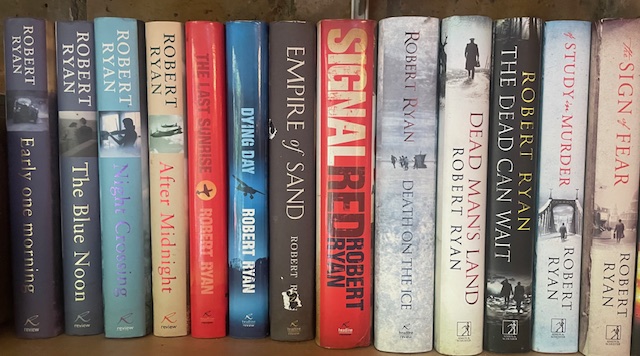
Author Archives: Robert Ryan

Unknown's avatar

About Robert Ryan

Author and Journalist

CLOSE ENCOUNTERS OF THE FURRED KIND

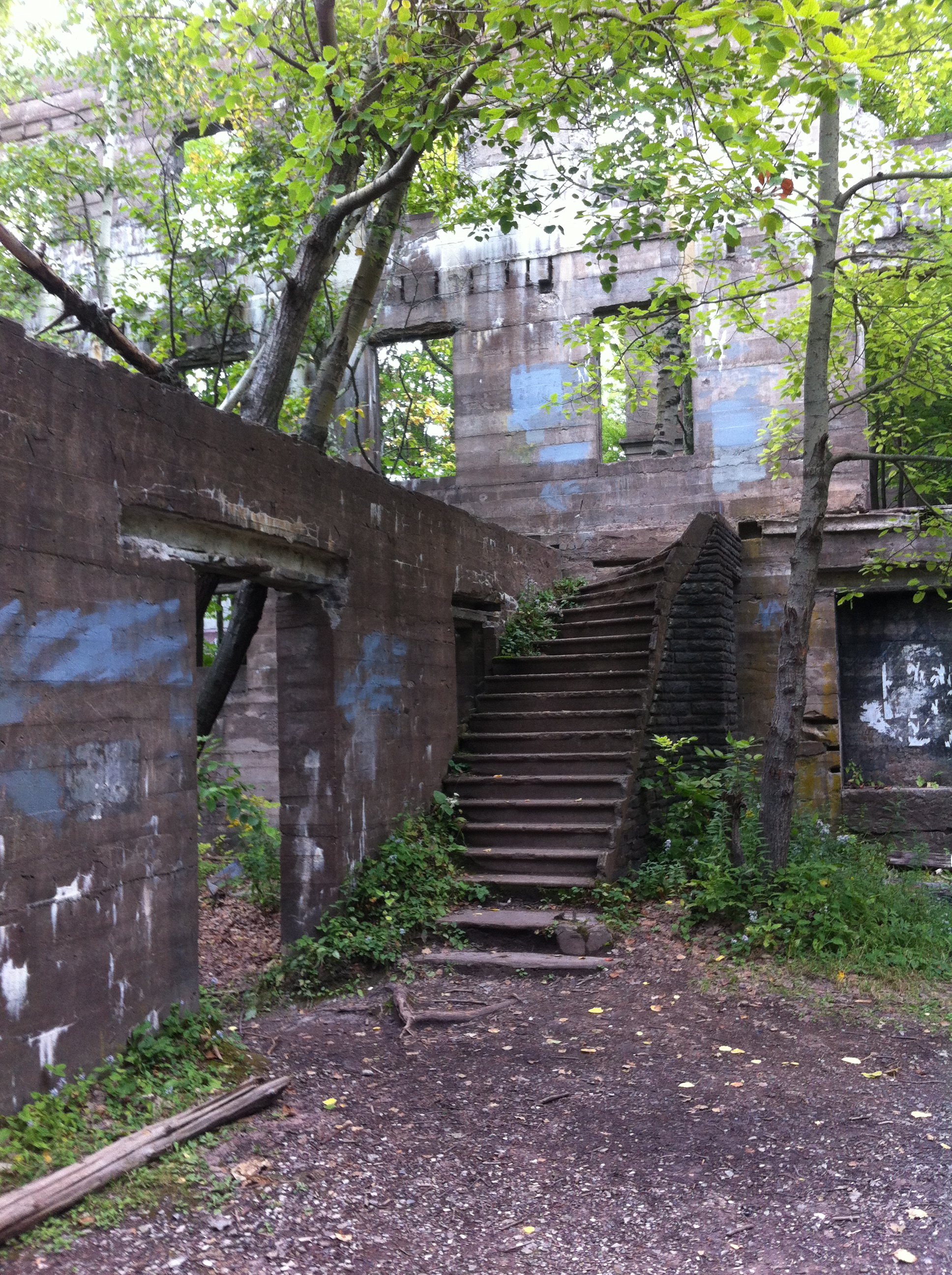
You have to work hard to reach the finest view of New York’s Hudson Valley. The trailhead to the aptly named Overlook Mountain can be found just outside Woodstock, opposite a Buddhist Temple and you soon find yourself praying for good karma on the hike up. It is a rocky and relentless two-and-a-half mile climb, with barely a flat section until near the top, when you reach the spooky, eerie husk of a once-glamorous hotel. Its roofless hallways and public spaces are now full of trees and creepers and (a warning sign suggests) timber rattlesnakes. Take it as a waymarker that the end is nigh and move on, rather than explore its unstable interior.

IMG_1922

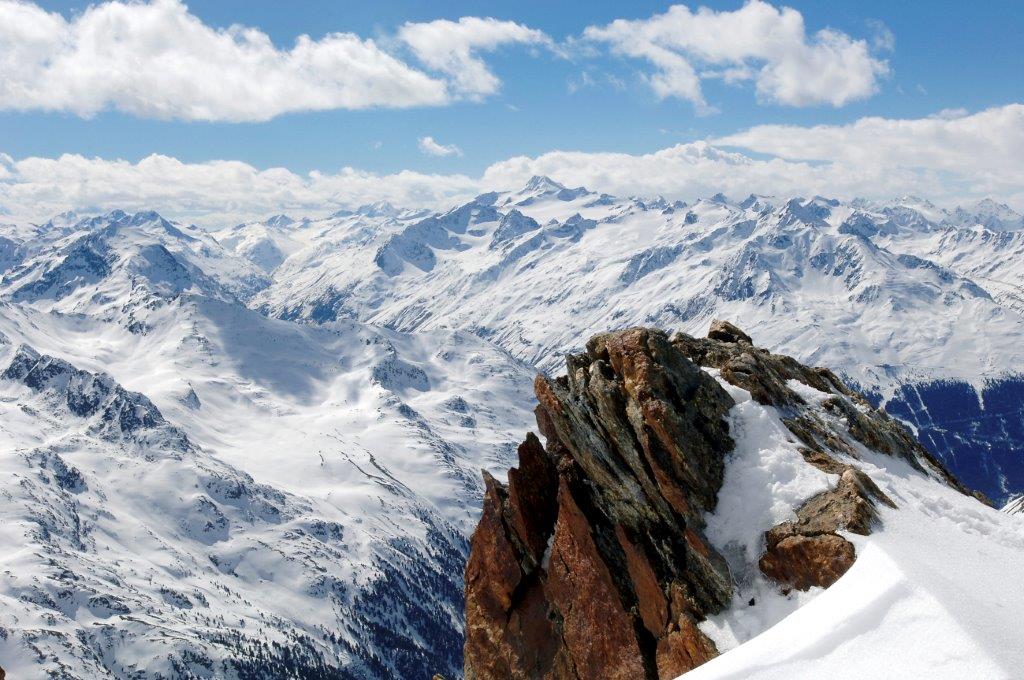
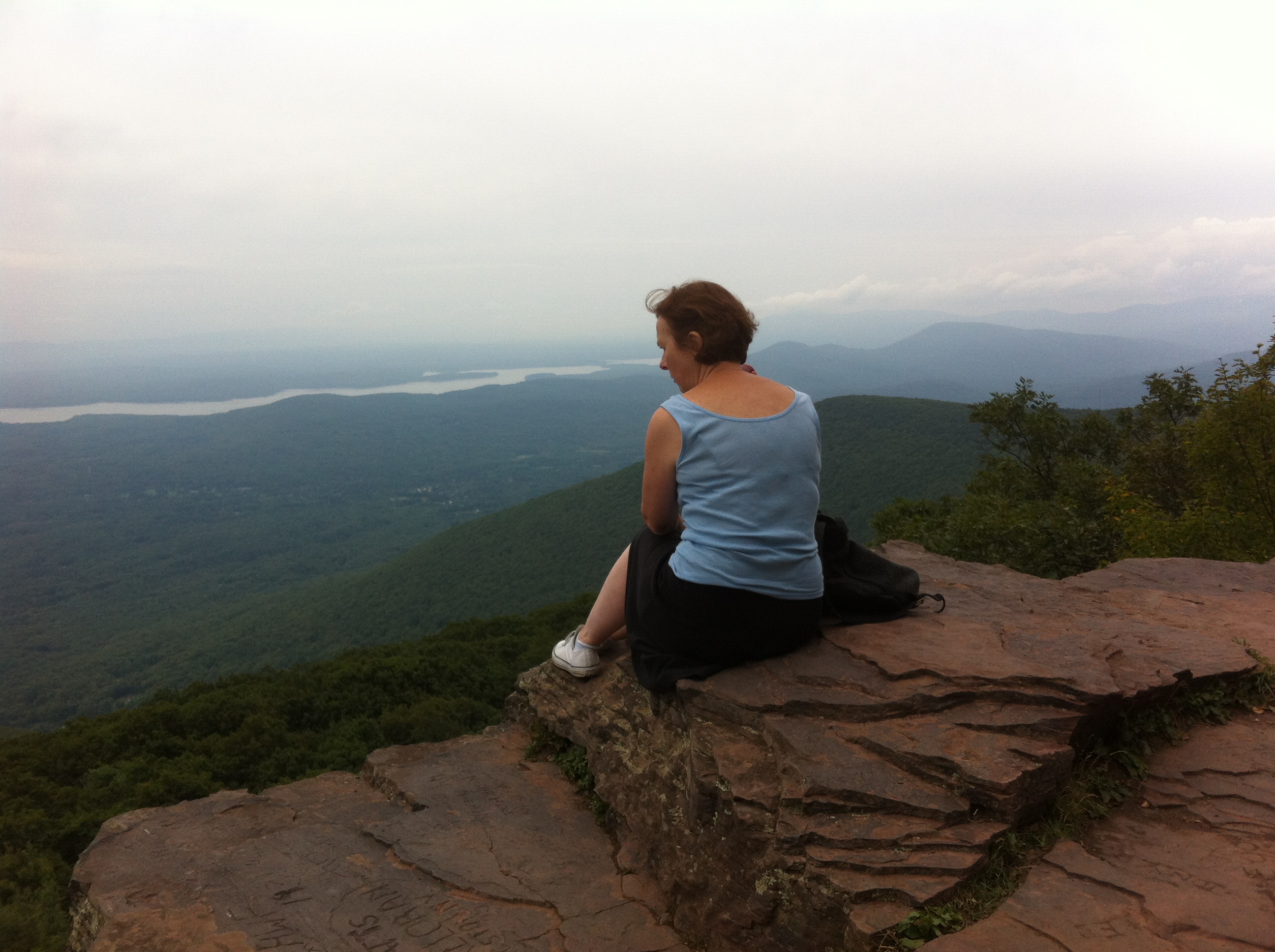
       At the summit of the trail is a small sign pointing through the undergrowth. “Scenic Outlook”, it says, and you damn well hope so after that climb, where you have mainly been looking at a solid wall of trees on either side. You struggle through the brushwood until you find yourself on a rocky outcrop, with the valley spread out below you, the wide, silvery ribbon of the Hudson itself on the left, the glistening waters of the Ashokan reservoir on the right and what feels like the whole world at your feet. It is both sudden and breathtaking and I can’t recall such a sneaky reveal of a fabulous view outside of the Grand Canyon.

IMG_1925

       You can gild this particular scenic lily by taking the steel staircase (if it is open – it’s manned by volunteers and usually weekend-only) to the restored firetower, which adds in a portion of the Catskill mountains to the north, humped like a series of green-backed cetaceans. I asked my wife if she thought the view was worth the long hike and the rickety steps up to the tiny cabin of the tower. “It’s worth the plane ticket over,” she replied. It was an opinion she was to revise on the return leg.

       The walk down was not that much easier than the ascent, but we were elated at having made it to the top on a hot, enervatingly muggy day. We were talking loudly and joking about rattlesnakes when two hikers who had halted some way ahead waved for us to stop. We did so. The man drew a finger across his throat. I instantly thought of Cabin In The Woods or any other number of city-folk-in-the-wilderness movies.

       But my wife hissed in my ear: “Oh my God, it’s a bear.”

       And so it was, a handsome black bear, inspecting the ferns, shrubs and trees that lined the side of the road about twenty metres to our right. Not a huge bear maybe, but when it reared up against a tree trunk, large enough to make knees knock. Every now and then it glanced our way or at the other hikers. It gave a few desultory sniffs of the air. It was a fine time to remember the half-eaten sandwich in my backpack.

bear photo

       Discounting the grizzly, which this was definitely not, there are two types of bear you are likely to encounter in the US, the brown and the black. “With one of them you make as much noise as possible and wave your arms,” I authoritatively whispered to my wife. “The other you climb a tree or play dead.”

       ‘Which one do you do for a black bear?” she asked.

       “I don’t remember,” I replied.

       Quietly, so as not to disturb our new ursine chum, she gave me a dead arm.

       All I could really recall was that a black bear can run at 35mph. A rough calculation suggested this was about 30 mph that I could manage uphill, even with a bear on my tail. We were stuck on that path for the time being.

       I subsequently discovered that there are at least 8,000 black bears in New York State. The population is growing and interactions with humans are increasing. So this year the autumn hunting season was extended into what amounts to a cull. Until the end of September, hunters were allowed to kill bears with “bow, crossbow, muzzle-loader, shotgun or rifle” in areas designated by the Department of Environmental Conservation. But I didn’t have any of those particular weapons on me and, besides, the innocent bear was mostly minding its own business. Mostly. Every now and then it would wander onto the track then, as if catching an elusive fragrance, it would be drawn back to a particular tree and start inhaling and snorting loudly.

       We were standing there for close to twenty minutes, waiting for this tree-junkie of a bear to get bored. Eventually, it looked up into the branches of its favourite trunk and, with an ease I still can’t quite comprehend and a speed that was both impressive and terrifying, it began to climb. With the crack of claw on bark and the odd grunt, it was soon in the upper branches, swaying like an overgrown, swarthy koala.

       ‘Not the climb-a-tree-to-escape species, then,’ I offered to my wife, whose expression suggested she thought my zoology degree was a waste of three years.

      It was time to go. We set off using a speedy gait that was a combination of Olympic race-walking and Lee Evans at his most hyperactive. We warned those coming from the car park that there was a bear in the air. Several, who had encountered bears before, turned back. Others, including a pair with what looked to me like a tasty morsel of a dog, carried on regardless.

       Later, nursing a slightly unsteady beer in a bar in Woodstock, I asked my wife what she made of the experience. “I was wrong about the view,” she said. “It was the bear that was worth the price of the plane ticket.”

 IMG_1918

  • I travelled as a guest of Virgin Holidays (0844-573 0088, virginholidays.co.uk), which has a week’s fly-drive to New York from £929pp, including flights and Alamo car hire. Advice on what to do when you encounter a bear can be found on nps.gov/subjects/bears/safety.htm. The best course of action is to back away slowly. Attacks are rare. If you are attacked, with brown and grizzly bears, you play dead. With black bears, you shout and make yourself seem as large as possible. Don’t climb a tree.


CATSKILL COOL

I have just returned from a week touring the Hudson Valley and the Catskills in upstate New York. Most of it was for a piece for The Times and it was a very successful trip – good food, dramatic modern art, fantastic scenery, Robber Baron’s grand historic homes, and some possibly too close encounters with local wildlife. But one standout was the hotel we stayed in on the last night, mainly because it was so unexpected (it was the result of a tip-off from a native New Yorker who said: ‘Don’t ask questions, just book in’).

If you read a lot of the US travel press you might think that the recent renaissance of the Catskills – which is a few hours’ drive from Manhattan, up I-87 or 90 – means it’s a Williamsburg with trees and mountains, with a farm-to-fork restaurant at every junction, an antique Americana collection on every porch, a cool bar beside every creek. This isn’t true, there is a lot of driving around (by our standards at least) to sample the best of, say, Delaware County.

The town of Andes in The Catskills is good for Americana

The town of Andes in The Catskills is good for Americana

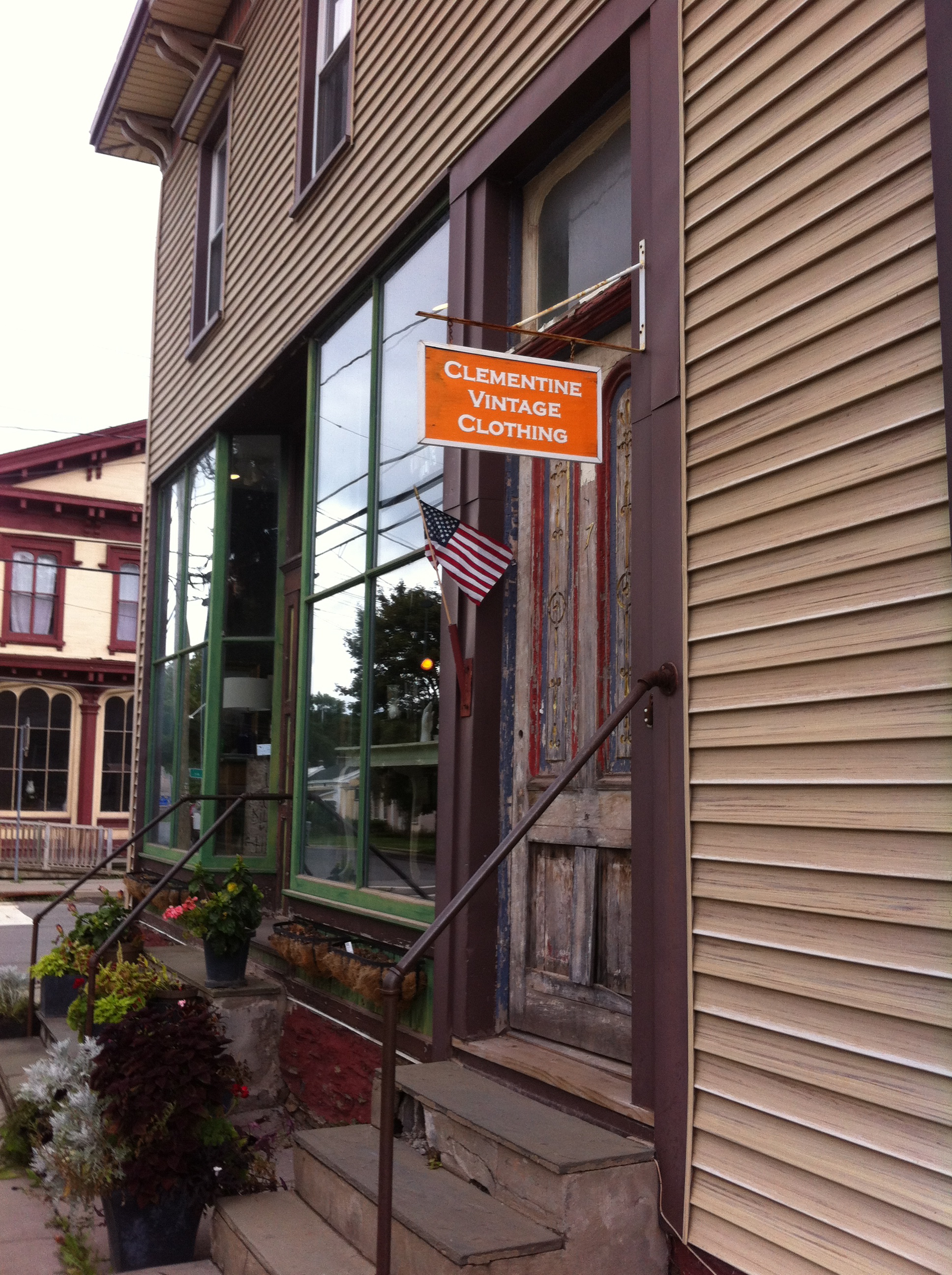
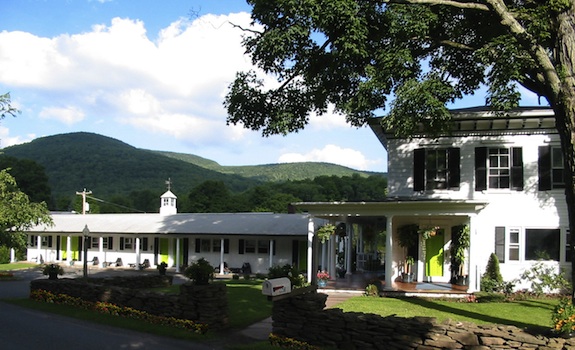
After a slightly disappointing first turn through district, the highlights being Andes (quaint, good vintage clothes, antiques, coffee and cookies) and Delhi (bookstores, covered bridges, more antiques) but not fly-blown Bloomville (Table on Ten restauarant and not much else), I thought maybe The Roxbury might not live up to its billing. However, there is often something about the typography and colour scheme of a place’s signboard that tells you that you are in safe hands. “Contemporary Catskill Lodgings” this one teased in limegreen and black and it delivered.

The Roxbury and backdrop

The Roxbury and backdrop

The Roxbury is a themed hotel, in that each of the 28 units is decorated to a particular brief, in this case a TV show or movie. Now, I’m not always a fan of themed rooms. Sometimes hoteliers think that all it takes is a hideous shagpile carpet, a lava lamp and a couple of DVDs and bam! The Austin Powers Suite. Or a bit of gold MDF and organza and you have the Arabian Nights room. That isn’t the case at The Roxbury Motel.

The owners, Greg Henderson and Joseph Massa both have theatrical backgrounds and it shows (Greg does concepts, Joseph is the craftsman) in the outlandish concoctions. What makes The Roxbury different is the attention to details – every room is done with passion and panache. Most are based on the sixties TV shows that were on constant re-run when the owners were growing up. So there is a Star Trek room, where the ceiling becomes the galaxy of dopplered stars as seen in warp drive, created by a massive coil of fibre optic lights in the roof space, and where the bathroom tiles glow to recreate the holodeck. For I Dream of Jeannie, the pair used an ancient Roman technique to create a perfect spherical space to represent the genie’s bottle. Gilligan’s Island is basically a huge inverted coconut cream pie as baked by Ginger and Mary Ann.

The understated Amadeus-themed room

The understated Amadeus-themed room

Best of all, though, is a three-bedroom stand-alone single-story house called The Digs. It was inspired by the purchase at auction of artifacts that were previously owned by a man who claimed to have worked for the Board of Education. Greg and Joseph discovered that they were from places such as Persia/Iran, the Far East and various destinations not open to the usual US tourist in the 50s and 60s. They decided the vendor had been a spy-cum-archeologist and so created a huge backstory which means The Digs is filled with the sort of items that might be boxed up at the end of Indiana Jones – and indeed there is a room with a ceiling full of bullwhips, snake wallpaper, a Mayan temple hiding a pull-down bed and a giant boulder above the lobby in homage to Indy. There’s also a fish tank so special it has featured on Animal Planet.

The Digs' ceiling lamps - from Cairo.

The Digs’ ceiling lamps – from Cairo.

But here’s the thing: despite all the frivolity, the hotel work – the products are excellent, there are bathtubs as opposed to mere showers, the fabrics, tiles, lamps, ceiling fixtures are sourced from the best suppliers in the world, there’s a two-part spa (hot tub and sauna in one wing, steam and treatments in another) and the sheets are as good as those in the Four Seasons.

As if this wasn’t enough, the pair have also bought a slightly sagging antebellum mansion down the road (see https://vimeo.com/105388223), which sits right next to a dramatic gorge and waterfall and they plan to do much the same with it (albeit more in keeping with the estate’s history than, say, The Jetsons room). Having toured the site, their plans are either insanely ambitious or just… No, I suspect The Roxbury at Stratton Falls will be ready within the two to three years they have allowed themselves. And I’ll be back.

The Digs living room

The Digs living room

See http://www.theroxburymotel.com for rates. I flew with Virgin Atlantic (http://www.virgin-atlantic.com) and hired a car through Alamo. The ins and outs of a Hudson Valley fly-drive will be dealt with  in The Times Travel piece.

CONAN DOYLE: THE REMIX PROJECT

This blog is actually about some “new” Arthur Conan Doyle stories featuring Sherlock Holmes and Dr Watson. But stick with me for a while…

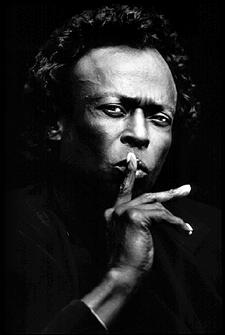
Back in 1998 Sony Records released Panthalassa, a sound collage of music made by Miles Davis between 1969-74, but given a radical reworking by Bill Laswell. Actually, it wasn’t that radical, he simply updated techniques used by Miles’ original producer, Teo Macero, who was the master of cut and splice and extracting a coherent shape from hours of studio jamming. Regardless of its honourable precedents, there was predictably some outrage from Miles Davis purists, claiming that what Laswell had done was sacrilege. These were the same people who, presumably, were happy to listen to the original In A Silent Way, with its whole section repeated verbatim (or whatever the musical equivalent is) – the last six minutes of the first track “Shhh” are actually the first six minutes of the same track repeated in identical form – the same performance, in fact. (To be fair, only a very few reviewers and listeners noticed this at the time).

Miles732-1

     But there is another reason why the purists are wrong. Laswell did not destroy the originals of In A Silent Way, On The Corner or Get Up With It. Those are still there to enjoy. And in fact, I play the original and Laswell’s versions of In A Silent Way about equally (incidentally, the boxed set of IASW contains two killer unreleased tracks – the blues-soaked Ghetto Walk and Joe Zawinul’s wonderful Early Minor).

The reason I mention this is because today (September 3) sees the release of The Case of The Six Watsons where, like Laswell, I have taken something considered as a sacred text and tinkered around with it. I therefore expect similar opprobrium to rain down on me. For I have taken Sir Arthur Conan Doyle’s texts and inserted some of my own words into them, this creating a collage of my own (although the majority of the text remains ACDs). The idea is to create “new” Holmes/Watson stories from the template of his non-Sherlock shorts which, let’s face it, are widely ignored compared to the 56 that make up the Holmes ‘canon’.

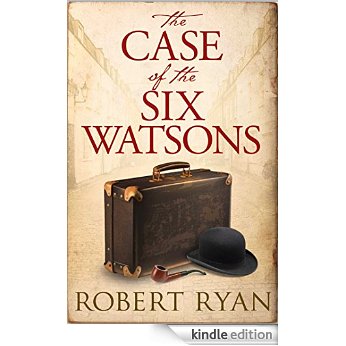
Case of the Six Watsons ebook cover

       Five of the six short stories I used are Conan Doyle stories that were among the hundreds (of variable quality) that he produced in addition the familiar Sherlock Holmes cases. Two of them actually make oblique reference to a famous detective, and in some countries are anthologised with the other 56 short stories (there are also the four novels, of course). The other three stories were the ones I thought could easily be transformed into Holmes tales (in fact, as the title suggests, it is mainly Watson who features in all of them) without disrupting the original text too much. The sixth is an original Watson short story by me, set in Egypt in 1915, when Watson would have been in the Royal Army Medical Corps. So the contents are as follows:

  1. The Beetle Lover. This immediately struck me as one of Conan Doyle’s short stories that most resembled a Holmes tale. It has a mysterious newspaper advertisement (as in ‘The Red-Headed League’), a job opportunity at a country house with some strange provisos (‘The Copper Beeches’) and the original narrator of ‘The Beetle Hunter’ (1898) was indeed a doctor, albeit somewhat younger than Watson. Until now. As with all the stories in this collection, I have changed the title slightly (from “Hunter” to “Lover”) so that there is no chance of confusion with the non-Watson original.
  1. 300px-Beetle-hunter-strand-juin-1898-5
  1. The Wrong Detective. This is the story that kick-started the whole idea of recasting ACD stories. In my Watson novel A Study in Murder (for which it formed an appendix), this was called ‘The Girl and the Gold Watches’, a slight twist on the original title, ‘The Man with the Gold Watches’. But I wanted to suggest that Holmes appears in this one, hence the new name. Holmes did get a mention in the version published by Conan Doyle in 1898, as an anonymous ‘well-known criminal investigator’ who offers some of the explanations that Holmes uses here.
  1. The Brazilian Wife. At its core this is an ACD story called ‘The Brazilian Cat’, originally published in 1908. My retelling is set during the Great Hiatus, when Holmes was assumed to have perished with Professor Moriarty at the Reichenbach Falls. I have inserted various events and references from ‘The Final Problem’ and ‘The Empty House’, the two short stories that bracket the Great Detective’s absence. This version sees Watson doubly bereft, with both Holmes and Mary Morstan gone from his life. Is it any wonder he acts irrationally?

300px-B24-strand-march-1899-4

  4. The Prisoner in B.24. Originally written in 1899 (under the title B.24) in the form of a  submission to the court of appeal, with no clear outcome. I have substituted Dr Watson for the court and given it a new ending.

5. The Missing Special. There are some anthologies of the Holmes stories, especially in translation,that include ‘The Lost Special’ (as it was originally called) in the ‘canon’ (or as apocrypha), becasue the celebrated detective who writes to The Times is clearly Sherlock. His identity is betrayed by he opening sentence of his letter – it is a classic Holmes maxim. So I have re-jigged this story to give the Great Detective and Dr Watson a more central role. Plus in the original (published in1898) there is a reference to a villainous Englishman at work, so I have taken the liberty of identifying him.

101px-The_Lost_Special_04

6. The Broken Crocodile. Having played fast and loose with some of Conan Doyle’s work, I thought it about time I gave myself a taste of my own medicine. This ‘samples’ a section of a novel I wrote about TE Lawrence (of Arabia) called Empire of Sand. The setting is from that book, but the mystery of the broken bowl is entirely new, although those who have read Dead Man’s Land – the first in the Dr Watson at War series – will recognise a character in the opening scene. It is set in the spring of 1915.

For a limited period these six stories are available to download for free as an e-book from the Amazon Kindle store.

And if you don’t approve, then I shall invoke the Laswell Defence, in that the original ACD stories are readily available, unsullied by me or anybody else, in the collections Tales of Unease and Round The Fire Stories.

THE ADVENTURE OF THE LOCKED ROOM

On September 3rd Simon & Schuster will publish The Case of the Six Watsons (see http://tinyurl.com/pcouonn) as a free Kindle book. In it are five variations of non-canonical Arthur Conan Doyle Stories (such as The Lost Special), re-cast to include Holmes and (mainly) Watson. The sixth tale is entirely new and set in Cairo in 1915.

51wJMmWonbL._AA324_PIkin4,BottomRight,-56,22_AA346_SH20_OU02_

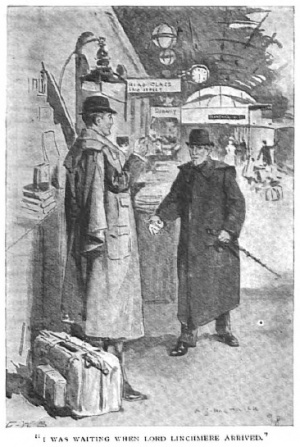
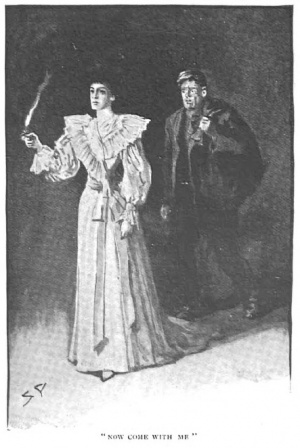
But there is a seventh story, based on The Adventure of the Sealed Room by ACD. I did not include it in the anthology because I thought Watson (and the original narrator) too passive. He merely observes, rather than deduces. Nevertheless, it is quite a fun tale and I am including a PDF below for anyone interested in the style of the Six Watsons. The illustrations are by Claude A Shepperson.

An original illustration from The Sealed Room

An original illustration from The Sealed Room

The re-imagined story begins…

THE LOCKED ROOM
A widower doctor of active habits with a busy practice must take what exercise he can in the evenings. Hence it was that I was in the habit of indulging in very long nocturnal excursions from my rooms in Mortimer Street, up towards Regent’s Park and, on occasion, to Baker Street itself. This was during those years when my friend was missing, thought dead, and that street and our old address always brought on an attack of melancholia. So, where possible, to preserve my sanity, I stayed to the east of the park. It was in the course of one of these rambles that I first met Felix Stanniford, and so embarked upon what has been the most extraordinary adventure of those lost years which many now call The Great Hiatus.

Read On:

THE LOCKED ROOM

SPY STORY

I had lunch with a spy last week. A real one. It was part of my research for an article on the history of SIS/MI6 for OMEGA Lifetime magazine. I had heard many of his stories before, but I always liked this one. Unfortunately, when I came to look at the finished article it was almost 4,000 words long. SIS has a lot of history. Just to do justice to the grim Philby era eats up the words. So this story had to go but I thought it worth posting here as an example of the men who fought on the frontline of the real Cold War.  

Unknown

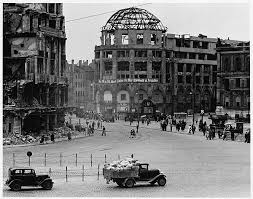
The winter of 1947-8 in Berlin is particularly bleak. The city, under the combined occupation of Russia, France, America and Great Britain, still mostly consists of piles of rubble. Food and fuel are in short supply. The surviving occupants are scarred, physically and mentally, by the brutality shown by the Russian forces when they swept through the city. Now, it’s a wind from the East that is knifing down the wide streets and bringing misery. The bitter cold it delivers is killing the old and the weak. People are selling whatever they can to stay alive – their last possessions, their bodies and above all, information, for Berlin had been plunged straight into the front line of a new war, a clandestine conflict between the Soviet Bloc and the West. The front line of this battle runs right through the former capital (and, a city in a similar plight, Vienna). And the commodity everyone wants most is intelligence about what the other side is up to. James Fraser, not yet thirty but already a veteran of Britain’s various secrets services, is one of the warriors in this Cold War. He is sitting in a shabby café, overcoat and gloves on, his breath clouding the chill air as he sips an acrid cup of adulterated coffee and peers out into the street. Across the road is the Russian sector, marked at this juncture only by a virtual border – no wall, no barbed wire, just the agreed concept that one side of the street is the Red of oppression, the other, Fraser’s side, is the Red, White and Blue of liberty.

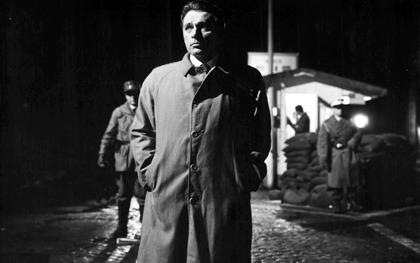
Some years later, after The Wall went up. But the job was the same.

Some years later, after The Wall went up. But the job was the same.

Fraser is, ostensibly, an administration officer with the Control Commission for Germany. In reality, he is a member of SIS, the Secret Intelligence Agency, sometimes known as MI6. And he is waiting for Otto, one of his ‘assets’ or agents in the east. As case officer, he is like father and brother to this young man, who is charged with watching train movements to and from the uranium mines of the SAG/SDAG Wismut mining company in Erzgebirge and Vogtland. A mundane job, but vital. The frequency of trains will tell someone, somewhere back in England, just how Russia’s nuclear programme is progressing. It is one of the tiny scraps of information that SIS uses to build a picture of what is happening in the East. Fraser has the madams of several high-end brothels over there in his pay, listening for pillow talk from Russian offers, and other assets working in the Red Army’s kitchens, for Napoleon was right, an army does march on its stomach, and if there is sudden increase in the amount of provisions ordered, it could be a sign that Soviet soldiers are about to move. Into the West, perhaps. Fraser lights a cigarette and checks his watch. Leo is late. That’s not necessarily a cause for concern. He has had to travel across an occupied country where military traffic always has priority. Across the road, a shadowy figure detaches from a doorway. Fraser is careful not to react. Like any good spy coming in from the cold, Otto has been observing the rendezvous, scanning for signs that the meet is compromised. As his prodigal son hurries towards the café, Fraser orders a second coffee for him from the owner. As he turns back, he catches an unexpected movement in the street from the corner of his eye.

*

Almost seven decades later and it is me sharing a beverage – tea, this time – with James Fraser at the Caxton Grill at St Ermin’s Hotel in London, not far from Broadway Buildings, once the home of his old ‘firm’. In fact, St Ermin’s is something of a ‘spy’s hotel’  – plenty of MI6 men used it and  it was once a favoured watering hole of Ian Fleming, who, of course, spent WW2 in Room 39 at the Admiralty as Personal Assistant to the Director of Naval Intelligence. During the war SIS and the Admiralty would have informal meetings at the Caxton, probabaly complaining about that noisy upstart, the Special Operations Executive.

Untitled

Fraser, long retired but still sharp as a tack and with the impeccable manners of a trained diplomat (which is what he pretended to be for so many years), worked for SIS, and before that its sibling Special Operations Executive (SOE), from 1939 until the early 1990s. I have asked him to tell me the story of SIS from his perspective, given he dedicated so much of his life to the organization. He agrees, but with a number of provisos. He will not name names, unless that person is on public record as having been a member of SIS, and he will give no details of operations he was personally involved in (Otto is an exception, as he used him to make a more general point about the nature of intelligence gathering) or which remain sensitive in any way. What he did in postings to Asia, Europe and the USA must remain off the record. This is, he makes clear, deep background only. I agree. And so much of what follows comes from him.

[You can read this missing section in the next issue of OMEGA Lifetime]

Back at the Caxton Grill, James Fraser agrees that the world of spying has moved on since his day. And not always for the better. He misses the world of dead letter drops and seedy cafes. He isn’t alone – how else does one explain the remake of the Smiley books with Gary Oldman and the BBC’s recent The Game series, set in the 1970s, all muted browns and beiges and with more moles than Wind in the Willows? What about Otto? I ask as we finish up. Last seen heading for a cafe in West Berlin? A car pulled up, Fraser explains, a new Moskvitch 400 with Soviet Embassy plates. Otto was bundled inside by some hoods and driven off. A few days later, his belongings were delivered to the SIS HQ at the Olympic Stadium (the very same one where Jesse Owens triumphed in 1936) as a message. Otto was dead. Fraser blinks, drinks his tea and rises to go. He pauses. ‘You know’, he says wistfully, ‘despite computers, satellites and drones, I bet somewhere in the world, right now, there is an SIS agent sitting in a bar or café waiting for his contact to show.’ And somehow, like me, he clearly finds that thought oddly comforting.

POLES APART

The Polish Embassy (@PolishEmbassyUk) has begun a Twitter campaign to raise awareness of the role played by Polish pilots in WW2’s Battle of Britain. Using the hashtags BoBPoles and BoB75 (it is the 75th anniversary of the battle) it will publish daily images and info celebrating their contribution to a battle every bit as decisive as Waterloo.

 CH4KTdcWwAA5Lcd

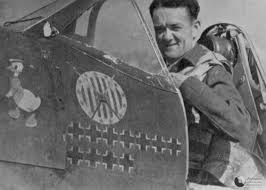
      For the past two years I have been working on a script, with an Anglo-Polish production company, about Jan Zumbach, one of the pilots who flew with the most well known outfit (mainly because it was the first made operational; there were sixteen in all), 303 Squadron, which operated out of RAF Northolt, not far from the Polish War Memorial. Below is part of an early funding submission.

   Like Agincourt, Waterloo and Trafalgar, The Battle of Britain has become part of Great Britain’s modern creation myth. But like all such legendary tales of derring-do, time (and a few obfuscations and exaggerations) has knocked off some of the rougher edges of the story, leaving a smooth, one-sided narrative, an easily digested piece of jingoism. The truth, as is often the case, is messier and more compelling than the usual tale of British, blue-eyed, blond public schoolboys in Spitfires fighting Nazis in the skies over Southern England (with a little help from the British Empire in the form of Aussies, Kiwis, Canadians and South Africans). Because the Battle of Britain was also the Battle for Europe, as many of the pilots were fighting for their own homelands, trying to defeat Germany so that France, Holland, Czechoslovakia and Poland could be free.

         The members of 303 Squadron had fought over their own country, and in France before it was overrun, and then made a last stand with the RAF. Older and more experienced than most of the pilots that the host country could provide, they were fighting on several fronts at once – against the Luftwaffe, against unfamiliar planes (the controls were reversed; they were not used to using R/T) and protocols, and against the British prejudice that saw them as demoralized and defeated at best, uncivilised savages at worst. They were also lonely and homesick, as well as constantly worried about what was happening to their families back in Poland. They overcame all those adversities to become the highest scoring squadron in the Battle of Britain, even though the RAF’s reticence to deploy them meant they entered the fray relatively late.  And they did this not in the sleek, graceful Spitfire, but the more quotidian Hurricane, the Shire horse to the Spit’s thoroughbred.

WB4

       Like all the Polish squadrons, 303 initially had RAF commanders – ex-stockbroker Ronald Kellett was Squadron Leader – he famously who fitted the men out with uniforms from his Savile Row tailor and paid their wages when the government didn’t – and under him Flight Lieutenants Johnny Kent and Athol Forbes. To make matters even more complicated, the highest scorer in the squadron was not a Pole, but a Czech, Sgt Josef František. He ended his career with 15 kills, but died just as 303 was stood down for rest and re-equipment in October 1940, ploughing his plane into a hillside for no apparent reason. It is possible he was suffering from the sort of combat stress Geoffrey Wellum described so well in his memoir ‘First Light’.

Lotnictwo Polski na Zachodzie. Piloci z dywizjonu 303 .

        The squadron was stuffed with interesting characters, but I decided to concentrate on Jan Zumbach, because he began the war as an idealist with an adventurous streak and ended it as a cynic, with mercenary tendencies (he was a gunrunner, diamond smuggler, and one-man airforce for various African rebel groups). It was an understandable arc for a man who felt the contribution of his countrymen was undervalued and who, after all the fighting for its liberation from Germany and Russia, saw his country ‘gifted’ to Stalin at the end of the war.

Jan Zumbach, who went on to become 303's Squadron Leader later in the war and later the one-man Biafran Airforce.

Jan Zumbach, who went on to become 303’s Squadron Leader later in the war and later the one-man Biafran Airforce.

          The story of 303 also has a powerful contemporary resonance, in that, as “immigrants”, the Polish pilots were faced with prejudice on arrival in the UK, followed by, eventually, acceptance when it transpired they were simply people, with the same hopes and fears as the Brits, who happened to be very good at shooting down Germans. Yet when the economic and political circumstance changed at the end of the war, as outsiders they become convenient scapegoats once more (and accused, in all-too-familiar rhetoric of “taking our boys’ jobs”).  The tale of Britain’s treatment of the Poles who served and of those who came as refugees during and after the war is not very edifying. We didn’t even thank them properly before pushing them off to Canada or Rhodesia or Poland or corralling them into camps.

The script opens with a radio announcer commentating on the Victory Parade that took place in London in June, 1946. It is taken almost verbatim from the broadcast at the time:

“I can see the Allied marching columns approaching now and what a sight! A two-mile procession made up of units from every corner of the globe, of every colour, race and creed, over 21,000 fighting men and women. The representatives of Allied forces are led by the United States, whose contingent includes the Marine Corps. After the American contingent come the troops of China and behind them a bewildering variety of flags and uniforms – France, Belgium, Brazil, Czechoslovakia, Denmark, Egypt, Ethiopia, Greece, Iran, Iraq, Luxembourg, Mexico, Nepal, Netherlands, Norway and Transjordan. “

But no Poland. The reason being, Stalin was busy subjugating the East and did not want ‘Free’ Polish forces celebrated and he put pressure on the British to make sure they were not represented. I think I am right in saying that the RAF Polish squadrons were invited to take part, but declined once they realised the other Polish services were forbidden from participating. 

178th-1

           This is the ‘card’ (or end caption) that finishess the script.

The 147 Polish pilots who served in the Battle of Britain claimed 201 aircraft shot down, around 20% of all Luftwaffe bombers and fighters destroyed.

      After the war an opinion poll showed that 56% of the British public thought the Poles should repatriated.

      Many of those who did return were persecuted, executed, imprisoned or deported to work camps.

       Not until 1992 was the contribution of the Poles serving with western forces recognised in their home country.


STAR TURN

STAR TURN

One of my finest sources of background information when researching my WW2 books (especially Early One Morning, The Last Sunrise and Dying Day)  was John Debenham-Taylor who, over the years, has become a friend. This week I learned that he has just been awarded a medal, 75 years after the event. In fact, he now has two medals gained during the war and two awarded afterwards. Both of the post-war medals concern the Winter War in Finland when, in November 1939, Russia invaded.

Unknown

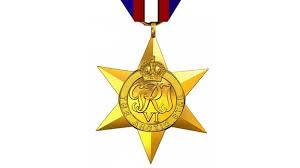
The Arctic Star

 This conflict is little remembered now in this country, but at the time (during the so-called ‘Phony War’) it was front-page news. Martha Gellhorn sent brilliant dispatches from a bombed Helsinki. An International Brigade, of the sort that fought in the Spanish Civil War, was raised across Europe, with some 12,000 volunteers, including the recently deceased Christopher Lee. Around 50 of these died, a low figure because the Finns (probably wisely) kept most of them from the front line. The Finns were fighting a new kind of war – hopelessly outnumbered, they opted for guerilla tactics. They were the first to mass-produce Molotov cocktails for use against tanks and their lethal, well-camouflaged skiers/snipers became a source of fear among Russian troops. Farmer and hunter Simo “Simuna” Häyhä, known as ‘White Death’ because of his snow camouflage suit, killed more than 500 Red Army Troops with a Mosin-Nagant rifle.

Unknown-1

The British tried to help. It secretly sent obsolete WW1 guns to Finland, although there were no instruction manuals. Which is where John Debenham-Taylor, who was with the Royal Artillery, came in. I already knew his story but digging a little deeper I found an obit of a British pilot who had ferried Blenheim bombers, donated by the British, to the country and had been awarded the Talvisodan muistomitali (the Winter War commemorative medal). Surely John deserved recognition for his service there? So I wrote to the Finnish Embassy:

John was just 19 and was a very good gunner of ‘instructor quality’ and a 2nd Lt. When asked if he would volunteer to help ‘a friendly nation’ under attack (he guessed Finland) he volunteered and along with seven others he was taken out of uniform and sent to Finland in civilian clothes via Sweden.

       He stayed there for months, writing manuals for the guns that SOE had smuggled up (mainly 3 inch anti-aircraft guns). Then, with the diplomatic bag consisting of a briefcase plus great crates of Russian guns and bombs for the British to analyse, he went north to the Artic circle and caught a trawler back to Liverpool

       The whole story is quite an adventure, and although he did not fight, his commitment to the Finns and his love of them and his time in Helsinki and the countryside shines through to this day. (He even introduced one fellow officer to his future Finnish wife). Because it was a secret mission and because he later became a full-blown SOE operative the story never came out. He believes that, as he was the youngest of the group, he is the sole survivor.”

The Finns acted with admirable speed. A new Winter War medal was struck and John was invited to the London Embassy to receive it from the Finnish Military Attaché.

Winter War medal

Winter War medal

But the story didn’t end there. John’s son-in-law discovered that anyone who had served north of the Arctic Circle was entitled to the Artic Star. John had commandeered that trawler, loaded with captured weapons, and sailed in it from the far north of Finland. He even passed Norway while it was being invaded by the Germans. I asked if he had witnessed any of it and, as laconic as ever, he said: ‘Actually, no. I was below. I was suffering from terrible constipation – living on reindeer for six months rather blocks you up, or so I found.’

And so, last week, the Arctic Star arrived through the post, almost 75 years to the day after that escape from Finland. Well deserved, and better late (John is 95 this year) than never.

THE CASE OF THE NEW WATSONS

Coming in September, a free Kindle anthology of six “new” stories featuring Dr Watson. In writing these I have drawn upon Arthur Conan Doyle’s non-Holmess short stories, as I did in the tale that concluded A Study in Murder. There is also a seventh story, which didn’t make the cut, called The Locked Room (based on ACD’s The Sealed Room). It will probably appear here sometime soon. Meanwhile, the cover of the new collection looks like this.51wJMmWonbL._AA324_PIkin4,BottomRight,-56,22_AA346_SH20_OU02_

CANON FODDER: A “NEW” SHERLOCK HOLMES STORY

In the newly released Dr Watson Book 3, A Study in Murder, the poor doctor is incarcerated in the most feared POW camp in Germany. During his incarceration, he is asked to contribute to the camp magazine. During the process of writing the book, I decided that snippets of the story he creates should be interspersed throughout the novel. But which Holmes story to choose? Even casual fans are familiar with the Sherlock canon, so I decided against incorporating one of the 56 oft-told tales. I could have created a pastiche in the style of Conan Doyle, but I have always tried to avoid that pitfall (it is not as easy as it seems at first glance). My Watson books are, after all, styled after the simpler third-person narration of His Last Bow.


Illustration from The Lost Special in The Strand magazine

Illustration by Max Cowper for The Lost Special in The Strand magazine

In the end I decided to look beyond the canon and at the short stories which function as Apocrypha to the main body of work, where an unnamed ” amateur reasoner of some celebrity” appears. The stories are The Man With The Watches and The Lost Special, both of which appeared in The Strand Magazine and are sometimes included in collections of Sherlock Holmes stories compiled outside the UK (most French compendia include them). If I were to adapt one of those, I thought, using as much of Conan Doyle’s language as possible, I might have something that was only part pastiche – a New/Old Sherlock Holmes tale, unfamiliar to most readers.

Illustration by Frank Craig for The Man With The Watches from The Strand Magazine.

Illustration by Frank Craig for The Man With The Watches from The Strand Magazine.

So, I set about taking The Man With The Watches and turning it into a full-blown Sherlock Holmes story, albeit one where (as in A Study in Scarlet) much of the action takes place away from Baker St. Although I used only excerpts in the body of the the novel, the entire exercise is printed as an appendix in A Study in Murder. Conan Doyle’s story begins:

“There are many who will still bear in mind the singular circumstances which, under the heading of the Rugby Mystery, filled many columns of the daily Press in the spring of the year 1892. Coming as it did at a period of exceptional dullness, it attracted perhaps rather more attention than it deserved, but it offered to the public that mixture of the whimsical and the tragic which is most stimulating to the popular imagination. Interest drooped, however, when, after weeks of fruitless investigation, it was found that no final explanation of the facts was forthcoming, and the tragedy seemed from that time to the present to have finally taken its place in the dark catalogue of inexplicable and unexpiated crimes.”

One of the first things I had to do was change the date, for The Final Problem, in which Holmes goes over the Reichenbach Falls with Moriarty, was set in 1891. This was the beginning of the ‘Great Hiatus’, the years when Watson thought Holmes dead. I also borrowed some lines from other Sherlock stories to set the scene.

“It was April 1890 (and not 1892 as some accounts would have it), as the debilitating bone chill of a lengthy winter had finally begun to relax its grip on the metropolis, when my friend Sherlock Holmes turned his attention to what the daily press were the calling The Rugby Mystery and some others The Girl and the Gold Watches. Holmes had recently completed his investigation into a most gruesome business, involving jealousy and murder. The solution to the case had put him in a rather sombre mood. ‘What is the meaning of it, Watson?’ he had exclaimed, not for the first time. Peering into the darkest corners of the human soul often caused him to recoil in revulsion at the depravity of his fellow man. ‘What object is served by this circle of misery and violence and fear? It must tend to some end, or else our universe is ruled by chance, which is unthinkable. But what end? There is the great standing perennial problem to which human reason is as far from an answer as ever?’

Illustration for The Man With The Watches by Frank Craig.

Illustration for The Man With The Watches by Frank Craig.

That resultant brown study, a cloud of melancholia that wrapped itself around him like a winter fog, persisted for some weeks, to the point where I feared he might reach for solace once more in the seven per cent solution. I sought permission – freely granted – from my wife to move back to our rooms in Baker Street that I might keep an eye on him until the black dog was driven away. And sure enough, as the thermometer rose on a certain bright Monday morning, Holmes stirred himself from his regular position, curled on the sofa with a newspaper, and began to pace the floor of our Baker Street lodgings, a practice I knew sometimes drove Mrs Hudson on the floor below us to distraction, for it could last many hours.
I lowered my own newspaper – I was studying an article about the recent rash of card-sharping incidents across the city and the methods the fraudsters preferred – and peered at him. He looked like a freshly coiled spring and something burned in his eyes. I knew that look of old and it warmed my heart. ‘Yes, Watson, you are thinking that my hibernation is at an end.’
I felt a surge of relief course through me. ‘You don’t have to be the world’s only Consulting Detective to deduce that, Holmes.’
‘Quite so. But, as your faculties are in such good order, you’ll be well aware that we are about to have a visitor.’”

The visitor then proceeds to narrate the story (essentially a ‘locked room’ mystery set on a train) and the narrative follows Arthur Conan Doyle as closely as I could manage, using as many of his own words as possible. It is hoped my publishers Simon & Schuster will put the entire thing online as an e-story sometime this year.

A Study in Murder is out in hardback now.

CASSAVETES: THE JAZZ DETECTIVE

When Guy Barker and I were sketching out the idea for a piece called dZf – The Magic Flute relocated to Greenwich Village – one of our touchstones was a TV series called Johnny Staccato, which aired in the US from 1959-60. Starring John Cassavetes as a “jazz detective”, it was set in a Village jazz club called Waldo’s, and the title character was a pianist who moonlighted as a gumshoe. Or vice-versa.Unknown

The club setting (and the music played there) was crucial to us, but the only episode we managed to track down was one where the nightclub was temporarily shut down. Disappointing, to say the least. Now, though, if you have a multi-region DVD player you can enjoy all 27 episodes in the US re-issue below. And what a treat it is, from the opening credits on.

Unknown-1

The theme music is by Elmer Bernstein (‘The Magnificent Seven’), a punchy, braying wail of brass, a supercharged version of his work on The Sweet Smell of Success. The musicians playing at Waldo’s included Barney Kessel, Shelly Manne, Red Mitchell, Red Norvo, and pianist Johnny Williams (later John Williams, responsible for Star Wars, Jaws etc). Although set in the Village, nearly all the players were from the West Coast school of jazz, because, apart from a few exteriors, the series was actually filmed in LA.

220px-John_Cassavetes_Johnny_Staccato_1959

So how does it stand up? Well the scripts aren’t its strong point, but Cassavetes with his razor-sharp suits and matching cheek bones is excellent and there is something to savour in most episodes, not least Elizabeth Montgomery – Samantha in Bewitched – playing against type as a sexy femme fatale in Tempted. And the music is always great – Bernstein used three different ensembles- a big band of 25, a Birth of the Cool-sized 12-piece and an ensemble of six players  with vibes and trumpet to the fore. Listen out for a riff that sounds as if it could be a sketch for Lalo Schifrin’s later Mission Impossible theme.

51+NhpOZVPL._AA160_

If you want to skip the visuals, the soundtrack is available on an 8-CD compilation called Jazz on Film: Crime Jazz, which also includes Lee Marvin’s M Squad, the Untouchables and, best of all, two CDs of Henry Mancini’s music from Peter Gunn.

Unknown-3