Monthly Archives: March 2026

EXTRA MILES

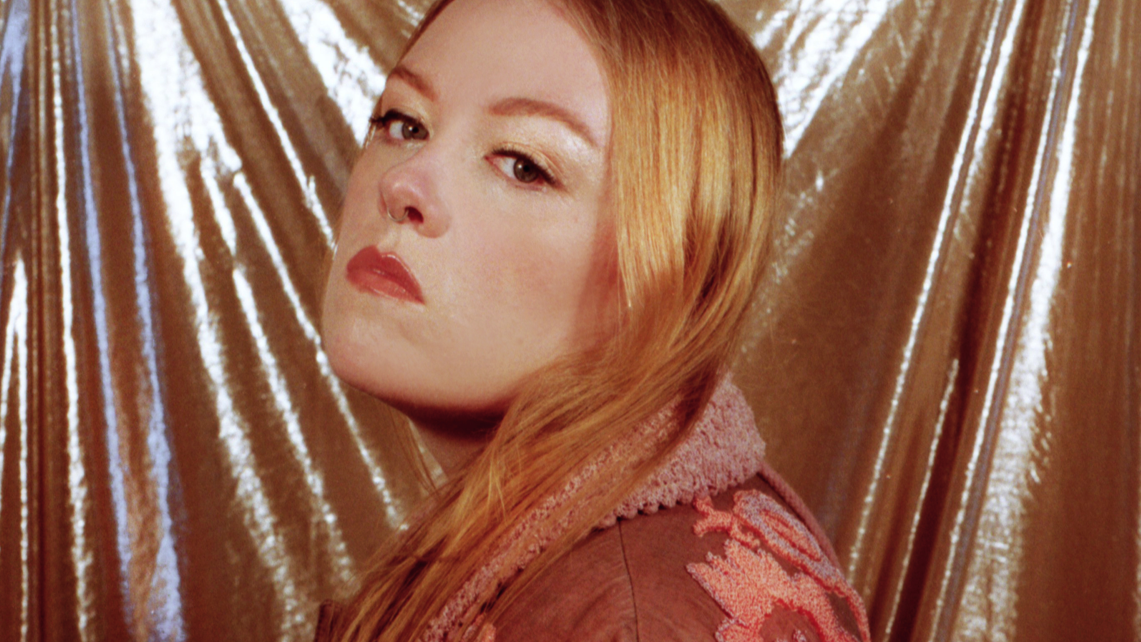
Another day, another sold out show, another slice of Mr Miles Davis. Last week Ronnie Scott’s in Soho saw the impressively versatile multi-instrumentalist, beat mistress and producer Emma-Jean Thackray paying her own homage to the master. Unlike Theo, Leeds’ finest did speak to the audience, explaining that she came through a northern brass band tradition, where everyone everywhere played the piece of music memorably called Concerto de Orange Juice by Pete Postlethwaite in the film Brassed Off. As a young teenager E-J T was on Limewire, which was mostly used for illegal file-sharing. She wanted to download a classic version of Rodrigo’s piece to practice along to. Instead, she got the one from Miles/Gil Evans Sketches of Spain and a new passion was born.

      In fact, rather than being “Dear Miles – A Love Letter to Miles” as billed the evening was really Miles & Me, charting the ongoing relationship between the two trumpeters. Although Electric Miles is closest to her heart, we were treated to tunes from many stages of Miles’ career, all processed through Emma-Jean’s magpie mind and broken beat sensibilities. We had a tricksy, staccato Seven Steps to Heaven,  a So What welded to a monstrous jazz-rock groove, the bass heavy superfunk of One and One from On the Corner and a short, marvellously chaotic free section that suggested Miles channelling Lester Bowie or Don Cherry, But there were also moments of tenderness, notably from a Harmon mute and piano combo (kudos to Lyle Barton on keys for slipping into the Bill Evans’ shoes). For the finale she said “I had a dream about Miles. I dreamt he came up to me and whispered: I love jungle.” You can imagine what followed – a machine-like explosion of urban rhythms that sounded like Miles hanging out in a hip East London jazz/vinyl joint. The jazz police would probably say “you’re under arrest” and certainly baulked at this collision of cultures, but it certainly fired some electric London club vibes through Ronnie’s. Emma-Jean told us that the Guardian once described her as a “jazz chav”. Huh. “Jazz alchemist” more like. The next chance to catch her (although not this show; she has her own stuff to do) is at the Cheltenham Jazz Festival over the May Bank Holiday. See: https://www.cheltenhamfestivals.org/events/emma-jean-thackray. However she is performing the Miles show at EartH Hackney on November 13 as part of the EFG London Jazz Festival (tickets: https://efglondonjazzfestival.org.uk/events/emma-jean-thackray-dear-miles-a-love-letter ).

MIXED UP MILES

An expanded version of this piece will appear in the Camden New Journal.

Theo Croker’s “Miles Davis Mixtape”

Southbank Centre x Montreux Jazz Festival Residency. Royal Festival Hall. 13 March 2026

“I’m not going to talk very much,” announced Theo Croker near the start of his Royal Festival Hall concert, before adding, with a chuckle, “Miles didn’t talk much.” Which is, of course, very true – in his later years you were lucky if the trumpeter even looked at the audience. This non-speaking gig was a double celebration – of Miles Davis’ centenary and of a collaboration between the Southbank and the venerable Montreux Jazz festival, which came to town for the weekend. There was lots going on but – for me at least-  Theo and Miles was the centrepiece.

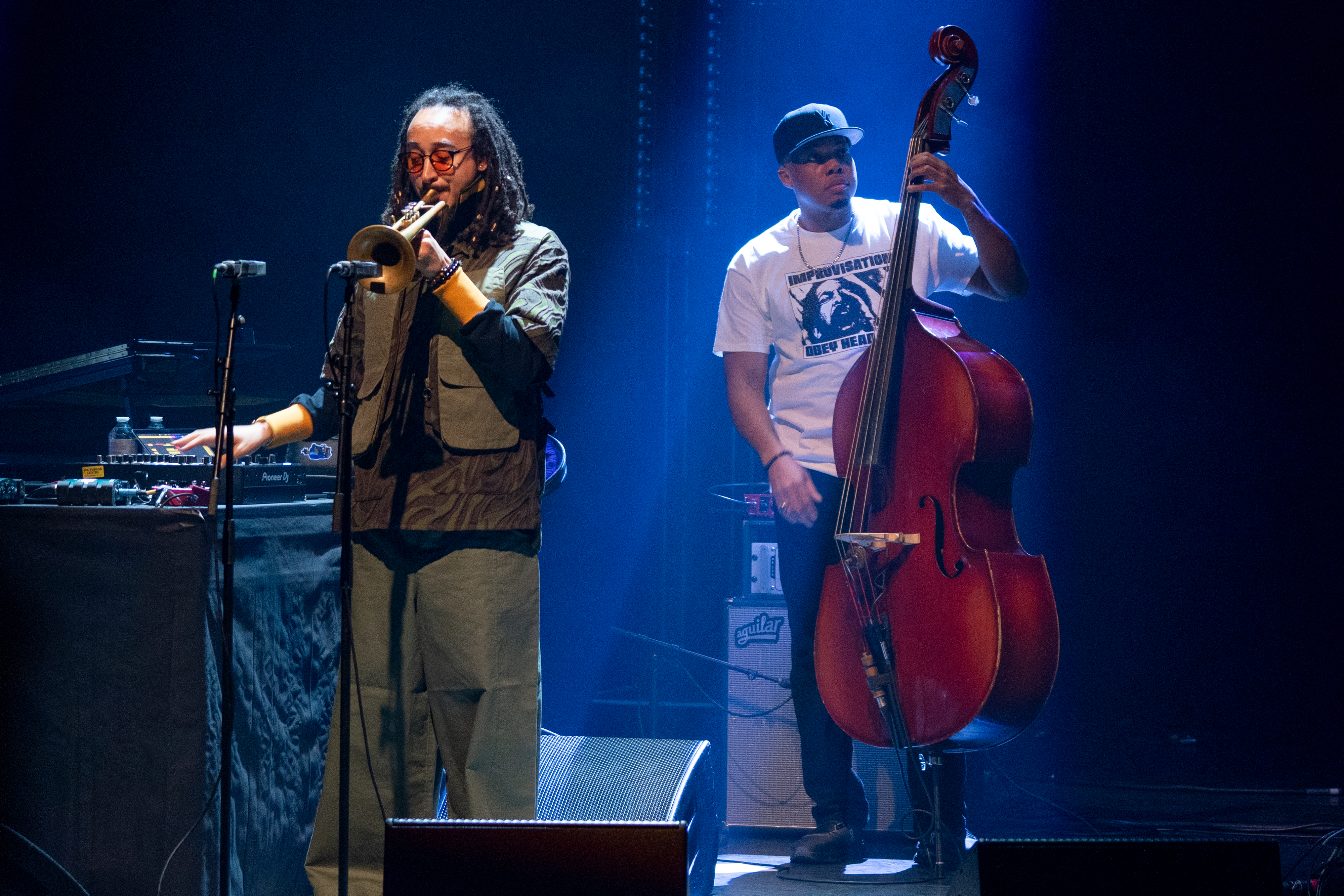
        (Photo: Pete Woodhead) The concert began with a beautifully full toned Concert de Aranjuez from the Gil Evans-helmed masterwork Sketches of Spain. Miles used a flugel in the opening on disc; Theo has a Monette trumpet, but no matter – that horn sings. It soon became clear that the pure-voiced singing was going to just part of its role here, as delay and reverb (Croker used a double microphone set up), scrunchy electronics and voice samples came to the fore as the Rodrigo segued into Croker’s own 4Knowledge. This was no slavish reproduction of Miles’ music, but a Theo Croker “mixtape”, with all the experimentation that suggests from a man who is one of the best and most forward-facing of the current crop of trumpeters. He included a good number of his own compositions in the mix – notably Amen Waters (where his playing reminded me of that other Miles admirer, Mark Isham) and 64 Joints, which is from his last album Dream Manifest. And they fitted perfectly.

         So, those hoping for Kind of Blue played in its entirety were destined to be disappointed, but we did get some exhilarating deep cuts. Very deep, one of them being Yaphet from the underrated Big Fun album from 1974, a pulsing track which could have acted as a blueprint for the whole gig. The band were on top form as it essayed the changes in tempo, atmosphere and harmony while Croker manipulated the sound in real time. Eric Wheeler was a powerhouse on bass, young drummer Koleby Royston subtle and far from overwhelmed by the demands of the ever shifting soundscape and Tyler Bullock was on keys. Although the latter also played synths, he also gave us some welcome, energetic passages on acoustic piano that offered us a definite human touch amid the electronic processing.

        (Photo: Pete Woodhead).

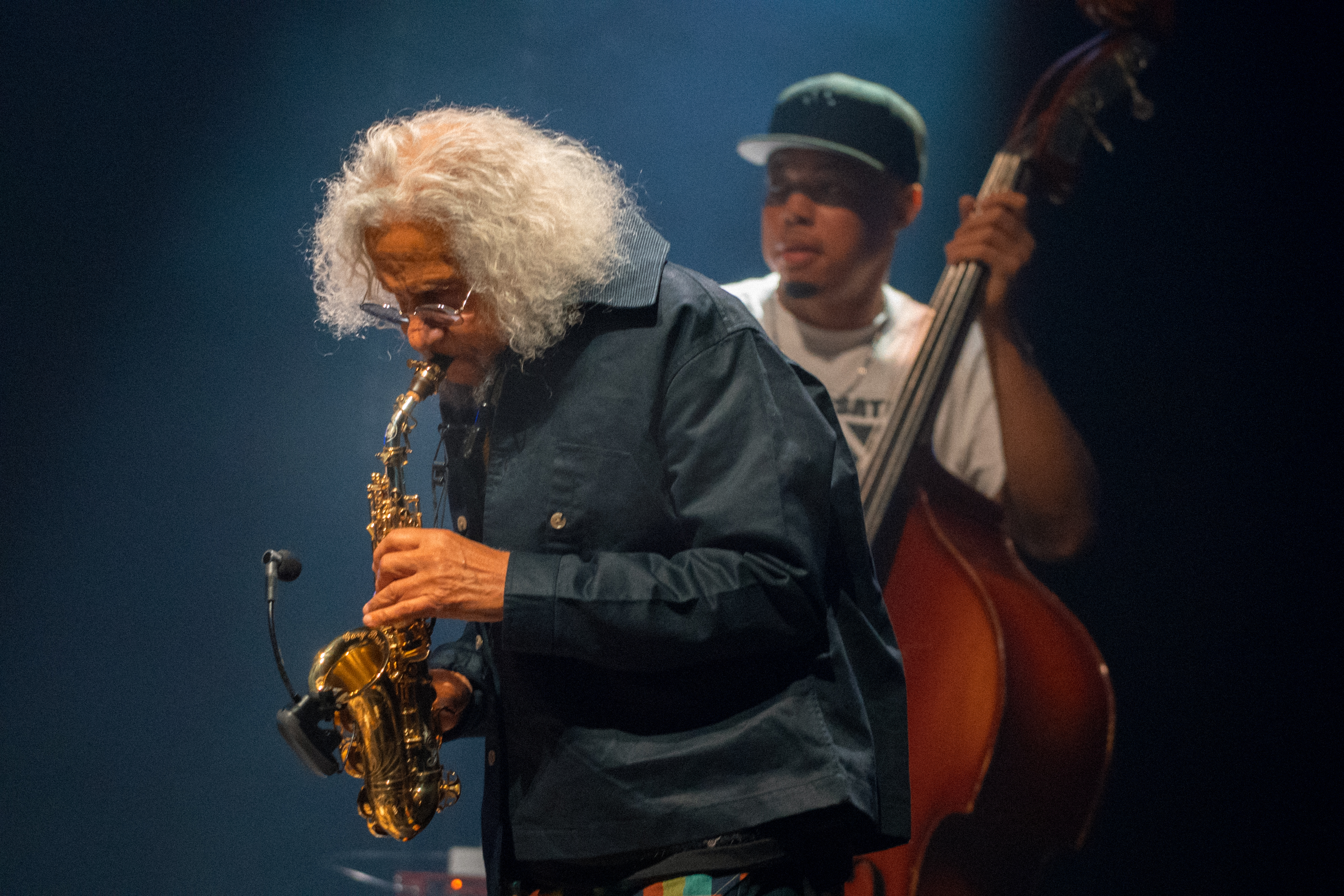
But it was special guest Gary Bartz who often took the limelight and ran with it. Looking like he had based his hairstyle on Doc from Back to the Future, the 85-year old began his contribution a little tentatively. I was a little concerned, as I have seen my fair share of jazz vets who no longer had the chop for a full-blown concert experience. No so Gary, who played with Miles in the early seventies (see Live-Evil) and led a pioneering fusion band called Ntu Troop (you’ll probably know Celestial Blues), and who showed here that he had the power and energy of a player half his age. Guest singer Ego Ella May also acquitted herself beautifully on two songs, including Croker’s Somethin’ which she sang on his album By the Way. I could have listened to more – but I guess I’ll have to catch one of her solo gigs.

         The concert ended back on solid Miles ground with Wayne Shorter’s Water Babies and a tender, acoustic Round Midnight that raised a few hairs on my neck, before Croker had the last word with his Hero Stomp. A couple of the two thousand plus audience expressed disappointment to me over a post-gig drink (they’d seen me taking notes) at the Croker-to-Miles ratio and the treatment of the sound. As someone who got on board with Miles at around Bitches Brew, I enjoyed the sonic manipulation which seemed entirely appropriate. After all, plenty of Miles’ music was heavily restructured in the studio by producer Teo Macero (look at the number of tape edits on the In a Silent Way album). I gave them my considered verdict on Theo’s mixtape: Miles would have loved it.

SWISS SOUTHBANKING

This coming weekend (from April 13) the Montreux Jazz Festival is landing on the banks of the Thames (so it’ll be smokin’ on the water.. sorry Deep Purple fans) for a three-day collaboration between the Southbank and the legendary Swiss festival. The Montreux Jazz Festival was founded by the late and much-missed Claude Nobs in 1967 and was and is known for the breadth of its programming. The London collab is equally eclectic. It includes Theo Croker’s Mixtape, an imaginative reworking of Miles’ electric legacy by the trumpeter (Friday 13), with, on the same night, the excellent vocalist Lucy-Anne Daniels in the Purcell Room, showing why she won 2025 Tina May Young Jazz Musician Award. She appears on stage alongside another of our favourite horn players, young Poppy Daniels (it’s part of the Women in Jazz strand). There’s also future-facing Scottish trombonist/electronica whizz corto-alto on the 15th – always innovative and entertaining at the same time – with Swiss-Palestinian drummer/composer Ramzi Hammad fusing Arabic, hip-hop and London jazz influences over in the Purcell. There’s lots more in between, including talks and discussions.

         We spoke to Jane Beese, Head of Contemporary Music at the Southbank Centre, to about the origins of this unique residency, which is an ongoing project and the state of modern jazz.

Theo Croker (Photo: Bruno Barretto)

How did the Montreux Jazz Festival link come about?

Our relationship with Montreux Jazz Festival grew from a shared curiosity about where jazz is headed and showcasing the talent that is pushing jazz in new directions. Both the Southbank Centre and Montreux have long histories of presenting pioneering music, and when we started exploring how to present a multi-faceted, diverse line-up of jazz, it became clear a sustained partnership could do more than just bring artists across international borders – it could create an exchange of ideas and approaches to jazz as a genre.

        It also feels fitting to think about the future of jazz during a landmark anniversary that marks 75 years since the Southbank Centre’s founding event: the Festival of Britain. For 75 years, our stages have hosted some of the most influential figures in jazz, from Nina Simone performing here in the late ’60s and ’70s to Miles Davis who performed here no fewer than eight times. That legacy gives context to thinking about the future and what the jazz of tomorrow sounds like. The residency lets us honour jazz’s history while amplifying voices who are shaping the next chapter of the music.

One of the key concerts is Theo Croker’s re-working/re-imagining of  Miles Davis’s electric legacy. Why, after all this time, does Miles matter?

As an icon of the genre, Miles Davis really did push the boundaries of jazz and remains an important cultural touchstone when thinking about multifaceted approaches to jazz and its direction. He wasn’t just a brilliant trumpeter – he was a pioneer, always asking what jazz could become next. From bebop to cool jazz, to electric fusion, he didn’t just follow trends, but set them, and challenged musicians and audiences to hear music differently. This year marks the centenary of his birth, which is a great moment to reflect on the scale of his influence. Even today, his legacy is felt in the way artists take risks, blend genres, and rethink what jazz can be. Miles’ legacy reminds us that jazz is alive, evolving, and never finished, and that ethos is what keeps the music vibrant today.

Jane Beese Head of Contemporary Music at the Southbank Centre (Photo: Pete Woodhead )

What guided the choice of artists for the residency?

Since the residency is all about presenting a multi-faceted take on jazz, we wanted to work with artists who are stretching the form – drawing on other genres, cultures, and experiences – and wanted to think about jazz as an evolving musical language rather than a fixed style. You can really see that in the line-up: Theo Croker’s music moves fluidly between jazz and hip-hop; corto.alto brings an experimental approach that leans heavily on jazz’s improvisational tradition. Each artist in the residency is asking questions about the music, the moment, and the audience, which feels very much in the spirit of Miles and in line with what the Southbank Centre has always tried to do: creating space for bold, forward-thinking artistry. It’s been a joy to curate a programme of jazz this year that is so eclectic and yet feels very of the moment. I can’t wait for people to come down to the Southbank Centre to experience it!

corto.alto (Photo: James Pearson-Howes)

How do you feel about the state of jazz in the UK at the moment? And how important have Tomorrow’s Warriors been?

It’s no secret that our Resident Organisation Tomorrow’s Warriors have had an incredible impact on the UK, and arguably beyond the UK too. Through their hard work and 35 years of dedication, they’ve helped produce artists like Soweto Kinch and the brilliant Ezra Collective, who have themselves really pushed the genre to a greater breadth of the public. It’s a privilege to work closely with Tomorrow’s Warriors, as a resident whose work is rooted in equity of access to opportunity, mentorship, and talent development. I can’t wait to hear them join forces with Children of Zeus, as part of the festival residency.

What else are you looking forward to in the jazz sphere and why?

One of the best things about jazz festivals in the UK today is the breadth of talent they platform. You can look across a line-up and be spoilt for choice. We’re very lucky to host the famed EFG London Jazz Festival at the Southbank Centre each year, which is always a highlight in the music calendar for any jazz fan, and yet another great chance to hear fantastic live jazz performance, particularly from artists in the early stages of their career too. It’s set to be a fantastic year for boundary-pushing jazz.

For the full Montreux v Southbank programme and tickets see: https://www.southbankcentre.co.uk/events/southbank-centre-x-montreux-jazz-festival-residency/.