Tag Archives: news

SWISS SOUTHBANKING

This coming weekend (from April 13) the Montreux Jazz Festival is landing on the banks of the Thames (so it’ll be smokin’ on the water.. sorry Deep Purple fans) for a three-day collaboration between the Southbank and the legendary Swiss festival. The Montreux Jazz Festival was founded by the late and much-missed Claude Nobs in 1967 and was and is known for the breadth of its programming. The London collab is equally eclectic. It includes Theo Croker’s Mixtape, an imaginative reworking of Miles’ electric legacy by the trumpeter (Friday 13), with, on the same night, the excellent vocalist Lucy-Anne Daniels in the Purcell Room, showing why she won 2025 Tina May Young Jazz Musician Award. She appears on stage alongside another of our favourite horn players, young Poppy Daniels (it’s part of the Women in Jazz strand). There’s also future-facing Scottish trombonist/electronica whizz corto-alto on the 15th – always innovative and entertaining at the same time – with Swiss-Palestinian drummer/composer Ramzi Hammad fusing Arabic, hip-hop and London jazz influences over in the Purcell. There’s lots more in between, including talks and discussions.

         We spoke to Jane Beese, Head of Contemporary Music at the Southbank Centre, to about the origins of this unique residency, which is an ongoing project and the state of modern jazz.

Theo Croker (Photo: Bruno Barretto)

How did the Montreux Jazz Festival link come about?

Our relationship with Montreux Jazz Festival grew from a shared curiosity about where jazz is headed and showcasing the talent that is pushing jazz in new directions. Both the Southbank Centre and Montreux have long histories of presenting pioneering music, and when we started exploring how to present a multi-faceted, diverse line-up of jazz, it became clear a sustained partnership could do more than just bring artists across international borders – it could create an exchange of ideas and approaches to jazz as a genre.

        It also feels fitting to think about the future of jazz during a landmark anniversary that marks 75 years since the Southbank Centre’s founding event: the Festival of Britain. For 75 years, our stages have hosted some of the most influential figures in jazz, from Nina Simone performing here in the late ’60s and ’70s to Miles Davis who performed here no fewer than eight times. That legacy gives context to thinking about the future and what the jazz of tomorrow sounds like. The residency lets us honour jazz’s history while amplifying voices who are shaping the next chapter of the music.

One of the key concerts is Theo Croker’s re-working/re-imagining of  Miles Davis’s electric legacy. Why, after all this time, does Miles matter?

As an icon of the genre, Miles Davis really did push the boundaries of jazz and remains an important cultural touchstone when thinking about multifaceted approaches to jazz and its direction. He wasn’t just a brilliant trumpeter – he was a pioneer, always asking what jazz could become next. From bebop to cool jazz, to electric fusion, he didn’t just follow trends, but set them, and challenged musicians and audiences to hear music differently. This year marks the centenary of his birth, which is a great moment to reflect on the scale of his influence. Even today, his legacy is felt in the way artists take risks, blend genres, and rethink what jazz can be. Miles’ legacy reminds us that jazz is alive, evolving, and never finished, and that ethos is what keeps the music vibrant today.
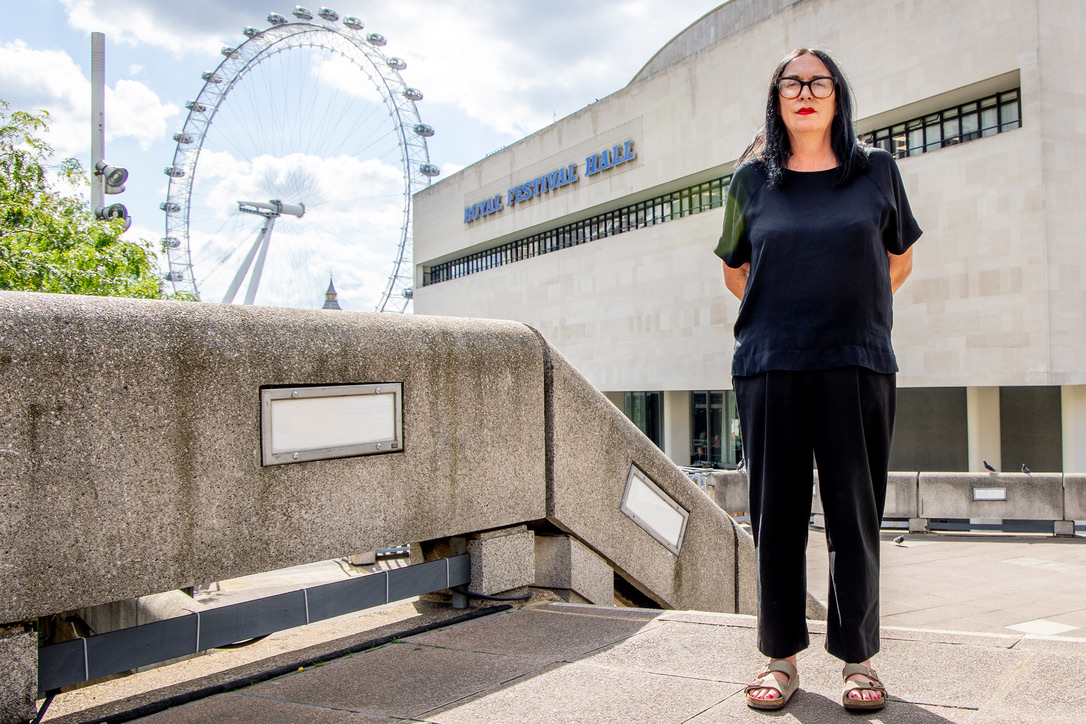
Jane Beese Head of Contemporary Music at the Southbank Centre (Photo: Pete Woodhead )

What guided the choice of artists for the residency?

Since the residency is all about presenting a multi-faceted take on jazz, we wanted to work with artists who are stretching the form – drawing on other genres, cultures, and experiences – and wanted to think about jazz as an evolving musical language rather than a fixed style. You can really see that in the line-up: Theo Croker’s music moves fluidly between jazz and hip-hop; corto.alto brings an experimental approach that leans heavily on jazz’s improvisational tradition. Each artist in the residency is asking questions about the music, the moment, and the audience, which feels very much in the spirit of Miles and in line with what the Southbank Centre has always tried to do: creating space for bold, forward-thinking artistry. It’s been a joy to curate a programme of jazz this year that is so eclectic and yet feels very of the moment. I can’t wait for people to come down to the Southbank Centre to experience it!
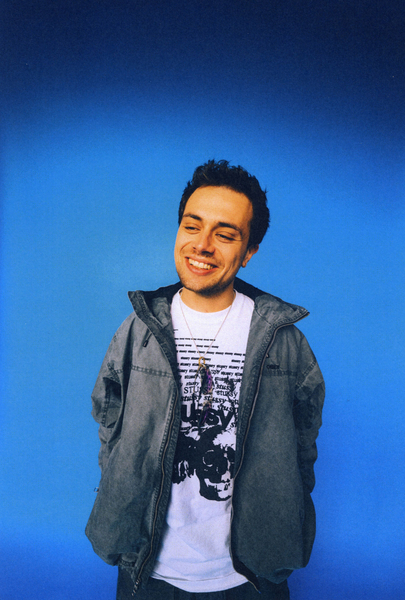
corto.alto (Photo: James Pearson-Howes)

How do you feel about the state of jazz in the UK at the moment? And how important have Tomorrow’s Warriors been?

It’s no secret that our Resident Organisation Tomorrow’s Warriors have had an incredible impact on the UK, and arguably beyond the UK too. Through their hard work and 35 years of dedication, they’ve helped produce artists like Soweto Kinch and the brilliant Ezra Collective, who have themselves really pushed the genre to a greater breadth of the public. It’s a privilege to work closely with Tomorrow’s Warriors, as a resident whose work is rooted in equity of access to opportunity, mentorship, and talent development. I can’t wait to hear them join forces with Children of Zeus, as part of the festival residency.

What else are you looking forward to in the jazz sphere and why?

One of the best things about jazz festivals in the UK today is the breadth of talent they platform. You can look across a line-up and be spoilt for choice. We’re very lucky to host the famed EFG London Jazz Festival at the Southbank Centre each year, which is always a highlight in the music calendar for any jazz fan, and yet another great chance to hear fantastic live jazz performance, particularly from artists in the early stages of their career too. It’s set to be a fantastic year for boundary-pushing jazz.

For the full Montreux v Southbank programme and tickets see: https://www.southbankcentre.co.uk/events/southbank-centre-x-montreux-jazz-festival-residency/.
ORGAN DONOR

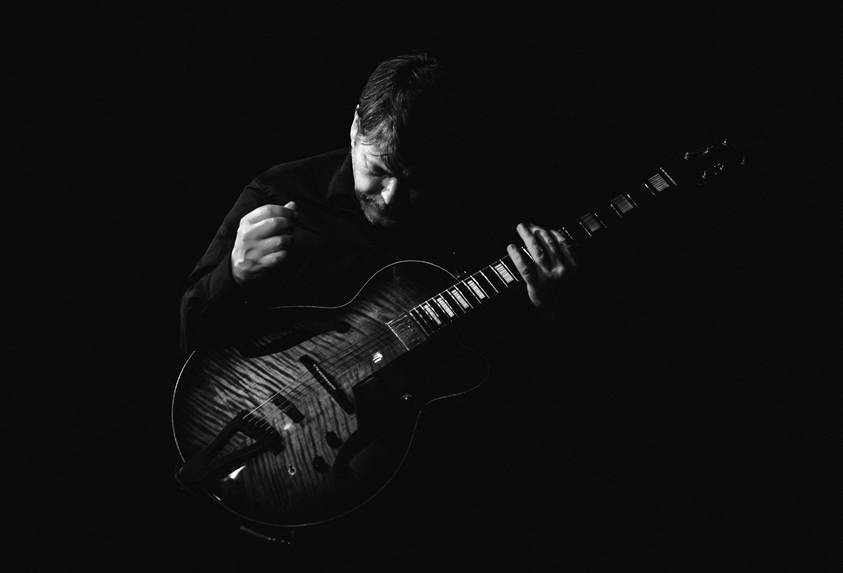
I fully intend to write about guitarist Nigel Price and his new album in my next column for the Camden New Journal, but I know I simply won’t have room to do him justice. Not only is Price our finest interpreter of the legacy of Wes Montgomery, Kenny Burrell and (pre-pop) George Benson, he  has been instrumental in maintaining the health of jazz in Britain.

(Above: Nigel Price. Photo by John McMurtrie)

We in London tend to think that jazz revolves around Ronnie Scott’s, the Pizza Express, The 606, The Vortex, The Jazz Cafe and a handful of other venues. These might form the beating heart of British jazz, but the lungs, the organ that keep the music breathing, is found in the myriad of small clubs scattered around Britain. They act as incubators for new talent that will find its way to London eventually, but also offer a network where established players can always get a gig. Without the likes of Peggy’s Skylight in Nottingham, The Verdict in Brighton, Splash Point in Seaford and Eastbourne, the Bear Club in Luton, the Band on the Wall, Manchester, Jazz Jurassica, Lyme Regis, Palladino’s in Cardiff, the Blue Lamp, Aberdeen and many, many more, the life of a gigging jazz musician would be even more unsustainable than it is in the current climate, where rapacious Spotify has stripped out much of the traditional income stream.

These clubs are often run by enthusiasts and volunteers  who wouldn’t recognise the word profit if it was on a Scrabble board before them (11 points by the way). Such is the precariousness of their existence that Covid threatened to kill some off as efficiently as it did those in care homes. It was why Price set up the Grassroots Jazz charity (https://www.grassrootsjazz.com), which fundraises and gives grants directly to venues. Recipients have included St Ives Jazz Club; Sound Cellar, Poole; Bebop Club, Bristol and Milestones, Lowestoft. Quite why he hasn’t been given some kind of government-sponsored gong for Services to Jazz is beyond me (although he and his group have won plenty of awards over the years).  

His latest tour is with his Organ Trio to showcase the band’s new record It’s On! It is criss-crossing the country, calling at many of those self-same grassroots venues outside of London (although for those in the capital there’s an album launch at Pizza Express Soho on October 5th – https://www.pizzaexpresslive.com/whats-on/nigel-price-organ-trio). For the full list of gigs nationwide see https://nigethejazzer.com/.

It’s On by the Nigel Price Organ trio is a very good album indeed – he’s not just a fine guitarist but his fellow members (Ross Stanley on Hammond, Joel Barford on drums) are at the top of their game. The hefty touring schedule that the trio undertakes has given them real emotional, rhythmic and harmonic connection. In his sleeve notes the guitarist calls the collection of tunes on It’s On! a “mixed bag” but it’s a cohesive exploration of classic organ trio material, re-written, reworked and revamped by Price to give it a more modern feel, while not ignoring the voicings and killer swing that made guitar/organ/drums such a key feature of the jazz repertoire. Buy a physical copy if you can rather than streaming it. You can purchase It’s On! and his other records on vinyl and CD at Price’s website above. And then catch the trio live and help keep jazz in Britain breathing.

BIG BAND THEORY

The Tom Smith Big Band plays at the Pizza Express at lunchtime on Sunday October 5 (https://www.pizzaexpresslive.com/whats-on/the-tom-smith-big-band). This is a very classy ensemble of top players and Tom is a talented arranger and composer – praised by one of his influences, my friend and collaborator Guy Barker – who writes evocative themes and charts for his stellar soloists to shine over. Check out his album A Year in the Life, a first rate jazz ode to London, which includes players of the calibre of saxophonists Graeme Blevins and Alex Garnett and trumpeters Tom Walsh and Freddie Gavita. I asked Tom Smith at the time of his last Pizza gig if you had to be crazy to run a big band in this economic climate, given the challenges of pulling together so many in-demand players. This is his Big Band Theory.

“You’re right that it’s a huge job, but there is something absolutely mesmerising about watching a group of 18+ musicians working together in harmony. Anyone who’s seen a big band performing live will know this immensely, especially in London where you can get right up and close to the performers and feel every note in your bones. In this country we really do have some of the finest big band musicians in the world – musicians who’ve studied this music all their life inside and out and know exactly what to do to elevate it to the highest level. There is a huge appetite in this country to experience this music, and we are in a new age of big band composers, especially in this country – Nikki Iles, Julian Siegel, Emma Rawicz, Dan Casimir, Sean Gibbs, Charlie Bates/Helena Debono, Callum Au, Olivia Murphy, Josephine Davies..and I could go on, everyone approaching it from totally different angles, with so much experimentation and new ideas.

“For my money the classic big band line-up is one of the all-time great large ensembles for the simple reason that it’s a self-balancing acoustic ensemble. In the hands of experienced players 5 saxes, 4 trumpets, 4 trombones, piano, bass, drums and guitar can perfectly balance with each other without the need for amplification, and this gives the musicians and the composer a HUGE amount of control over how the music is expressed and played. We also have access to a huge number of timbres – the saxes can be harsh, melodic, airy, trumpets bombastic and regal, trombones piercing and full bodied, and that’s not to mention the extra colours we can get with mutes, moving the saxes onto flutes and clarinets, and giving the trumpet players flugelhorns. The rhythm section is very adaptable and wide ranging, giving you the option to move from 20s jazz to 60s rock, from psychedelic guitars and orchestral percussion. The greatest big bands in the world consistently sell out huge concert halls, and I see a future where the big band is regarded as equally as important as a full classical orchestra – my dream is to write a film score using a big band as my main writing vehicle! (Below: Freddie Gavita).


“What I love about being a saxophone soloist on top of a big band is the amount of support it gives you. The music has a great range of movement, timbres, emotional weight and texture and this gives me so much to work with. I find myself playing off of the most different things every time I play with the band – the way a specific trombone chord resonates at a certain point, the sound of a muted trumpet playing with a clarinet can inspire me and push me in new unique ways each time. I absolutely love playing in smaller groups as well, there’s more options for where the music can go and your improvisations can move into freer territories, but sometimes the magnificence of a well-oiled machine like a big band is hard to beat…”

     And if that doesn’t whet your appetite for some of Tom’s big band adventures, I don’t know what will.