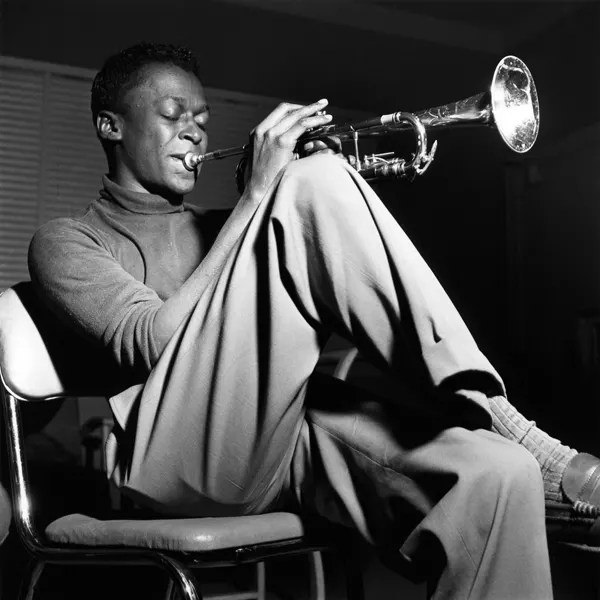
Another day, another sold out show, another slice of Mr Miles Davis. Last week Ronnie Scott’s in Soho saw the impressively versatile multi-instrumentalist, beat mistress and producer Emma-Jean Thackray paying her own homage to the master. Unlike Theo, Leeds’ finest did speak to the audience, explaining that she came through a northern brass band tradition, where everyone everywhere played the piece of music memorably called Concerto de Orange Juice by Pete Postlethwaite in the film Brassed Off. As a young teenager E-J T was on Limewire, which was mostly used for illegal file-sharing. She wanted to download a classic version of Rodrigo’s piece to practice along to. Instead, she got the one from Miles/Gil Evans Sketches of Spain and a new passion was born.
In fact, rather than being “Dear Miles – A Love Letter to Miles” as billed the evening was really Miles & Me, charting the ongoing relationship between the two trumpeters. Although Electric Miles is closest to her heart, we were treated to tunes from many stages of Miles’ career, all processed through Emma-Jean’s magpie mind and broken beat sensibilities. We had a tricksy, staccato Seven Steps to Heaven, a So What welded to a monstrous jazz-rock groove, the bass heavy superfunk of One and One from On the Corner and a short, marvellously chaotic free section that suggested Miles channelling Lester Bowie or Don Cherry, But there were also moments of tenderness, notably from a Harmon mute and piano combo (kudos to Lyle Barton on keys for slipping into the Bill Evans’ shoes). For the finale she said “I had a dream about Miles. I dreamt he came up to me and whispered: I love jungle.” You can imagine what followed – a machine-like explosion of urban rhythms that sounded like Miles hanging out in a hip East London jazz/vinyl joint. The jazz police would probably say “you’re under arrest” and certainly baulked at this collision of cultures, but it certainly fired some electric London club vibes through Ronnie’s. Emma-Jean told us that the Guardian once described her as a “jazz chav”. Huh. “Jazz alchemist” more like. The next chance to catch her (although not this show; she has her own stuff to do) is at the Cheltenham Jazz Festival over the May Bank Holiday. See: https://www.cheltenhamfestivals.org/events/emma-jean-thackray. However she is performing the Miles show at EartH Hackney on November 13 as part of the EFG London Jazz Festival (tickets: https://efglondonjazzfestival.org.uk/events/emma-jean-thackray-dear-miles-a-love-letter ).
An expanded version of this piece will appear in the Camden New Journal.
Theo Croker’s “Miles Davis Mixtape”
Southbank Centre x Montreux Jazz Festival Residency. Royal Festival Hall. 13 March 2026
“I’m not going to talk very much,” announced Theo Croker near the start of his Royal Festival Hall concert, before adding, with a chuckle, “Miles didn’t talk much.” Which is, of course, very true – in his later years you were lucky if the trumpeter even looked at the audience. This non-speaking gig was a double celebration – of Miles Davis’ centenary and of a collaboration between the Southbank and the venerable Montreux Jazz festival, which came to town for the weekend. There was lots going on but – for me at least- Theo and Miles was the centrepiece.
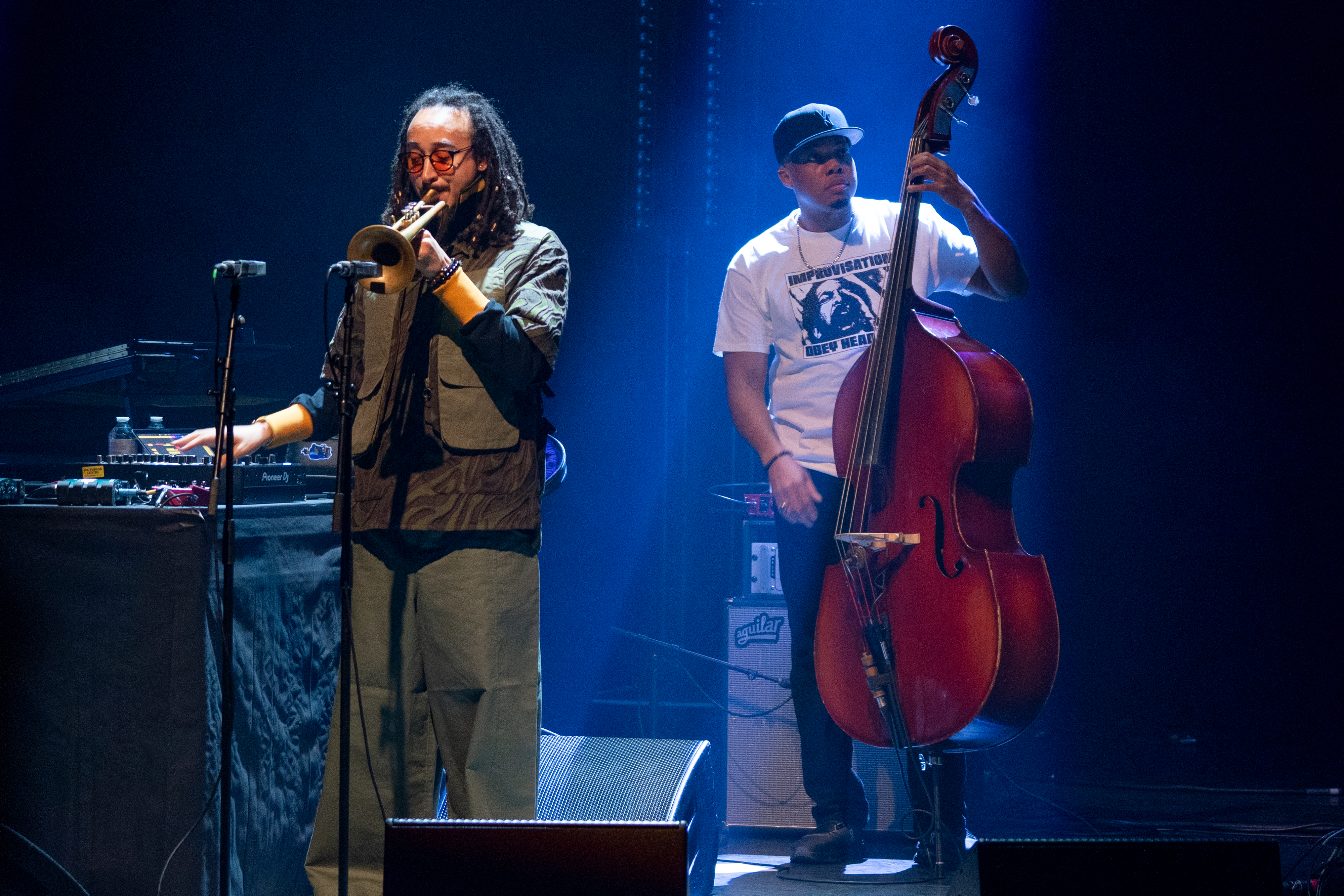
(Photo: Pete Woodhead) The concert began with a beautifully full toned Concert de Aranjuez from the Gil Evans-helmed masterwork Sketches of Spain. Miles used a flugel in the opening on disc; Theo has a Monette trumpet, but no matter – that horn sings. It soon became clear that the pure-voiced singing was going to just part of its role here, as delay and reverb (Croker used a double microphone set up), scrunchy electronics and voice samples came to the fore as the Rodrigo segued into Croker’s own 4Knowledge. This was no slavish reproduction of Miles’ music, but a Theo Croker “mixtape”, with all the experimentation that suggests from a man who is one of the best and most forward-facing of the current crop of trumpeters. He included a good number of his own compositions in the mix – notably Amen Waters (where his playing reminded me of that other Miles admirer, Mark Isham) and 64 Joints, which is from his last album Dream Manifest. And they fitted perfectly.
So, those hoping for Kind of Blue played in its entirety were destined to be disappointed, but we did get some exhilarating deep cuts. Very deep, one of them being Yaphet from the underrated Big Fun album from 1974, a pulsing track which could have acted as a blueprint for the whole gig. The band were on top form as it essayed the changes in tempo, atmosphere and harmony while Croker manipulated the sound in real time. Eric Wheeler was a powerhouse on bass, young drummer Koleby Royston subtle and far from overwhelmed by the demands of the ever shifting soundscape and Tyler Bullock was on keys. Although the latter also played synths, he also gave us some welcome, energetic passages on acoustic piano that offered us a definite human touch amid the electronic processing.
(Photo: Pete Woodhead).
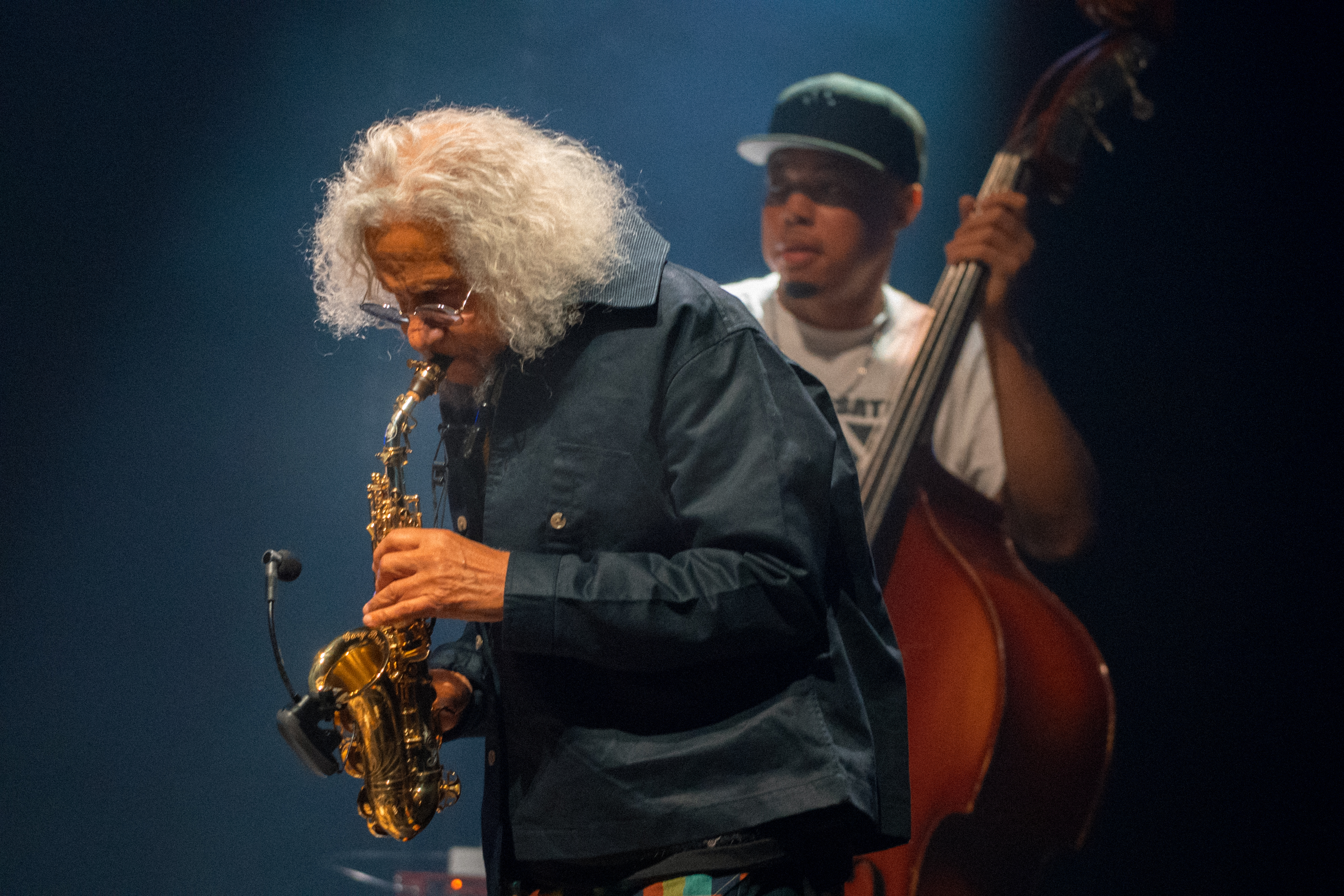
But it was special guest Gary Bartz who often took the limelight and ran with it. Looking like he had based his hairstyle on Doc from Back to the Future, the 85-year old began his contribution a little tentatively. I was a little concerned, as I have seen my fair share of jazz vets who no longer had the chop for a full-blown concert experience. No so Gary, who played with Miles in the early seventies (see Live-Evil) and led a pioneering fusion band called Ntu Troop (you’ll probably know Celestial Blues), and who showed here that he had the power and energy of a player half his age. Guest singer Ego Ella May also acquitted herself beautifully on two songs, including Croker’s Somethin’ which she sang on his album By the Way. I could have listened to more – but I guess I’ll have to catch one of her solo gigs.
The concert ended back on solid Miles ground with Wayne Shorter’s Water Babies and a tender, acoustic Round Midnight that raised a few hairs on my neck, before Croker had the last word with his Hero Stomp. A couple of the two thousand plus audience expressed disappointment to me over a post-gig drink (they’d seen me taking notes) at the Croker-to-Miles ratio and the treatment of the sound. As someone who got on board with Miles at around Bitches Brew, I enjoyed the sonic manipulation which seemed entirely appropriate. After all, plenty of Miles’ music was heavily restructured in the studio by producer Teo Macero (look at the number of tape edits on the In a Silent Way album). I gave them my considered verdict on Theo’s mixtape: Miles would have loved it.
This coming weekend (from April 13) the Montreux Jazz Festival is landing on the banks of the Thames (so it’ll be smokin’ on the water.. sorry Deep Purple fans) for a three-day collaboration between the Southbank and the legendary Swiss festival. The Montreux Jazz Festival was founded by the late and much-missed Claude Nobs in 1967 and was and is known for the breadth of its programming. The London collab is equally eclectic. It includes Theo Croker’s Mixtape, an imaginative reworking of Miles’ electric legacy by the trumpeter (Friday 13), with, on the same night, the excellent vocalist Lucy-Anne Daniels in the Purcell Room, showing why she won 2025 Tina May Young Jazz Musician Award. She appears on stage alongside another of our favourite horn players, young Poppy Daniels (it’s part of the Women in Jazz strand). There’s also future-facing Scottish trombonist/electronica whizz corto-alto on the 15th – always innovative and entertaining at the same time – with Swiss-Palestinian drummer/composer Ramzi Hammad fusing Arabic, hip-hop and London jazz influences over in the Purcell. There’s lots more in between, including talks and discussions.
We spoke to Jane Beese, Head of Contemporary Music at the Southbank Centre, to about the origins of this unique residency, which is an ongoing project and the state of modern jazz.
Theo Croker (Photo: Bruno Barretto)
How did the Montreux Jazz Festival link come about?
Our relationship with Montreux Jazz Festival grew from a shared curiosity about where jazz is headed and showcasing the talent that is pushing jazz in new directions. Both the Southbank Centre and Montreux have long histories of presenting pioneering music, and when we started exploring how to present a multi-faceted, diverse line-up of jazz, it became clear a sustained partnership could do more than just bring artists across international borders – it could create an exchange of ideas and approaches to jazz as a genre.
It also feels fitting to think about the future of jazz during a landmark anniversary that marks 75 years since the Southbank Centre’s founding event: the Festival of Britain. For 75 years, our stages have hosted some of the most influential figures in jazz, from Nina Simone performing here in the late ’60s and ’70s to Miles Davis who performed here no fewer than eight times. That legacy gives context to thinking about the future and what the jazz of tomorrow sounds like. The residency lets us honour jazz’s history while amplifying voices who are shaping the next chapter of the music.
One of the key concerts is Theo Croker’s re-working/re-imagining of Miles Davis’s electric legacy. Why, after all this time, does Miles matter?
As an icon of the genre, Miles Davis really did push the boundaries of jazz and remains an important cultural touchstone when thinking about multifaceted approaches to jazz and its direction. He wasn’t just a brilliant trumpeter – he was a pioneer, always asking what jazz could become next. From bebop to cool jazz, to electric fusion, he didn’t just follow trends, but set them, and challenged musicians and audiences to hear music differently. This year marks the centenary of his birth, which is a great moment to reflect on the scale of his influence. Even today, his legacy is felt in the way artists take risks, blend genres, and rethink what jazz can be. Miles’ legacy reminds us that jazz is alive, evolving, and never finished, and that ethos is what keeps the music vibrant today.
Jane Beese Head of Contemporary Music at the Southbank Centre (Photo: Pete Woodhead )
What guided the choice of artists for the residency?
Since the residency is all about presenting a multi-faceted take on jazz, we wanted to work with artists who are stretching the form – drawing on other genres, cultures, and experiences – and wanted to think about jazz as an evolving musical language rather than a fixed style. You can really see that in the line-up: Theo Croker’s music moves fluidly between jazz and hip-hop; corto.alto brings an experimental approach that leans heavily on jazz’s improvisational tradition. Each artist in the residency is asking questions about the music, the moment, and the audience, which feels very much in the spirit of Miles and in line with what the Southbank Centre has always tried to do: creating space for bold, forward-thinking artistry. It’s been a joy to curate a programme of jazz this year that is so eclectic and yet feels very of the moment. I can’t wait for people to come down to the Southbank Centre to experience it!
corto.alto (Photo: James Pearson-Howes)
How do you feel about the state of jazz in the UK at the moment? And how important have Tomorrow’s Warriors been?
It’s no secret that our Resident Organisation Tomorrow’s Warriors have had an incredible impact on the UK, and arguably beyond the UK too. Through their hard work and 35 years of dedication, they’ve helped produce artists like Soweto Kinch and the brilliant Ezra Collective, who have themselves really pushed the genre to a greater breadth of the public. It’s a privilege to work closely with Tomorrow’s Warriors, as a resident whose work is rooted in equity of access to opportunity, mentorship, and talent development. I can’t wait to hear them join forces with Children of Zeus, as part of the festival residency.
What else are you looking forward to in the jazz sphere and why?
One of the best things about jazz festivals in the UK today is the breadth of talent they platform. You can look across a line-up and be spoilt for choice. We’re very lucky to host the famed EFG London Jazz Festival at the Southbank Centre each year, which is always a highlight in the music calendar for any jazz fan, and yet another great chance to hear fantastic live jazz performance, particularly from artists in the early stages of their career too. It’s set to be a fantastic year for boundary-pushing jazz.
I fully intend to write about guitarist Nigel Price and his new album in my next column for the Camden New Journal, but I know I simply won’t have room to do him justice. Not only is Price our finest interpreter of the legacy of Wes Montgomery, Kenny Burrell and (pre-pop) George Benson, he has been instrumental in maintaining the health of jazz in Britain.
(Above: Nigel Price. Photo by John McMurtrie)
We in London tend to think that jazz revolves around Ronnie Scott’s, the Pizza Express, The 606, The Vortex, The Jazz Cafe and a handful of other venues. These might form the beating heart of British jazz, but the lungs, the organ that keep the music breathing, is found in the myriad of small clubs scattered around Britain. They act as incubators for new talent that will find its way to London eventually, but also offer a network where established players can always get a gig. Without the likes of Peggy’s Skylight in Nottingham, The Verdict in Brighton, Splash Point in Seaford and Eastbourne, the Bear Club in Luton, the Band on the Wall, Manchester, Jazz Jurassica, Lyme Regis, Palladino’s in Cardiff, the Blue Lamp, Aberdeen and many, many more, the life of a gigging jazz musician would be even more unsustainable than it is in the current climate, where rapacious Spotify has stripped out much of the traditional income stream.
These clubs are often run by enthusiasts and volunteers who wouldn’t recognise the word profit if it was on a Scrabble board before them (11 points by the way). Such is the precariousness of their existence that Covid threatened to kill some off as efficiently as it did those in care homes. It was why Price set up the Grassroots Jazz charity (https://www.grassrootsjazz.com), which fundraises and gives grants directly to venues. Recipients have included St Ives Jazz Club; Sound Cellar, Poole; Bebop Club, Bristol and Milestones, Lowestoft. Quite why he hasn’t been given some kind of government-sponsored gong for Services to Jazz is beyond me (although he and his group have won plenty of awards over the years).
His latest tour is with his Organ Trio to showcase the band’s new record It’s On! It is criss-crossing the country, calling at many of those self-same grassroots venues outside of London (although for those in the capital there’s an album launch at Pizza Express Soho on October 5th – https://www.pizzaexpresslive.com/whats-on/nigel-price-organ-trio). For the full list of gigs nationwide see https://nigethejazzer.com/.
It’s On by the Nigel Price Organ trio is a very good album indeed – he’s not just a fine guitarist but his fellow members (Ross Stanley on Hammond, Joel Barford on drums) are at the top of their game. The hefty touring schedule that the trio undertakes has given them real emotional, rhythmic and harmonic connection. In his sleeve notes the guitarist calls the collection of tunes on It’s On! a “mixed bag” but it’s a cohesive exploration of classic organ trio material, re-written, reworked and revamped by Price to give it a more modern feel, while not ignoring the voicings and killer swing that made guitar/organ/drums such a key feature of the jazz repertoire. Buy a physical copy if you can rather than streaming it. You can purchase It’s On! and his other records on vinyl and CD at Price’s website above. And then catch the trio live and help keep jazz in Britain breathing.
The Tom Smith Big Band plays at the Pizza Express at lunchtime on Sunday October 5 (https://www.pizzaexpresslive.com/whats-on/the-tom-smith-big-band). This is a very classy ensemble of top players and Tom is a talented arranger and composer – praised by one of his influences, my friend and collaborator Guy Barker – who writes evocative themes and charts for his stellar soloists to shine over. Check out his album A Year in the Life, a first rate jazz ode to London, which includes players of the calibre of saxophonists Graeme Blevins and Alex Garnett and trumpeters Tom Walsh and Freddie Gavita. I asked Tom Smith at the time of his last Pizza gig if you had to be crazy to run a big band in this economic climate, given the challenges of pulling together so many in-demand players. This is his Big Band Theory.
“You’re right that it’s a huge job, but there is something absolutely mesmerising about watching a group of 18+ musicians working together in harmony. Anyone who’s seen a big band performing live will know this immensely, especially in London where you can get right up and close to the performers and feel every note in your bones. In this country we really do have some of the finest big band musicians in the world – musicians who’ve studied this music all their life inside and out and know exactly what to do to elevate it to the highest level. There is a huge appetite in this country to experience this music, and we are in a new age of big band composers, especially in this country – Nikki Iles, Julian Siegel, Emma Rawicz, Dan Casimir, Sean Gibbs, Charlie Bates/Helena Debono, Callum Au, Olivia Murphy, Josephine Davies..and I could go on, everyone approaching it from totally different angles, with so much experimentation and new ideas.
“For my money the classic big band line-up is one of the all-time great large ensembles for the simple reason that it’s a self-balancing acoustic ensemble. In the hands of experienced players 5 saxes, 4 trumpets, 4 trombones, piano, bass, drums and guitar can perfectly balance with each other without the need for amplification, and this gives the musicians and the composer a HUGE amount of control over how the music is expressed and played. We also have access to a huge number of timbres – the saxes can be harsh, melodic, airy, trumpets bombastic and regal, trombones piercing and full bodied, and that’s not to mention the extra colours we can get with mutes, moving the saxes onto flutes and clarinets, and giving the trumpet players flugelhorns. The rhythm section is very adaptable and wide ranging, giving you the option to move from 20s jazz to 60s rock, from psychedelic guitars and orchestral percussion. The greatest big bands in the world consistently sell out huge concert halls, and I see a future where the big band is regarded as equally as important as a full classical orchestra – my dream is to write a film score using a big band as my main writing vehicle! (Below: Freddie Gavita).
“What I love about being a saxophone soloist on top of a big band is the amount of support it gives you. The music has a great range of movement, timbres, emotional weight and texture and this gives me so much to work with. I find myself playing off of the most different things every time I play with the band – the way a specific trombone chord resonates at a certain point, the sound of a muted trumpet playing with a clarinet can inspire me and push me in new unique ways each time. I absolutely love playing in smaller groups as well, there’s more options for where the music can go and your improvisations can move into freer territories, but sometimes the magnificence of a well-oiled machine like a big band is hard to beat…”
And if that doesn’t whet your appetite for some of Tom’s big band adventures, I don’t know what will.
I have been in Ronnie Scott’s many, many times, but never on a Saturday afternoon and have certainly never had my heart broken there. Ronnie’s is all about elation, not regret. But then, on a recent Saturday, I was about to give something precious away. An instrument.
(PHOTO: JONATHAN FUTRELL)
Some years ago, I was working on a novel [Trans Am] set in a trailer park in the US. I wanted the hero to be a trumpet player and, at some point, to have to sell his horn in order to fund a search for a young lad who had gone missing from the park. I tracked down top trumpet player Guy Barker, whom I had seen and heard at Ornette Coleman and Billy Cobham gigs and asked him if he would help with some technical details. Yes, he said. When we went to get taxis home, it turned out we lived in parallel roads in Muswell Hill (he’s in Chiswick now and I’m in Kentish Town). We became friends and have even collaborated on projects since then.
I eventually bought myself a rather careworn trumpet and set about practicing not just the playing but the stripping down and cleaning rituals (prior to the hero hocking it). My wife Deborah even bought me lessons, from a young man called Henry Collins who went on to play in the Amy Winehouse Band. In fact, he still does – they are regulars at places like Koko in Camden and are currently touring what we used to call The Continent.
When I finally delivered the book, my editor loved it. Apart from one thing. “Lose the trumpet player,” he said. “But I’ve just learned to play Love Theme from Spartacus,” I protested, to no avail. My protagonist became a guitarist. But I didn’t buy a guitar. I wasn’t going to make that mistake twice.
During the course of my over-research into the trumpet, I had mentioned how much I loved the warmer, more melancholic sound of the slightly larger flugelhorn, as played by Kenny Wheeler, Art Farmer and Ian Carr. Me and my big mouth. I had a big birthday coming up and, unbeknownst to me, Deb plotted to buy me one.
She went to a well-known brass instrument and explained what she wanted and was duly presented with a shiny Flugel on the counter top. “Hold on,” she said. “I’m not sure. Do you mind if I make a phone call?” The assistant shrugged. Deb called Guy, who was in Hong Kong. “Put the server on,” he said. Deb handed her phone over, saying “It’s Guy Barker.”
The assistant went pale. After some spluttering, he said “No, Guy. Yes, Guy. You’re right, this isn’t the flugelhorn she’s looking for. I’ll sort it.”
And he did. It’s a lovely instrument, but I simply don’t do it justice. I sort of played it at my daughter’s wedding recently, although luckily Guy stepped out from behind a curtain to perform Cole Porter’s I Love You as intended.
Guy Barker (PHOTO: JAMES CHRISTOS)
It has mostly been back in its case since then, although I sometimes lift it out to give it a polish and oil the valves. The thing is, hanging around with Guy and people like Nathan Bray and Tom Rees-Roberts and listening to Mark Kavuma, Poppy Daniels or Sheila Maurice-Grey, I know I’ll never be in the same trumpet universe as them, even if I did have the wherewithal to put in the hard hours. And the other thing is, that flugel should be played. It demands to be played. I feel like those people who buy beautiful vintage cars, lock them in a garage and never drive them.
Which is how I ended up at Ronnie Scott’s on that recent Saturday afternoon. For the past ten years the club has run a non-profit charitable foundation which supports jazz and young jazz musicians. One of the initiatives is the Musical Instrument Amnesty, which happens every two years or so. You turn up at the club and hand over your unwanted, unloved, criminally underplayed saxophone, guitar, trumpet, violin..whatever. Ronnies then finds a home for it with a struggling musician. Where do they end up? Ada Ologbosere of the RS Foundation explains:
“We distribute instruments through our extended networks, primarily by holding school workshops at the club and providing grants to youth music charities. For example, this year, we funded several organisations across the country, including Serious Trust, to host jazz-focused workshops during the EFG London Jazz Festival. We have also committed to ongoing funding for Kinetika Bloco, a youth music charity comprising young brass and woodwind players, drummers, steel pan, and dancers.
Our outreach program, ‘Ronnie’s On The Road,’ allows us to partner with various schools and organisations across London. This initiative enables us to connect with young adults who, for various reasons, cannot or choose not to leave their borough.”
It isn’t just the UK – Ronnie’s has sent instruments to Africa via Brass For Africa – https://www.brassforafrica.org/) and to Europe (via Sistema Europe – https://www.sistemaeurope.org/). So, who knows where my flugel will end up? Well, I hope I will.
I arrived quite late in the afternoon of donations and the room was pretty rammed with around a hundred instruments. The standard jazz joke would be to say they were all trombones, but there were guitars, keyboards, drum sets, violins, trumpets… and the odd trombone. Each instrument is assigned a number at check in and those that are particularly notable are given a star. My flugel got one of those, which means Ronnie’s will do its very best to keep track of where it ends up and who will play it. Ada kindly offered me the chance to go up onto that hallowed stage and give one last toot, but my mouth went dry at the very thought, especially as RS Orchestra’s estimable Pete Long was in the room checking out the instruments. So, I simply waved it off as it disappeared upstairs.
And yes, I did ask Deborah’s permission before saying goodbye to her gift.
You can contact the Ronnie Scott’s Charitable Foundation on foundation@ronniescotts.co.uk to find out when the next amnesty will be, although it is also announced on social media – just follow the club on whatever platform (links on http://www.ronniescotts.co.uk). But if you have an instrument burning a hole in its case right now, North London’s Young Music Makers charity (which offers subsidised music lessons) will take it off your hands see: https://www.youngmusicmakers.co.uk/.
This review first appeared in the Camden New Journal
My wife suggested that a vanishingly small number of readers would appreciate the headline to this piece. So, here goes – it is a play on a track called Dedicated To You.. But You Weren’t Listening on Soft Machine Volume Two (also used for the title of an album by the Keith Tippet Group, which featured Softs men Elton Dean and Robert Wyatt). It came to mind because guitarist John Etheridge of this parish (you may see him crossing the Heath most days), and the de facto frontman of the current Softs line-up, dedicated the band’s performance on Wednesday night to long-term, masterly drummer John Marshall, who played his final gig at Ronnie’s last year with the band and died in September 2023. Marshall wasn’t actually on Volume Two or the Tippett album but the latter in particular is a masterpiece of the kind of jazz-rock that Marshall excelled at.
The latest iteration of the Softs (above, pic by P Howitt) played the first show at Ronnie’s – 6.30-8pm -a slightly early slot for jazz. It was ”Just after nap time” as Etheridge, who joined the band in 1975, making him the elder statesmen, put it. Whether he had partaken of a snooze himself wasn’t clear, but something put fire in his belly, because he was on blistering form, whether trading licks with the versatile sax/flute/keys man Theo Travis, indulging in a McLaughlin/Cobham like interplay with drummer Asaf Sirkis or turning out fiery finger-shredding solos on former member (Sir) Karl Jenkins’ Tales of Taliesin from the ninth album Softs.
With no original personnel left, there are those who think the group is like Trigger’s famous broom in Only Fools and Horses – if all the parts have been replaced, is it still the same brush? In this case, though, the better analogy would be something like the Porsche 911 that has evolved over time into a new, yet familiar, beast. Hardly any components remain from the original in the current 911 model, yet the DNA they share is obvious. Soft Machine began in 1966 but the 2024 version has a similar genetic connection to the original.
Etheridge went to great lengths to explain how the new boys – drummer Sirkis with his five crash cymbals and bass player Fred Baker – slot into the history of the band, although a hand-out of a Pete Frame-like family tree would certainly help beginners to the Canterbury scene. Baker, incidentally, may look like he’ll be off to sell shooms at Glastonbury, but he demonstrated that he and his fretless bass are worthy (farm) successors to Hugh Hopper and Roy Babbington. The latter retired recently with hand problems, but he can be heard guesting on the excellent new record Other Doors, which has all the knotty time signatures, ethereal soundscapes and earworm melodies that any long-term fan could desire.
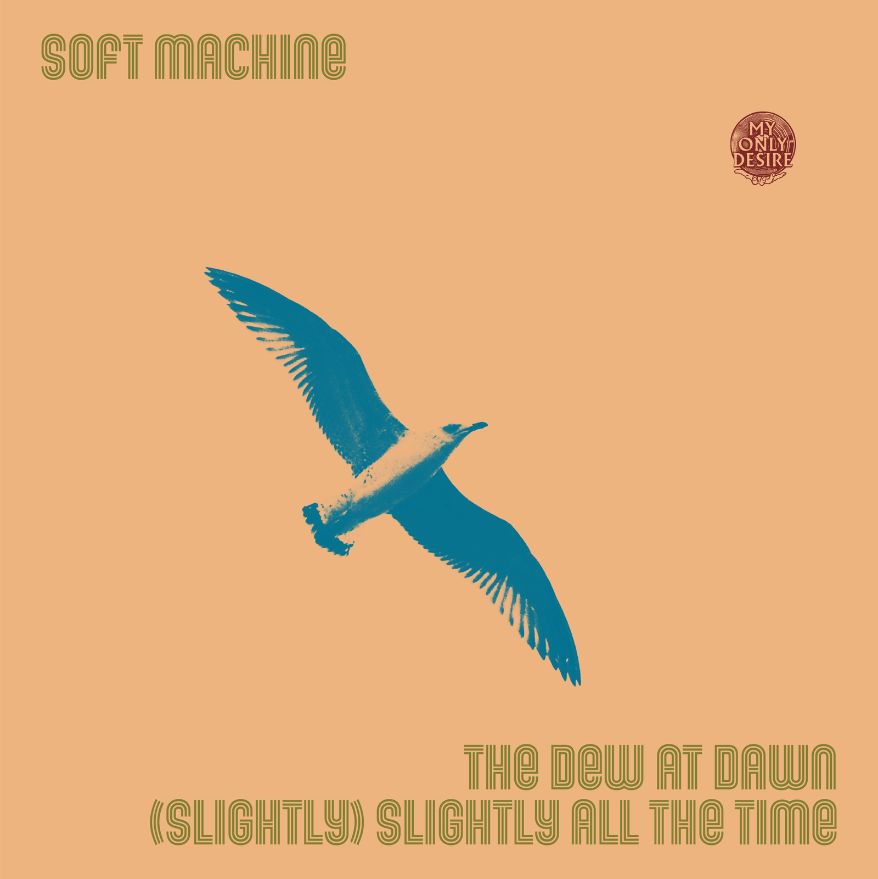
The set was a canny mix of old and new, going back to the sixties for Joy of a Toy – also revisited on Other Doors – and taking in the seminal Third with Facelift and ranging from the abstract and angular (Travis’s The Visitor at the Window) to the serenely beautiful (a flute-driven version of Hopper’s Kings & Queens from Fourth – the flute harks back to the days when the enigmatic Lyn Dobson was a short-lived addition to the “classic” Dean/Hopper/Ratledge/Wyatt line-up). Odd that the new single wasn’t featured. It’s a proper 7-inch 45 rpm number with Harry Becket’s lilting The Dew at Dawn backed with a reworking of that old Mike Ratledge-era favourite, Slightly All the Time. Still, it was for sale in the foyer for those who missed it being included.
The evening finished with a medley that spanned decades, where the multi-talented Travis let rip a la Elton Dean, beginning with 10.30 Returns to the Bedroom, the final track on Soft Machine Volume Two, and climaxing with a furious Hazard Profile Part One from the Bundles album. The full house loved it and, as on the new album, the band demonstrated this music, rather than being an exercise in prog-rock nostalgia, still has a winning vitality and relevance. Ronnie’s is closing for a refurb over the summer – let’s hope they invite Soft Machine back to the spiffed-up club, perhaps this time in the later slot, not just after nap time.
There is a horrible neologism that I came across in a newspaper recently. In the article the term “premiumisation” was applied to scotch whiskey – it describes the process of rebranding/hyping a product to make it “investible” and “collectable”. Something very similar is happening in the world of jazz, specifically in the world of LPs. It began with coloured vinyl editions, which are nearly always promoted as limited, collectable and attract a few quid extra over and above their monochrome siblings. I fell for this for a while – I have clear, yellow, red, orange, blue and even camouflaged discs. I stopped going colour-crazy when a record company executive assured me that adding pigment can affect sound quality and longevity of the album.
The other route to “premiumisation” is the re-mastered special edition. This is spiralling to quite frightening heights – there was a recent version of Miles Davis’s Kind of Blue, announced with typical fervour: Definitive handmade limited run reissue Ultra High Quality Record! 33 1/3 RPM LP release limited to 25,000 copies. Mastered directly from the original 3-Track master tapes by Bernie Grundman. Pressed at Quality Record Pressings using Clarity Vinyl® on a manual Finebilt press. Cost for all this? Around £150. I’m sure it’s a wonderful artefact but I already have six versions of that record, including one on cassette. I surprised myself by resisting it.
Less eye-wateringly expensive is the Blue Note Tone Poet series, supervised by Joe “Tone Poet” Harley, and put out to celebrate 80 years of the label. These are “all-analogue, mastered-from-the-original-master-tape 180g audiophile vinyl reissues in deluxe gatefold packaging. Mastered by Kevin Gray (Cohearent Audio) and vinyl manufactured at Record Technology Incorporated (RTI)” . The latter is considered one of the best pressing plants in the world. Artists getting the Tone Poet treatment include Herbie Hancock, Grant Green, Lee Morgan, Wayne Shorter, Dexter Gordon and many others.
Again, they are beautifully done, but are they worth the £10 premium they attract (they usually retail at £31-34) over a regular LP? After all, over the years I have been seduced by claims of superior sound quality by Japanese-only Blue Note editions (or maybe it was the obi strip – that band of paper that wraps around the cover) and “Cadre Rouge Audiophile” featuring Direct Metal Mastering and French pressing. Do I need more tweaks?
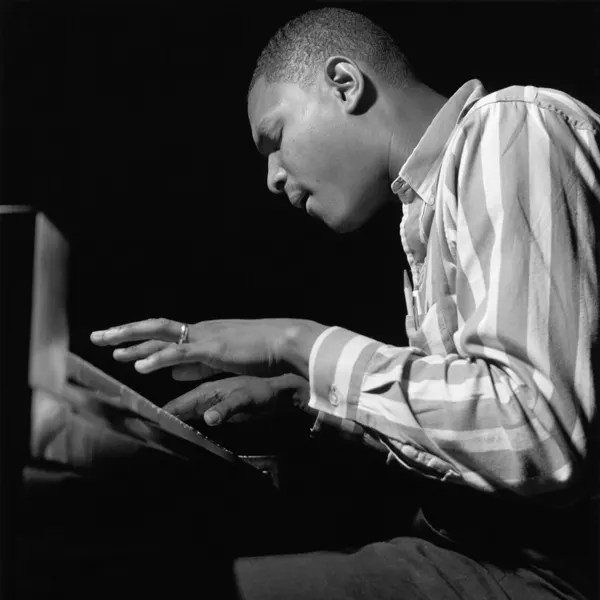
McCoy Tyner
One of the most recent batches of Tone Poets included McCoy Tyner’s splendid Expansions, which features the great Woody Shaw on trumpet, Wayne Shorter on tenor, Gary Bartz on alto and, unusually, clarinet, and bassist Ron Carter on an unexpected cello. It encompasses fast and furious modal jazz with the septet firing on all cylinders, Matthew Halsall-like Far Eastern tones and a piano/cello ballad. It was indeed an expansion of Tyner’s regular soundscape. I happen to have a 75th Anniversary re-issue of this, so I bought a Tone Poet one to compare and contrast.
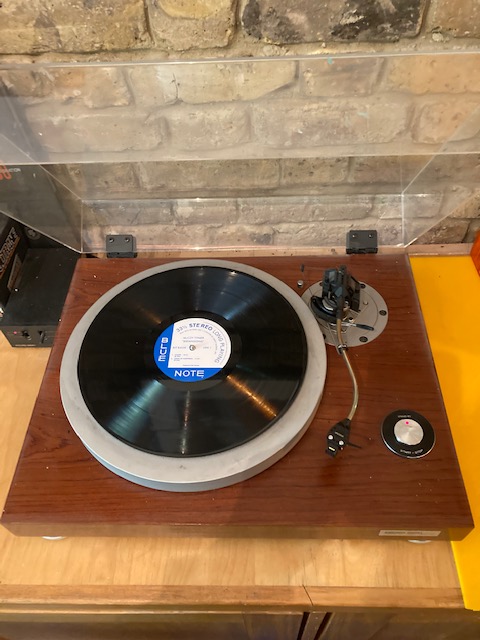
I don’t have a particularly high-end audio system. At its heart is a vintage Quad and 1970s Japanese Micro-Seiki deck with SME arm which is maintained by Audio Gold in Crouch End (it was where I traded a still-boxed CD player for it years ago, back when you couldn’t give record decks away). So not audiophile perhaps, but I do know its sound very well and thought I should be able to detect any differences/improvements in the new pressing.
And I could. A more sonorous piano here, a richer woodier bass sound there, crisper horns in one or two places. But, I realised, paying such close attention and constantly repeating sections not only gave me a headache, but it also spoiled my enjoyment. I was like one of those oenophiles who can wax lyrical about the component parts of a wine without pausing to enjoy the whole (the same is true of some coffee drinkers I know). I’m assured that the superior quality is best appreciated through headphones, but as that isn’t how I like to consume music, it’s a moot point. So, would I rush out to replace an album I already had with a Tone Poet version? No, probably not. But….
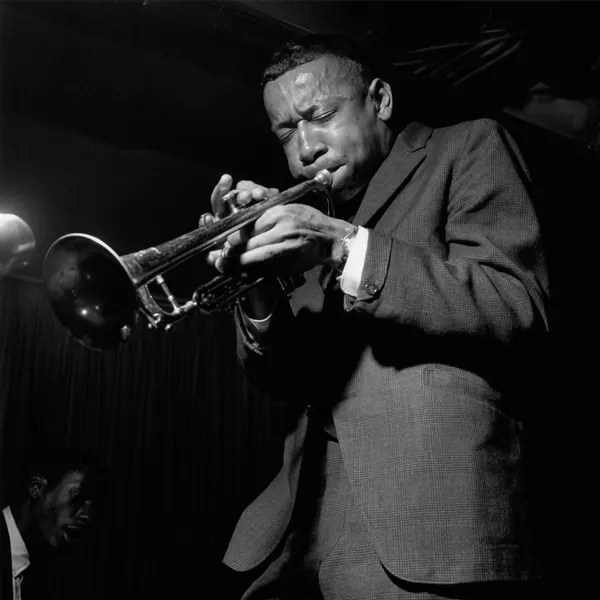
The great Lee Morgan
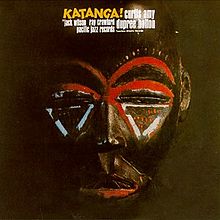
And it is quite an interesting “but”. One of the welcome aspects about these re-issues is that Mr Poet hasn’t gone for the big ticket albums. So, no Sidewinder by Lee Morgan, but the more obscure Cornbread, no Maiden Voyage by Herbie Hancock, but The Prisoner and so on. Also Joe Harley has embraced other labels that were or are now in the Blue Note stable. So for instance, I have a Tone Poet of Chick Corea’s Now He Sings, Now He Sobs, which was on the originally on the Stateside label, and a recent release, Katanga! by Curtis Amy and Dupree Bolton, which was on Pacific Jazz.
The latter is a fascinating album, because it highlights just how brilliant a trumpeter Dupree Bolton was, blistering fast yet astonishing accurate, with a hairs-up-on-the-back-of the-neck high-speed stratospheric excursions and brilliant tone. Bolton only made two real appearances on disc (Katanga! and The Fox by Harold Land, also recommended), frequently disappearing into the fog of drug addiction and subsequently prison. There isn’t space here to tell his whole tragic story of wasted talent, but if you are interested seek out Granta 69 (“The Assassin”). It includes a piece about Bolton by Richard Williams called Gifted, which is as fine and as moving a piece of jazz writing as you’ll find.
So, given the quality and heft of the physical record, the heavy card used for the covers and, sometimes, the inserts with essays (as with Katanga!), I certainly would buy a Tone Poet if it was an album new to me or I only had it on CD and wanted an actual LP. Forthcoming releases for 2021 include Lee Konitz and Gerry Mulligan, Wayne Shorter, Joe Pass, Stanley Turrentine, Sonny Red and more Grant Green, all new to me. I’ve got my extra tenners ready.
Exactly fifty years ago last weekend I caught a bus from my semi-squat in Catford to Crystal Palace and joined the crowd of long-haired, patchouli-scented hippies streaming into the park to witness the first ever rock Garden Party. The Crystal Palace Bowl with its distinctive hemi-spherical stage (think a dinky version of the Hollywood Bowl) overlooking a small lake had opened in 1961, but up to that point it had only hosted classical music. That day, headliners Pink Floyd were to usher in the dawn of a new age (but then everything was a New Age back then) with amplifiers, inflatables, dope and semi-nude people frolicking in the water in front of the stage.
I had already seen the band several times by that point, including the Azimuth Co-ordinator tour – it was a joystick that controlled a quadrophonic sound system, allowing panning from speaker to speaker – at the Liverpool Empire. Although in the pantheon of PF gigs, that palls in comparison to the one my friend, writer Jonathan Futrell, witnessed: -Syd Barrett-era Floyd and Jimi Hendrix at the Albert Hall – it was a hard act to follow.
Indeed, I was slightly underwhelmed by the band that day, not helped by being damp and cold (the weather was capricious in the extreme, much like this May) and the lengthy wait for them to set up. Atom Heart Mother without the orchestra didn’t carry the same punch as on the album, and although they did play one unfamiliar work – The Return of the Son of Nothing, later to become Echoes – most of the set was the familiar workhorses from the live disc of Ummagumma. Plus the inflatable octopus that was meant to rise majestically from the lake was a damp squib.
The ill-fated octopus
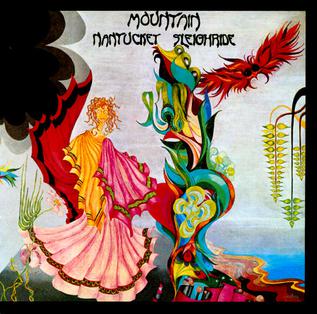
I was mainly there for Mountain, a band featuring plus-sized guitarist Leslie West and bassist Felix Pappalardi (later to be shot dead by his wife Gail), a key figure in several Cream recordings. I don’t recall that much of their performance apart from Jack Bruce’s Theme for An Imaginary Western, their big hit Mississippi Queen and the long coda to a gloriously extended Nantucket Sleighride – later the theme for TV’s Weekend World. To my surprise, Rod Stewart, in a pink corduroy suit, and The Faces put on a fantastically rumbustious, amiable and crowd-pleasing set although, I have to admit, I wasn’t quite sure who he was. But I was young then. And wise enough to go back to the bowl a few more times, because it was – and will be again – one of London’s great outdoor venues.
The subsequent Garden Parties featured the likes of Elton John, Roxy Music, Yes, Jimmy Cliff, Ian Dury, Santana and, er, Vera Lynn. The most famous gig was probably Bob Marley and the Wailers, when capacity was increased from 15,000 to 25,000 and Jonathan Futrell (then a writer for Black Echoes) waded into the lake, stood on a milk crate and snapped an iconic photograph of the singer that now hangs in the Bob Marley Home & Museum in Trench Town, Kingston, Jamaica.
The original stage fell into disrepair and was replaced by a more angular (and now rusty) steel one in 1997 but that too became dilapidated. The final, small-scale concerts took place around 2009. Recently, however, a successful crowdfunding campaign (match-funded by the Mayor) has raised enough money to rebuild/refurbish the stage and bring back live music to the Bowl. In the meantime, a temporary structure will be floated onto the lake and used until the new permanent structure is complete. First up in this re-birth is the South Facing Festival (southfacingfestival.com), a month-long series of concerts with The Streets, Dizzee Rascal, Cymande, Soul II Soul, Sleaford Mods and the English National Opera. There is also a healthy smattering of jazz on offer and I’ll be writing more about that and the festival in the new Kind of Jazz column in the Camden New Journal over the coming weeks.
Ian Shaw has won the BBC Jazz Awards “Best Vocalist” twice and is critically lauded by the press – “Has few rivals” (Sunday Times); “Our finest jazz singer” (Time Out); “A recipe for bliss” (The Telegraph). Is he really that good? Listen to John Fordham at The Guardian:
“Shaw’s humanity, technique, wit and willingness to take an insane gamble has always kept him in the jazz loop. What you get with Shaw is always really him – sometimes funny, sometimes resigned, sometimes wounded, sometimes over the top, but always technically perfect.”
Ian Shaw (with the fabulous Liane Carroll at the piano)
Yet these days when he packs up his music at the end of a gig (charts for The Great American Songbook, Joni Mitchell, Tom Waits, as well as his own compositions), Shaw is likely to be heading for a place that sees few UK musicians of any stripe – “The Jungle” in Calais, the multinational camp for refugees, migrants, call them what you will, who hope to cross to the UK.
For the past three months he has been visiting regularly, initially because he was outraged by the conditions in the camp he saw on television. Once out there – having taken out much-needed clothes and sleeping bags – he discovered there were decent players among the refugees who had lost their instruments along the very tough way. So later he loaded his car and took over drums, guitars and basses (including one that once belonged to Jack Bruce of Cream, donated by Jack’s family). But he now also helps build, fund, organise and raise awareness of what is going on just a few miles from the Kent coast. And he has put his money where his mouth is. There has been one benefit already, at The Vortex in Dalston, with Sarah Jane Morris and Carleen Anderson, and another is due at Phoenix Artist Club, Soho (Nov 18th, two shows, fabulous line-up, £25, see http://phoenixartistclub.com). All the money raised goes directly to helping the refugees (“I’ve spent all my own,” Shaw confessed from the stage of The Vortex) in practical ways.
Ian Shaw with Georgia Mancio, who will appear at one of the Phoenix shows
Shaw is keen that people know about life in The Jungle, to share the story of the people he has met and the sometimes terrible things that have happened and are happening (the camps are being de-populated, but the refugees are being moved to windowless containers). He is also keen to refute what he calls the “vile lies” about the camp, such as the inhabitants having so many clothes from charities, they burn them for fuel. In fact, charities are very thin on the ground – there isn’t a large UK one active in The Jungle at all. Just an ad hoc group of musicians (as well as a larger contingent of non-musicians) who aren’t doing it for the cameras or some high-profile telly marathon.
From the creation of sublime music in a slum camp to the building of a church from bin bags, from professors to war-battered paupers, Shaw has seen all sorts. And he will be over there in the coming months because, to quote Game Of Thrones, Winter Is Coming, and things aren’t going to get any better. If you wish to help, and get a great gig in to the bargain, head for the Phoenix next week. And he still needs musical instruments.






 robtryan