Roman Coppola (son of Francis Ford, co-writer of Darjeeling Limited and Moonrise Kingdom) was in town recently to show off the winners of Four Stories, Intel/W Hotel’s screenwriting competition for emerging talent. You can see the winning entries at www.youtube.com/fourstories, including one shot by Coppola at W Hollywood. ‘I did that for convenience,’ he said. ‘Then I saw the footage from W Maldives and realized what a mistake I’d made. Duh!’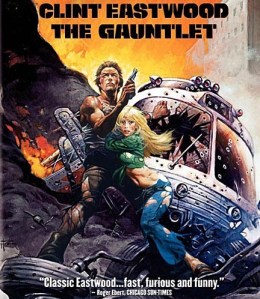
I went along to interview him for My Hols for The Sunday Times and, as expected, he talked a lot about his father’s places in Belize and Italy. I was beginning to think that this was going to be a run-of-the-mill My Hols (well, as run-of-the-mill as it can be if your dad directed The Godfather and Apocalypse Now) when he let slip that his next holiday would be on a Greyhound bus.
No, Roman isn’t going to be riding the freeways with the great unwashed, he has his own Greyhound bus. ‘It’s from the 1940s, the classic silver-sided one. I found it in Ohio.’ So, it’s like the one in The Gauntlet (1978), I asked, that Clint Eastwood armours up and rides into Phoenix to confront the corrupt city officials? Never seen the movie, he admitted.
He should. OK, so it’s a piece of schlock, but apart from being the only movie to star a similar bus to his (it is “Southern Trail Lines”, not Greyhound and, on re-viewing, it is a later model than Roman’s), it also has a great soundtrack. The music is by Jerry Fielding, but Eastwood, ever the jazz fan, made sure he booked the legendary Art Pepper (apparently on both alto and, unusually, baritone), who needed the gig, and a new kid, the stratosphere-scraping trumpeter John Faddis. It’s grand stuff, but be warned though, the OST is only 31 minutes long.
The Gauntlet bus was destroyed by 8,000 explosive ‘squibs’ to simulate bullet holes. In contrast, Roman has had his interior done out in mahogany, like a classic Hacker-Craft 1920s motorboat, with six berths and he intends to tour the Mid-West of America in it next year. You can read more when the interview appears in the Sunday Times in a few weeks.


 Maxine Hitchcock, editorial director of Simon & Schuster. She mentioned that they were looking for a work of fiction featuring a ‘detective in the trenches of WW1’. I said it was an interesting idea – what better spot to commit murder than in a place where thousands are being slaughtered each day? But I also knew it had its problems, not least because the front line was very fluid (soldiers did not spend weeks in the trenches – they were rotated back on a regular basis) and also most Military Policemen were concerned with desertion and cowardice than crime. So I said: ‘Actually, it would be better if he wasn’t a copper, but a doctor, just behind the lines, a man who might recognize a murder when he sees one. And why not go one step further and make the central figure Dr Watson?’
 robtryan